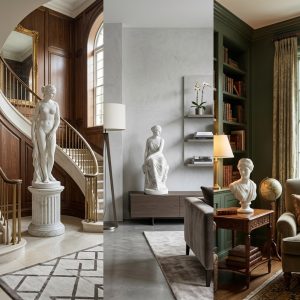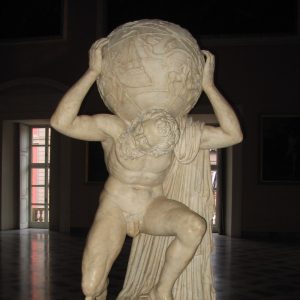
When choosing stone for a sculpture, fountain, architectural feature, or garden installation, the material is just as important as the design itself. Different natural stones have different levels of hardness, grain structure, texture, weather resistance, and carving performance.
For sculptural projects, the key question is not simply “Which stone is the strongest?” Instead, it is:
Which stone is best suited to the shape, details, environment, and purpose of the sculpture?
Marble, granite, sandstone, and travertine can all be used for stone sculpture and architectural projects, but they perform differently during carving and create very different visual results.
This guide compares these four sculptural stones from the perspective of a professional stone sculpture manufacturer.
Marble vs. Granite vs. Sandstone vs. Travertine: Quick Comparison
| Stone | Carving Performance | Fine Details | Appearance | Outdoor Use | Best Applications |
| Marble | Excellent | Excellent | Elegant, refined | Excellent with proper stone selection and installation | Human figures, religious statues, fountains, classical sculptures, columns |
| Granite | Moderate to difficult | Good, but more difficult for intricate work | Strong, granular | Excellent | Large outdoor sculptures, bases, benches, fountains, architectural elements |
| Sandstone | Easy to moderate | Good for certain styles | Warm, natural, earthy | Moderate, depending on stone | Architectural carving, garden features, rustic sculptures |
| Travertine | Good | Good, but pores affect details | Warm, textured, natural | Good with suitable installation | Fountains, planters, columns, architectural decoration |
The table provides a general comparison, but the real differences become clearer when we look at how each material behaves during sculpture production.

1. Marble: The Most Versatile Stone for Fine Sculpture
Marble has been one of the most important materials in Western sculpture for centuries. From classical Greek and Roman works to Renaissance masterpieces, artists have traditionally chosen marble when they need a combination of fine detail, smooth surfaces, elegant color, and sculptural depth.
For a professional sculpture factory, marble is particularly suitable because it can be carved into both highly detailed figures and large architectural structures.

Why is marble suitable for sculpture?
Marble has a relatively uniform structure compared with stones such as sandstone and travertine. This allows experienced sculptors to gradually remove material and shape details such as:
- Facial features
- Hair and beards
- Fingers and hands
- Drapery and folds
- Muscles and anatomy
- Flowers and leaves
- Wings and feathers
- Animal features
- Classical ornaments
This makes marble especially suitable for figurative sculpture, where subtle transitions and delicate details can have a major impact on the final appearance.
Marble for Human and Religious Sculptures
For life-size and larger-than-life-size human figures, marble is one of the strongest choices.
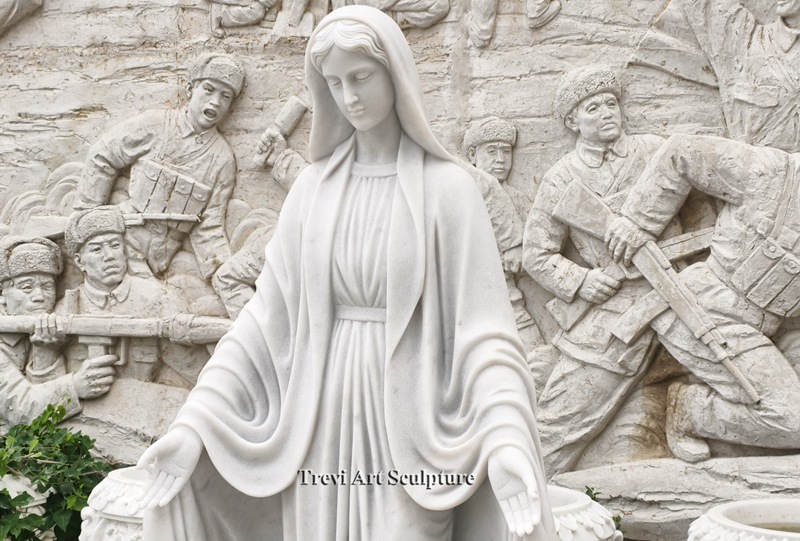
A skilled sculptor can create a smooth transition between the face, body, clothing, and surrounding forms. This is particularly important for religious sculptures such as:
- Virgin Mary statues
- Jesus statues
- Saints
- Angels
- Apostles
- Biblical figures
- Classical gods and goddesses
White marble is especially popular for religious and classical sculpture because its light color gives the finished statue a clean and timeless appearance.
Different marbles can also provide different visual effects, from bright white to warmer beige and more distinctive colored stones.
Marble for Fountains
Marble is also highly suitable for architectural and garden fountains.
A fountain may combine many different sculptural elements, including:
- Bowls and basins
- Columns
- Figures
- Animals
- Flowers
- Shells
- Decorative reliefs
- Multiple tiers
Marble allows these components to be carved as part of a coordinated design.
For large custom fountains, manufacturers can also combine structural stonework with highly detailed sculptural elements. This makes marble particularly suitable for classical tiered fountains, statuary fountains, courtyard fountains, and estate garden fountains.

Marble for Gazebos, Columns, Planters, and Benches
Marble is not limited to statues.
It can also be used for larger architectural and landscape projects, including:
- Marble gazebos and pavilions
- Exterior architectural columns
- Decorative planters
- Garden benches
- Balustrades
- Pedestals
- Stair elements
- Architectural ornaments
For projects where sculpture and architecture need to visually work together, marble offers a consistent material language.
2. Granite: Extremely Durable but More Challenging to Carve
Granite is generally harder and more resistant to wear than marble. This makes it an excellent choice when structural strength and long-term outdoor durability are the primary concerns.
However, the same hardness that makes granite durable also makes it more demanding to carve.
Compared with marble, granite generally requires more effort, specialized tooling, and production time when creating intricate sculptural details.

Granite for Large Outdoor Sculptures
Granite can be an excellent material for:
- Monumental sculptures
- Large abstract sculptures
- Simple animal forms
- Memorials
- Bases and pedestals
- Outdoor benches
- Architectural structures
Its natural granular appearance can also give a sculpture a strong and substantial visual character.
For projects exposed to demanding outdoor conditions, granite deserves serious consideration.

Where Granite Is Less Suitable
For highly detailed figurative sculptures, marble is often easier to work with.
A complex human figure may require extremely precise carving around the face, fingers, hair, clothing, and other delicate areas. Granite’s greater hardness makes this process more difficult and can make very fine sculptural work more labor-intensive.
Therefore, if the priority is maximum detail and classical figurative beauty, marble is usually the more natural choice.
3. Sandstone: Soft, Warm, and Naturally Textured
Sandstone has been used in architecture and sculpture for thousands of years. Its relatively workable nature makes it attractive for certain types of carving.
Unlike polished white marble, sandstone usually has a warmer and more earthy appearance.
Its natural texture can become part of the artistic character of the finished sculpture.

Where Sandstone Works Well
Sandstone can be suitable for:
- Architectural reliefs
- Rustic garden sculpture
- Decorative architectural carving
- Traditional building ornaments
- Simple figurative forms
- Garden walls and architectural features
For projects that are intended to look aged, natural, or connected to traditional architecture, sandstone can be an attractive option.

Limitations for Fine Figurative Sculpture
Sandstone is not necessarily the first choice when the design requires extremely smooth surfaces and delicate three-dimensional details.
For example, a highly detailed life-size figure with intricate facial features and flowing clothing may benefit from the more uniform carving characteristics of marble.
The specific type and quality of sandstone also matter considerably because sandstone can vary in grain size, density, and weathering characteristics.
4. Travertine: A Natural Choice for Architecture and Garden Features
Travertine is a calcium carbonate stone characterized by its distinctive pores and natural surface texture.
It is widely used in architecture and landscaping because of its warm color and natural appearance.
For sculpture projects, travertine can create a softer, more architectural look than polished white marble.
Travertine for Fountains and Garden Projects
Travertine can work particularly well for:
- Garden fountains
- Planters
- Columns
- Wall decoration
- Benches
- Pavilions
- Architectural details
Its warm beige and cream tones can integrate naturally into gardens, courtyards, villas, and Mediterranean-style landscapes.

What About Fine Sculpture?
Travertine can certainly be carved, but its natural pores and layered structure can influence the level of detail that a sculptor can achieve.
For highly detailed facial features, fingers, hair, feathers, and other delicate elements, marble generally provides a more predictable and refined carving surface.
For a simpler architectural sculpture or garden feature, however, travertine can be an excellent aesthetic choice.
Why Marble Remains a Popular Choice for Professional Sculpture Projects
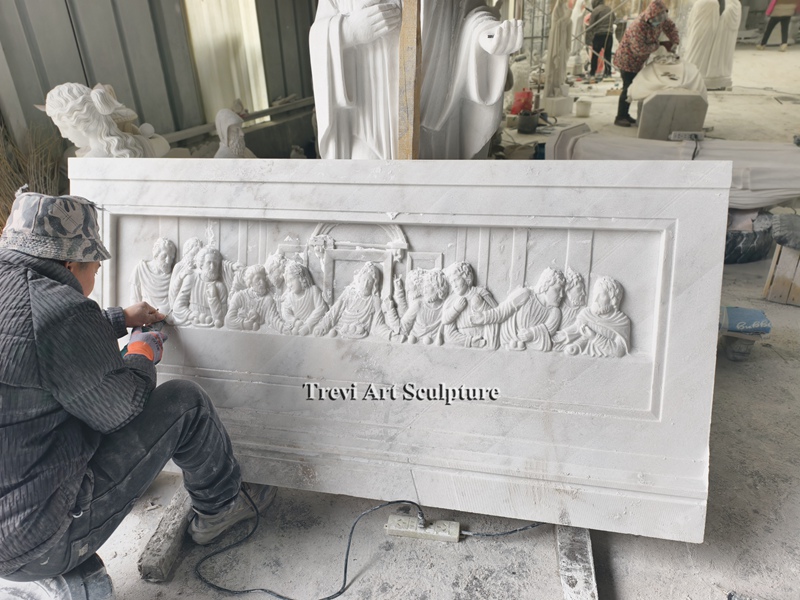
For sculpture manufacturers, marble offers an unusually broad range of possibilities.
It can be used for both artistic sculpture and architectural stonework, allowing a single material to carry a complete project from individual statues to surrounding landscape elements.
For example, a villa project could include:
- Marble entrance columns
- Life-size garden statues
- A large marble fountain
- Decorative planters
- Marble benches
- A gazebo or pavilion
- Pedestals and architectural ornaments
Using marble throughout the project can create a unified visual style.
For churches and religious institutions, the same principle applies. A project may combine Virgin Mary or saint statues with marble columns, altars, fountains, benches, or other architectural elements.
This versatility is one of the main reasons marble remains one of the preferred materials for custom stone sculpture.

Choosing the Right Stone for Your Sculpture
There is no single stone that is best for every project.
Choose marble when you want fine details, elegant surfaces, classical figures, religious sculpture, or a combination of sculpture and architecture.
Choose granite when exceptional outdoor durability and structural strength are the highest priorities.
Choose sandstone when you want a warm, earthy, architectural, or rustic appearance.
Choose travertine when you prefer natural textures and warm tones for fountains, planters, columns, and landscape architecture.
For buyers commissioning custom sculptures, the most important factors are the design, size, level of detail, installation environment, desired appearance, and budget.
Custom Marble Sculpture from a Professional Factory
Our marble sculpture factory specializes in custom natural stone sculpture for international projects. We produce a wide range of marble human figures, religious statues, fountains, gazebos, planters, garden benches, architectural columns, and other custom stonework.
Our sculptors can work from drawings, photographs, 3D references, clay models, or existing artworks to develop custom marble sculptures for churches, private estates, gardens, hotels, commercial landscapes, and architectural projects.
Whether you need a life-size marble statue, a large sculptural fountain, a classical gazebo, a set of architectural columns, or custom marble garden furniture, we can help you select a suitable stone and develop the design according to your project requirements.
Contact us to discuss your sculpture project, stone selection, size, design, and quotation.