Elephants have long been among the most popular subjects for animal sculptures worldwide. Across different countries and cultures, elephants symbolize strength and wisdom, and are also regarded as emblems of good fortune, wealth, and protection. Whether in Asian temples, European estates, or modern hotels and private gardens, elephant sculptures hold significant decorative and cultural importance. Elephant sculptures in different poses often convey distinct meanings and can influence the energy and atmosphere of the entire space.
Based on our years of experience in sculpture production, we view elephant sculptures not merely as landscape art pieces but as cultural symbols imbued with blessings. In the following sections, we will explore the meanings behind elephant sculptures in various poses and explain how they bring good fortune and a sense of sophistication to buildings and gardens.
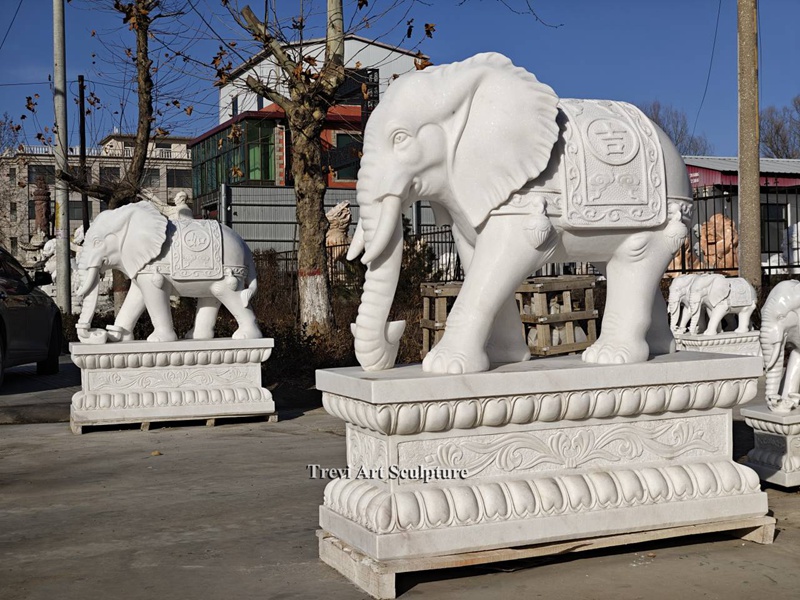
Different Elephant Sculpture Poses and Their Meanings
Different Elephant Sculpture Poses and Their Symbolic Meanings
| Elephant Sculpture Pose | Symbolic Meaning | Typical Placement / Application | Additional Notes |
| Trunk Up | Welcoming good fortune, accumulation of wealth, career success, and positive energy | Entrances of homes, hotels, and commercial buildings | Absorbs blessings; popular in Asian cultures; example: pair at restaurant entrance in Malaysia |
| Trunk Down | Stability, wisdom, inner strength, groundedness | Classical estates, European-style gardens | Appeals to European and American clients; conveys calm and reliability |
| Mother and Baby | Family happiness, maternal love, protection, and family heritage | Private residences, family gardens, amusement parks | Conveys warmth and approachability; ideal for intimate, family-focused spaces |
| Sitting Elephant | Peace, good fortune, spiritual strength | Temples, meditation spaces, Zen gardens, Oriental-style gardens | Represents serenity and dignity; white marble enhances tranquility and purity |
| Fortune / Auspicious / Elephant Carrying Objects | Fortune, auspicious symbols, prosperity, and cultural heritage | Varies depending on the object (temples, gardens, homes) | Includes elephants with inscriptions, treasure vases, and lighthouses, deeply rooted in traditional culture |
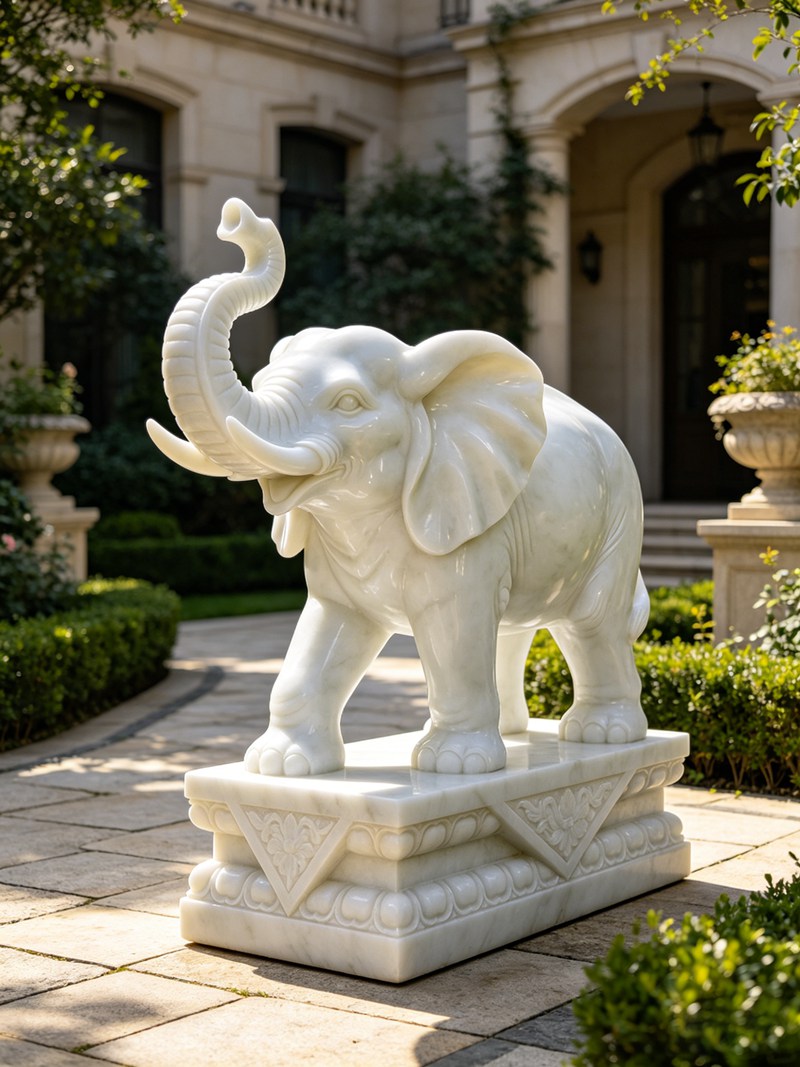
Trunk Up Elephant Sculpture
The “Elephant with Raised Trunk” is currently one of the most popular poses for elephant sculptures, particularly favored by Asian customers. In many Asian cultures, an elephant raising its trunk is seen as a gesture of welcoming good fortune; it symbolizes wealth accumulation, career success, and positive energy. Many believe that an elephant raising its trunk high is like absorbing good fortune and blessings, so elephants in this pose are often placed at the entrances of homes, in front of hotels, or around commercial buildings in the hope of bringing prosperity and luck to the entire space.
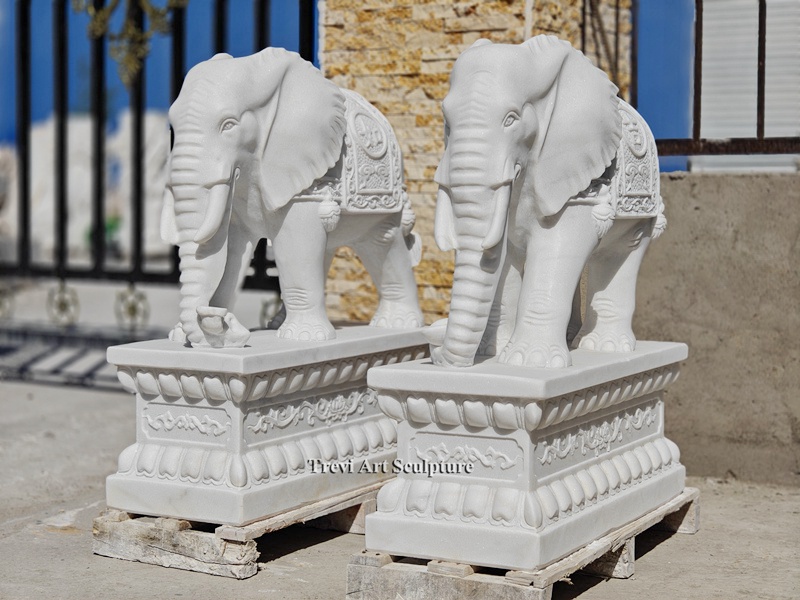
We once created a pair of marble “Elephant with Raised Trunk” sculptures for a client in Malaysia, who placed them on either side of the entrance to his restaurant.
Trunk Down Elephant Sculpture
Compared to the trunk-up elephant, the trunk-down elephant sculpture appears more composed and substantial. This pose typically represents stability, wisdom, and inner strength. In some cultures, the trunk-down elephant is seen as a symbol of down-to-earthness and the accumulation of wealth, giving it a calmer and more reliable feel.
Many clients in Europe and the United States prefer this style because it better suits the atmosphere of classical estates and European-style gardens.
Elephant Mother and Baby Sculpture
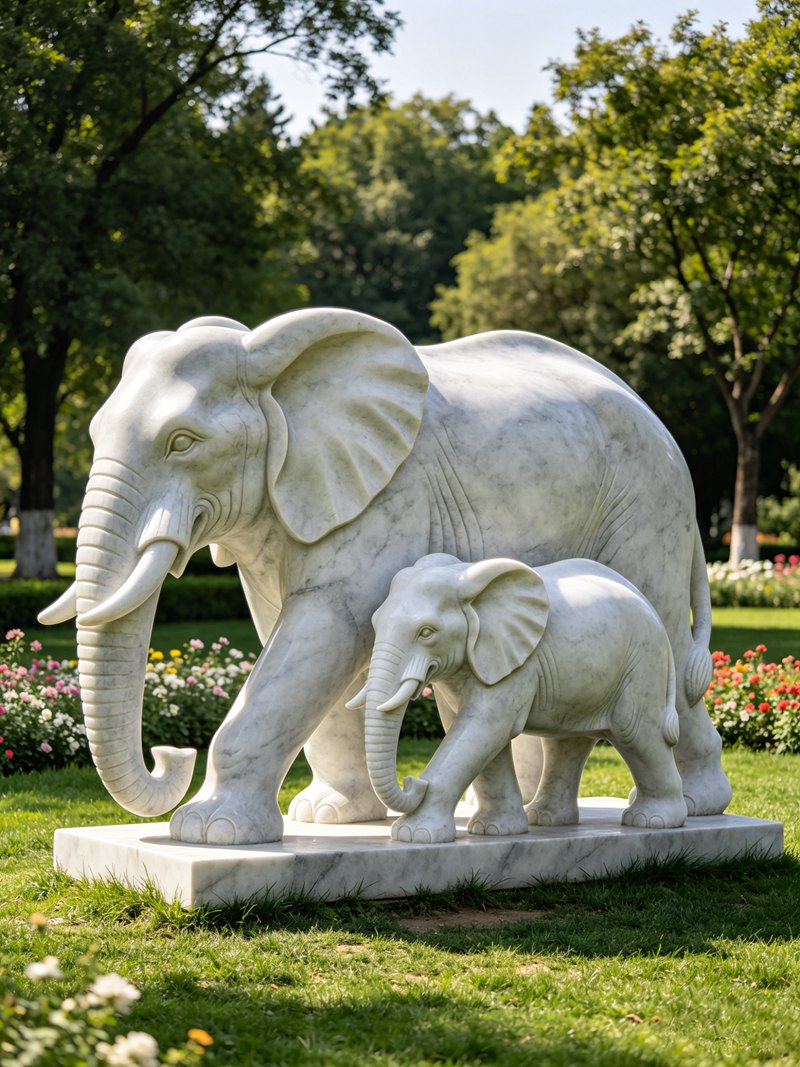
Mother-and-baby elephant sculptures have grown increasingly popular in the home garden market in recent years. These sculptures typically represent family happiness, maternal love, protection, and family heritage. Compared to large, imposing elephant sculptures, the mother-and-baby theme conveys a warmer and more approachable feeling, making it particularly suitable for private residences, family gardens, or amusement parks.
Sitting Elephant Sculpture
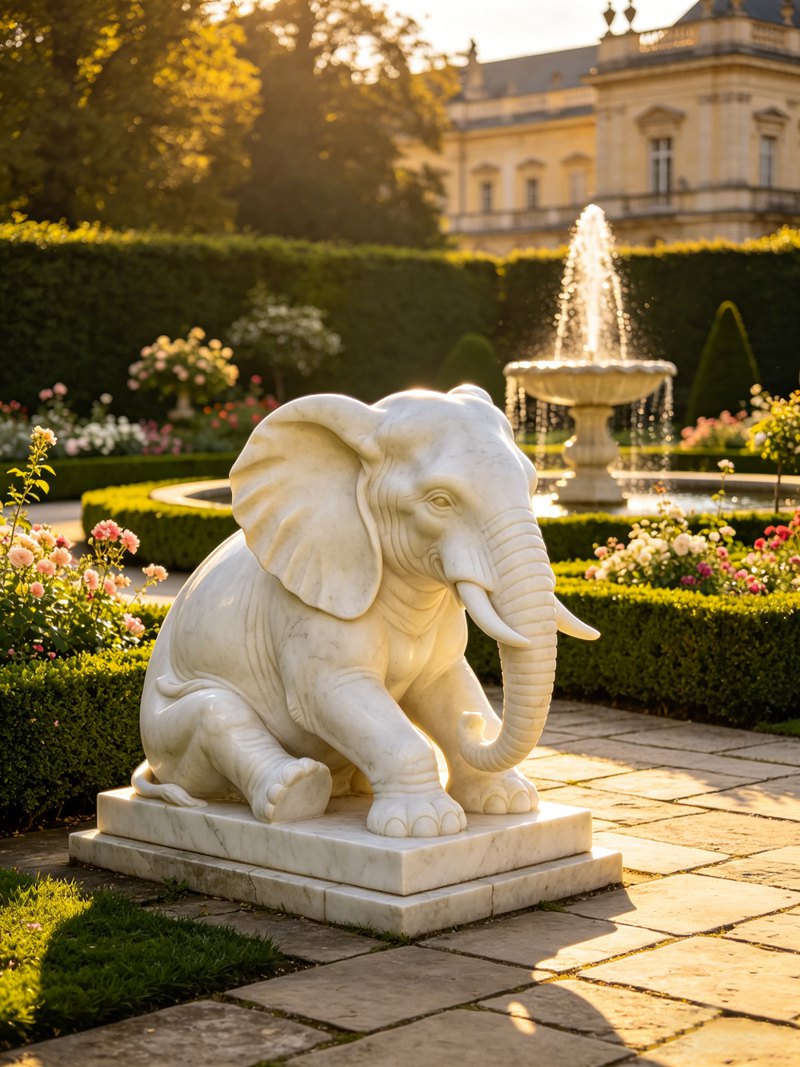
Although sitting elephant sculptures are not as common as those depicting elephants with their trunks raised, they possess a very distinctive Eastern charm. This pose typically symbolizes peace, good fortune, and spiritual strength. In some religious cultures, elephants are considered sacred, which is why sitting elephant sculptures are often placed in temples, meditation spaces, or Zen gardens.
Many clients specifically choose this serene and dignified elephant sculpture when designing an Oriental-style garden. White marble, in particular, can imbue the entire space with a sense of tranquility and purity.
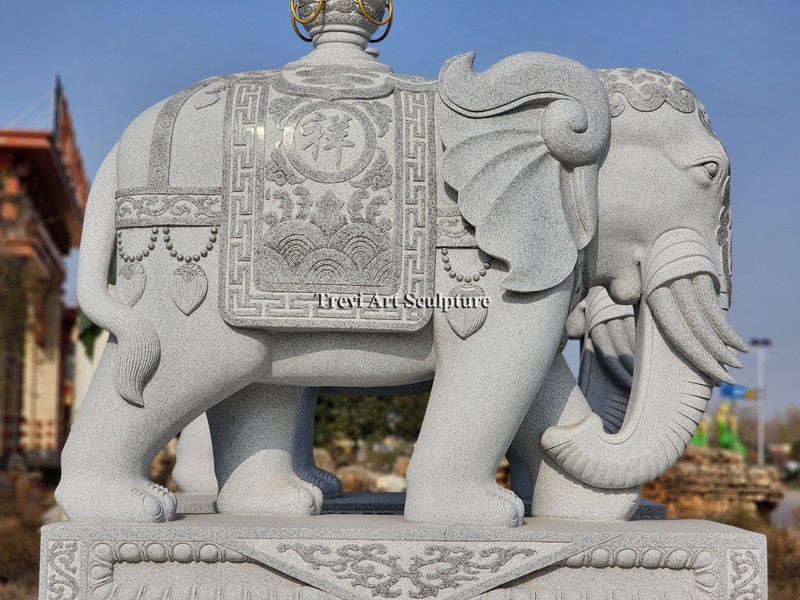
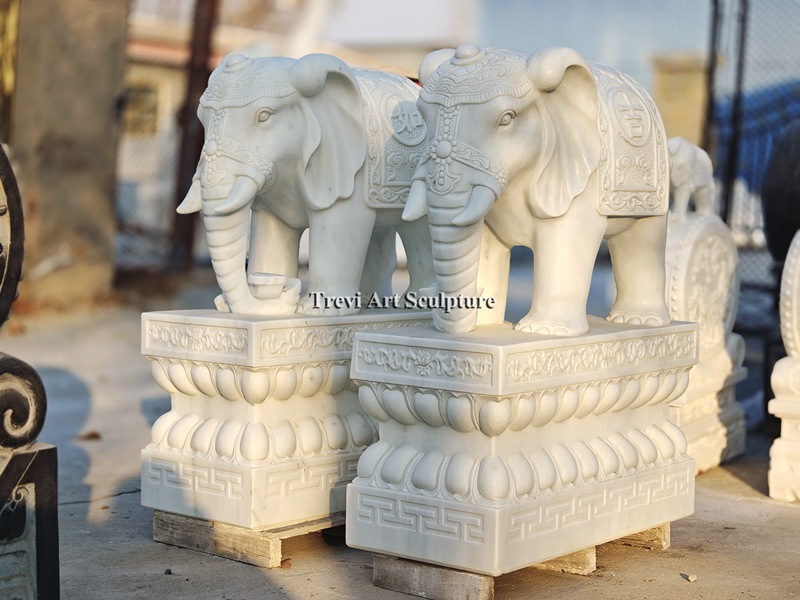
In addition to the trunk—a prominent symbolic feature—the inscriptions carved on the elephant’s body or the objects it carries on its back also hold rich symbolic meanings. For example, there are “Fortune Elephant” sculptures (bearing the Chinese character for “fortune”), “Auspicious Elephant” sculptures (bearing auspicious symbols), elephants carrying lighthouses, and elephants carrying treasure vases, among others. These forms are deeply rooted in ancient traditional culture, and their inner meanings have continually evolved and deepened throughout the progression of human civilization.
Large marble elephant sculptures come in a variety of forms, offering us a wealth of options. However, given that each carries distinct symbolic meanings, we must not make choices arbitrarily but should carefully consider the specific environment and requirements. The appropriate shape, size, and other specifications should be selected based on individual needs, the surrounding environment, and other relevant factors.
How to Place Elephant Sculptures for Good Luck
Place Elephant Sculptures at the Entrance
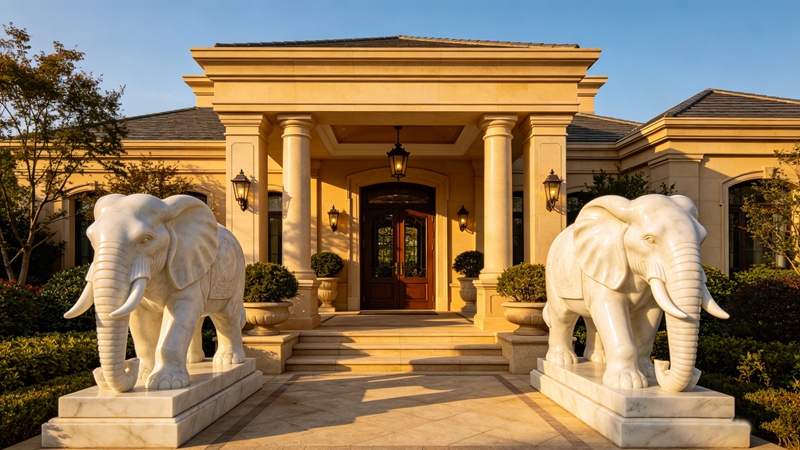
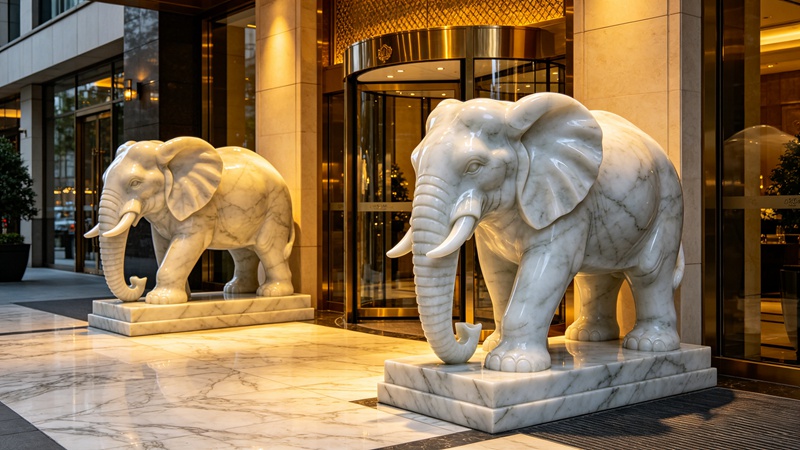
In our client projects, the most common placement for elephant sculptures is at the entrance of a building. Many clients prefer to place a pair of elephant sculptures on either side of the main gate, as this arrangement not only enhances the building’s grandeur but is also believed to symbolize protection and the welcoming of good fortune. Particularly in large villas, hotels, and estate projects, symmetrically placed elephant sculptures lend the entire entrance a more solemn and sophisticated appearance.
Face the Elephant Toward the Interior
Many Asian clients pay special attention to the orientation of elephant sculptures when commissioning them. In some traditional cultures, an elephant facing inward is believed to attract wealth and good fortune, making it a common choice for residential and commercial spaces. Conversely, an elephant facing outward is seen more as a symbol of protection and the warding off of negative energy.
We once had a Thai client who, while reviewing the installation drawings, specifically requested that the trunk-raising elephant be oriented toward the center of the courtyard, as they believed this would allow good fortune to gather throughout the family’s living space.
Use Elephant Sculptures in Gardens and Landscapes
Elephant sculptures are exceptionally well-suited for gardens and landscape design. Compared to ordinary decorations, large stone elephant sculptures can instantly elevate the spatial depth of a space and create a strong visual focal point. Especially when set against greenery, water features, and European-style architecture, elephant sculptures create a classic, sophisticated effect.
As a sculpture manufacturer, we’ve found that many clients initially purchase just a single elephant sculpture. Still, after the project is completed, they often add fountains, Roman columns, or figurative sculptures to create a unified artistic style for the entire landscape.
Elephant Sculptures in Commercial Spaces
Today, an increasing number of hotels, resorts, and commercial projects are incorporating large elephant sculptures. In addition to the elephant’s symbolic associations with good luck and hospitality, these large-scale sculptures enhance a space’s distinctiveness and attract visitors to take photos.
Why Marble Elephant Sculptures Are Popular
Natural marble has long been one of the most classic materials for elephant sculptures. Compared to ordinary decorative materials, marble is not only more durable but also features natural veining and a substantial texture, making it particularly suitable for high-end architecture and outdoor landscapes.
As a sculpture workshop, we remain committed to hand-carving techniques, as the unique veining of natural stone ensures that every piece is one-of-a-kind. Many clients are captivated by the natural patterns and luster of the stone the first time they see a completed elephant sculpture.
Even after years of outdoor exposure, high-quality marble sculptures retain their timeless artistic appeal—a key reason for their enduring popularity among clients worldwide.
Custom Elephant Sculpture Service
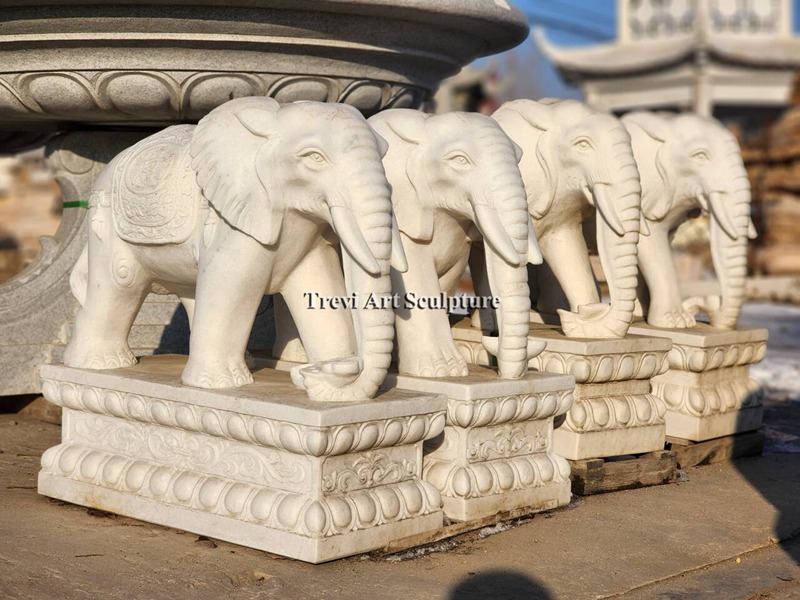
Our factory offers custom elephant sculpture services in a variety of styles and sizes.
Whether for private gardens, commercial plazas, or religious spaces, we provide comprehensive solutions—including design, carving, packaging, and shipping—tailored to your needs.
If you are seeking a high-quality elephant sculpture, please contact us for more design options and the latest quotes.
FAQ
What does an elephant sculpture symbolize?
Elephant sculptures typically symbolize wisdom, strength, wealth, good fortune, and protection. In various cultures, they are also regarded as symbols of family happiness and professional success.
Is a trunk-up elephant considered good luck?
Yes. In many Asian cultures, an elephant with its trunk raised is believed to bring good luck, wealth, and positive energy, making it one of the most popular poses for elephant sculptures.
Where should elephant statues be placed?
Elephant sculptures are typically well-suited for placement at building entrances, in gardens, around fountains, and in commercial spaces. Many clients choose to display them in pairs to enhance the grandeur of the space.
Why are elephant sculptures popular in hotels?
Because elephants symbolize welcome, luck, and strength, large sculptures also enhance the visual impact of the architecture and serve as a scenic focal point to attract visitors.
Are marble elephant sculptures durable?
Natural marble is highly durable and well-suited for long-term outdoor display. With proper maintenance, marble sculptures can last for many years.
Can elephant sculptures be customized?
Absolutely. We can customize elephant sculptures in various sizes, materials, colors, and poses to match different architectural and landscape styles.