Why do statues of Dionysus appear so often in classical gardens, villas, palaces and grand estates?
The answer is that Dionysus was never only the “God of Wine.” He was a god of vineyards and vegetation, of fertility and celebration, of pleasure, theater, music and festivity. In Greek and Roman art he can appear as a graceful, youthful god or as a mature, bearded figure. Around him gather grapes, ivy, drinking cups, the thyrsus (his ivy-wrapped staff), panthers, satyrs and maenads.
That rich visual language made Dionysus more than a mythological figure. He became a powerful decorative subject for sculpture and architecture, and he remains one today. The Greek god statues of Dionysus (known to the Romans as Bacchus) continue to inspire marble sculptors and collectors around the world.
Who Was Dionysus? The Greek God Behind the Sculpture
Dionysus, God of Wine and Celebration
- Greek name:Dionysus / Dionysos
- Roman name:Bacchus
- Parents:Zeus and Semele
- Domains:wine and viticulture, vegetation and fertility, festivity and pleasure, theater
Museum collections such as the National Archaeological Museum in Athens also link Dionysus with nature, vegetation, winemaking, ecstatic dance and drama. This is why a Dionysus marble statue suits so many settings, from a dining terrace to a vineyard courtyard.
The Symbols of Dionysus
Knowing his symbols helps you read any Dionysus sculpture, and helps you design your own.
- Grapes and grape vines:wine, harvest and the abundance of nature.
- Thyrsus:the ivy-wrapped staff, one of his most recognizable emblems.
- Drinking cup:the link to wine and the banquet.
- Ivy crown:a classic part of Bacchus imagery.
- Panther:a wild companion who appears in many sculptural groups.
- Satyrs and maenads:his lively followers and the spirit of the Bacchic procession.
Each of these elements can become a design reference for a modern marble Bacchus statue.
8 Famous Dionysus Sculptures You Should Know
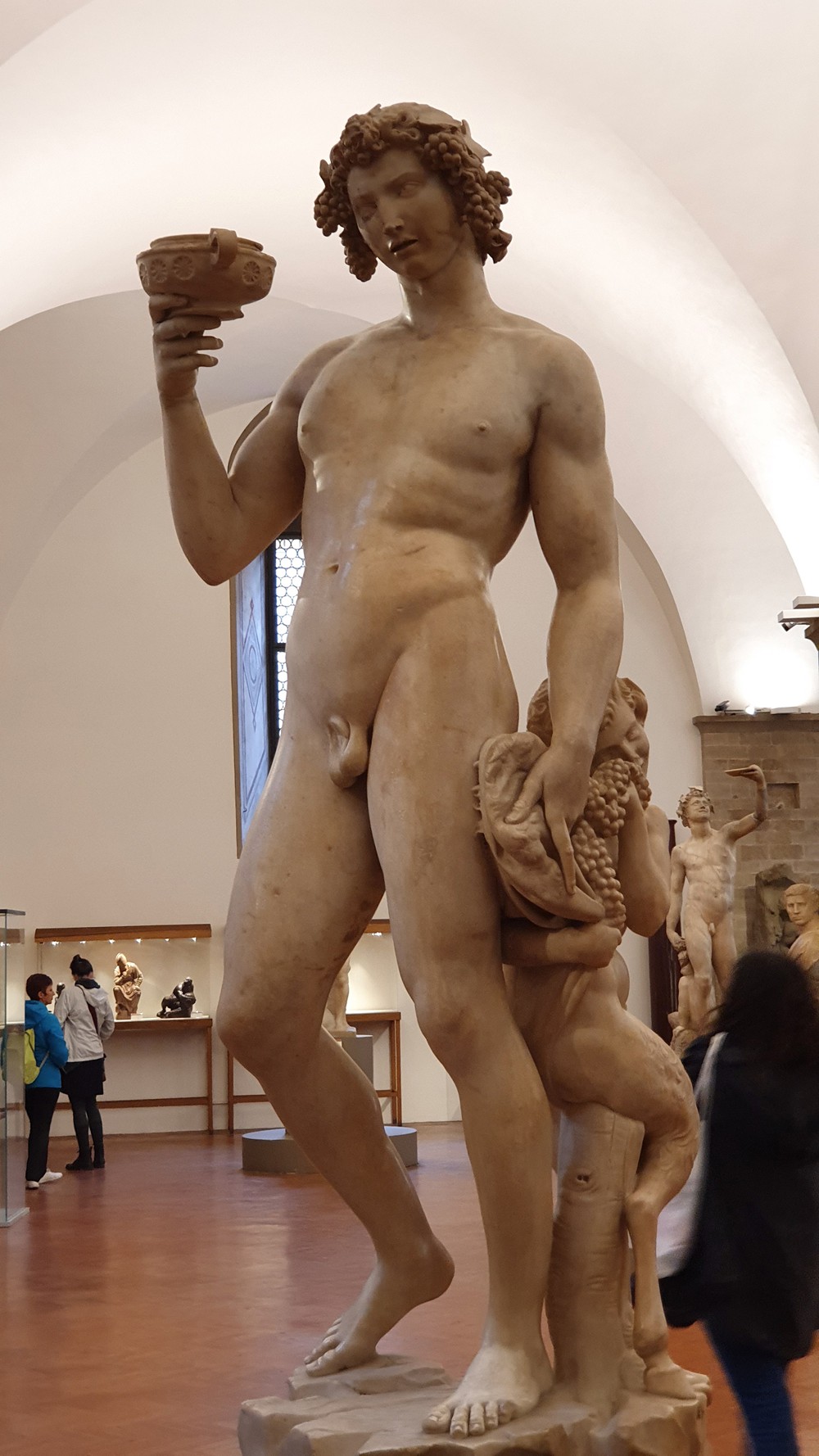
1. Michelangelo’s Bacchus (Museo Nazionale del Bargello, Florence)
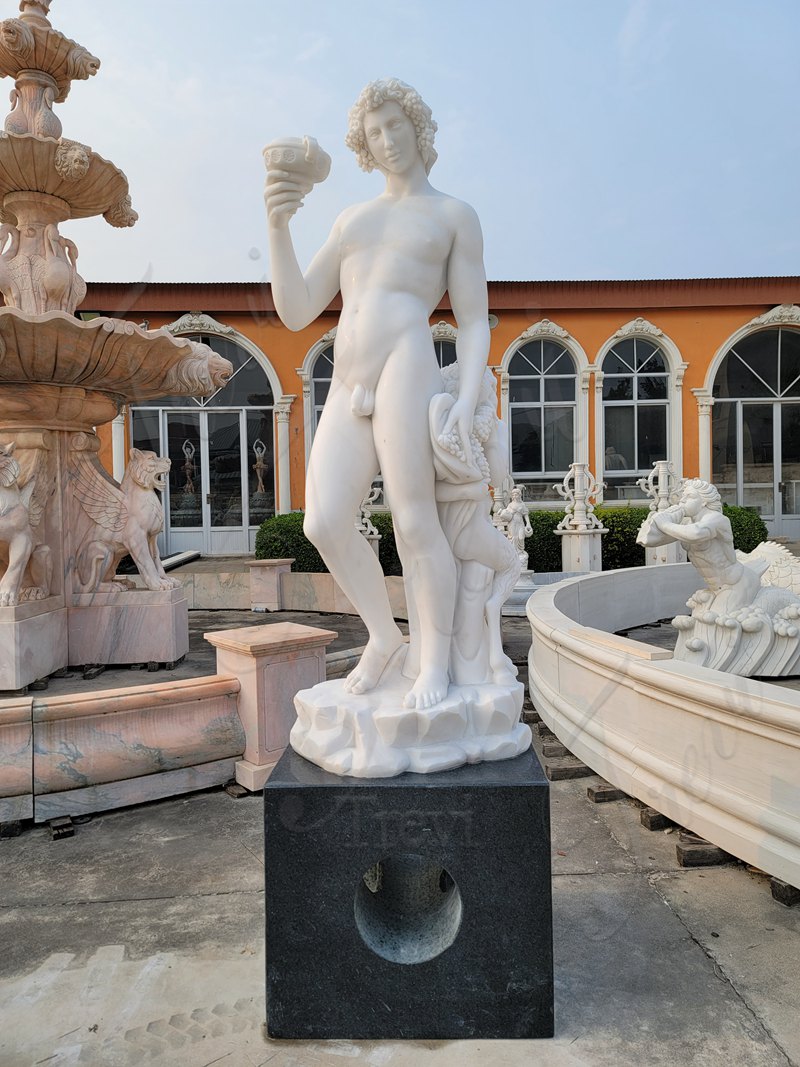
Carved around 1496–97 when Michelangelo was in his early twenties, this is one of the most celebrated Bacchus marble statues in the world. The god sways slightly as he lifts a cup, with a crown of grape clusters in his hair. A small satyr at his side nibbles at the grapes, bringing humor and movement to the composition. It is a landmark of the Renaissance revival of classical mythology.
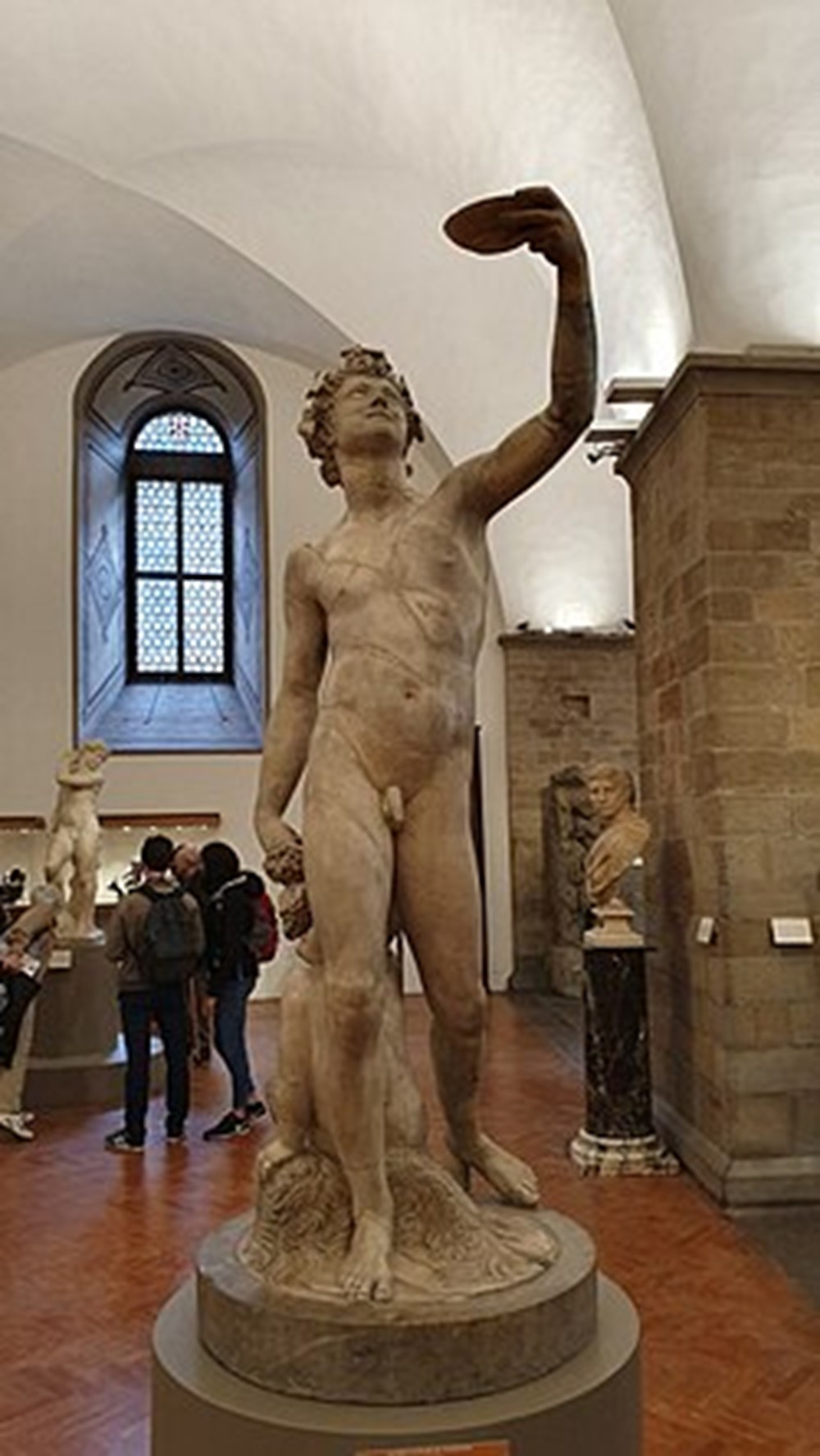
2. Jacopo Sansovino’s Bacchus (Museo Nazionale del Bargello, Florence)
Sansovino’s Bacchus, made in the early 16th century, takes a different approach from Michelangelo’s. The figure is more upright and youthful. One arm is raised high with a cup, the other hand holds grapes, and the head is wreathed in vine leaves. It shows how Renaissance sculptors reinterpreted the same god in very different ways.
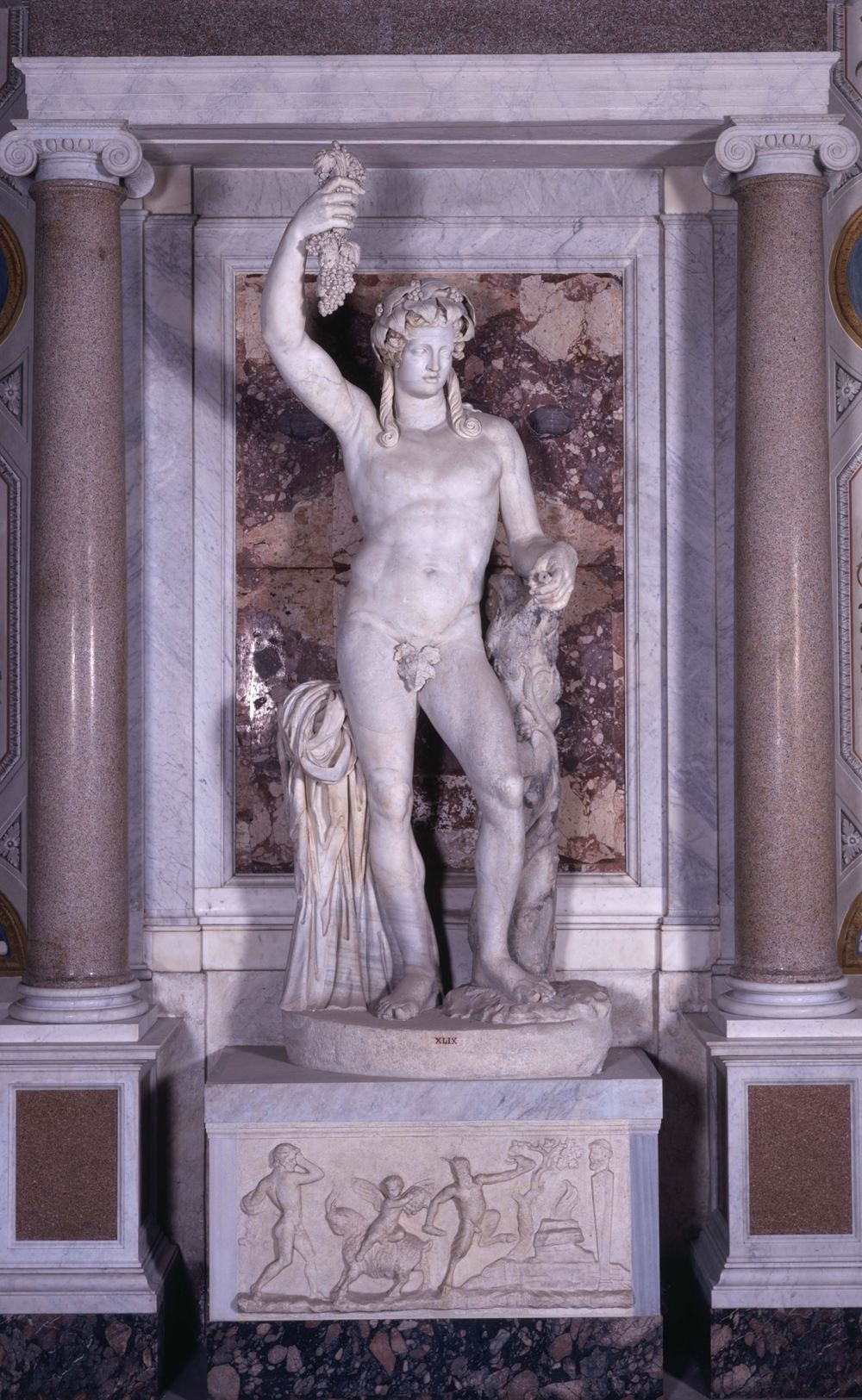
3. Colossal Statue of Dionysus (Galleria Borghese, Mariano Rossi Hall, Rome)
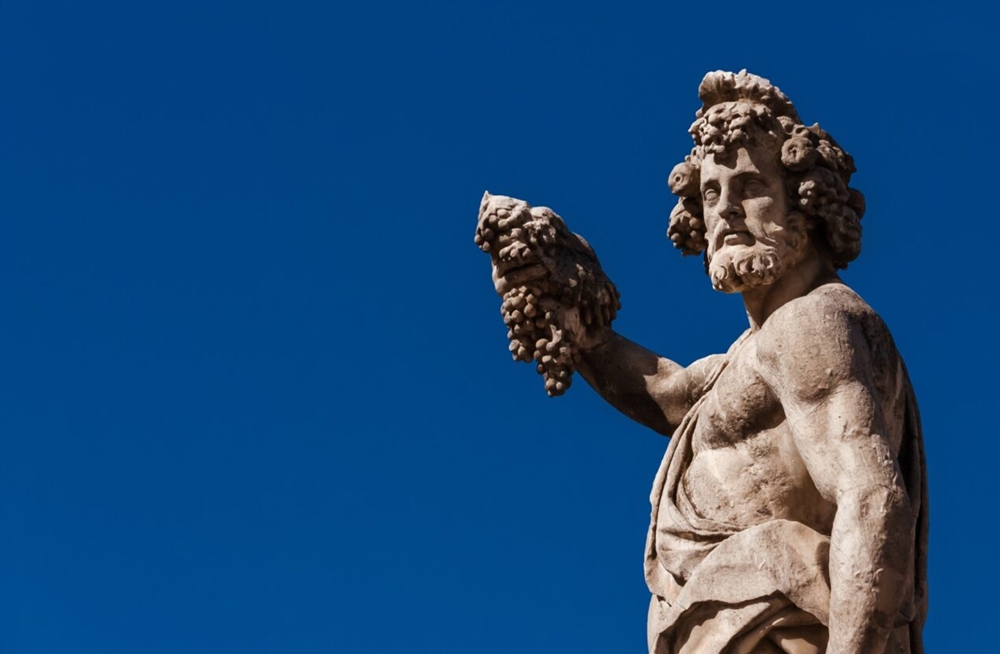
This Roman marble shows Dionysus as a graceful, youthful god. He holds a bunch of grapes high in one hand, wears a wreath of grapes and ivy, and has long curling locks falling to his shoulders. A vine-wrapped trunk and draped cloth support the figure, and the pedestal carries a relief of satyrs and a winged putto riding a goat. Its setting of columns and colored marbles shows how well Dionysus sculpture suits grand architecture.
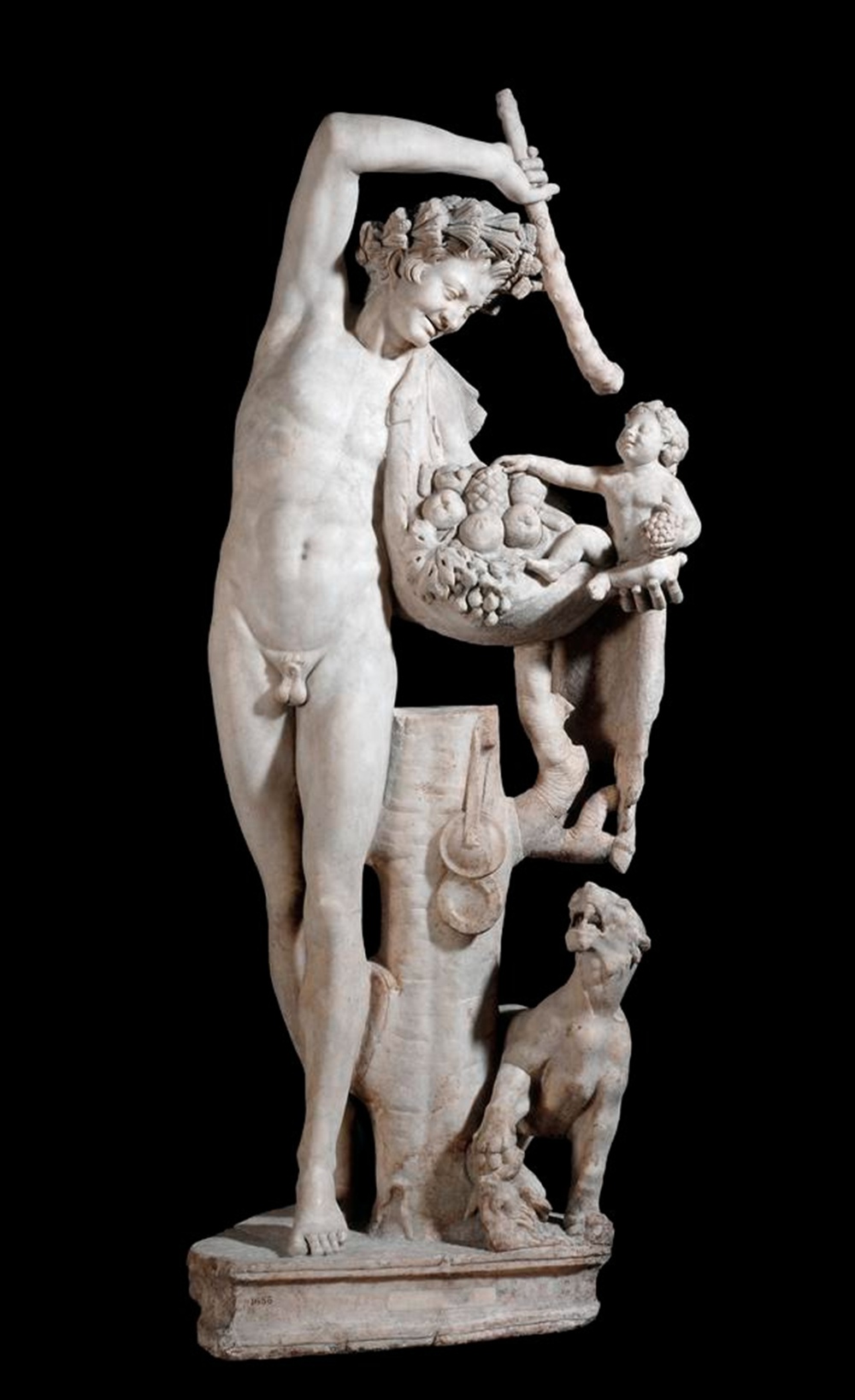
4. Satyr Playing with the Infant Bacchus (British Museum, London)
This Roman marble group is full of narrative. A laughing satyr, crowned with a leafy wreath, cradles the infant Bacchus in a fold of cloth heaped with fruit and grapes. Cymbals hang from the tree trunk, and a panther looks up from below. It is a good example of how a single sculpture can combine myth, music, abundance and humor.
5. Old Bacchus (Vatican Museums)
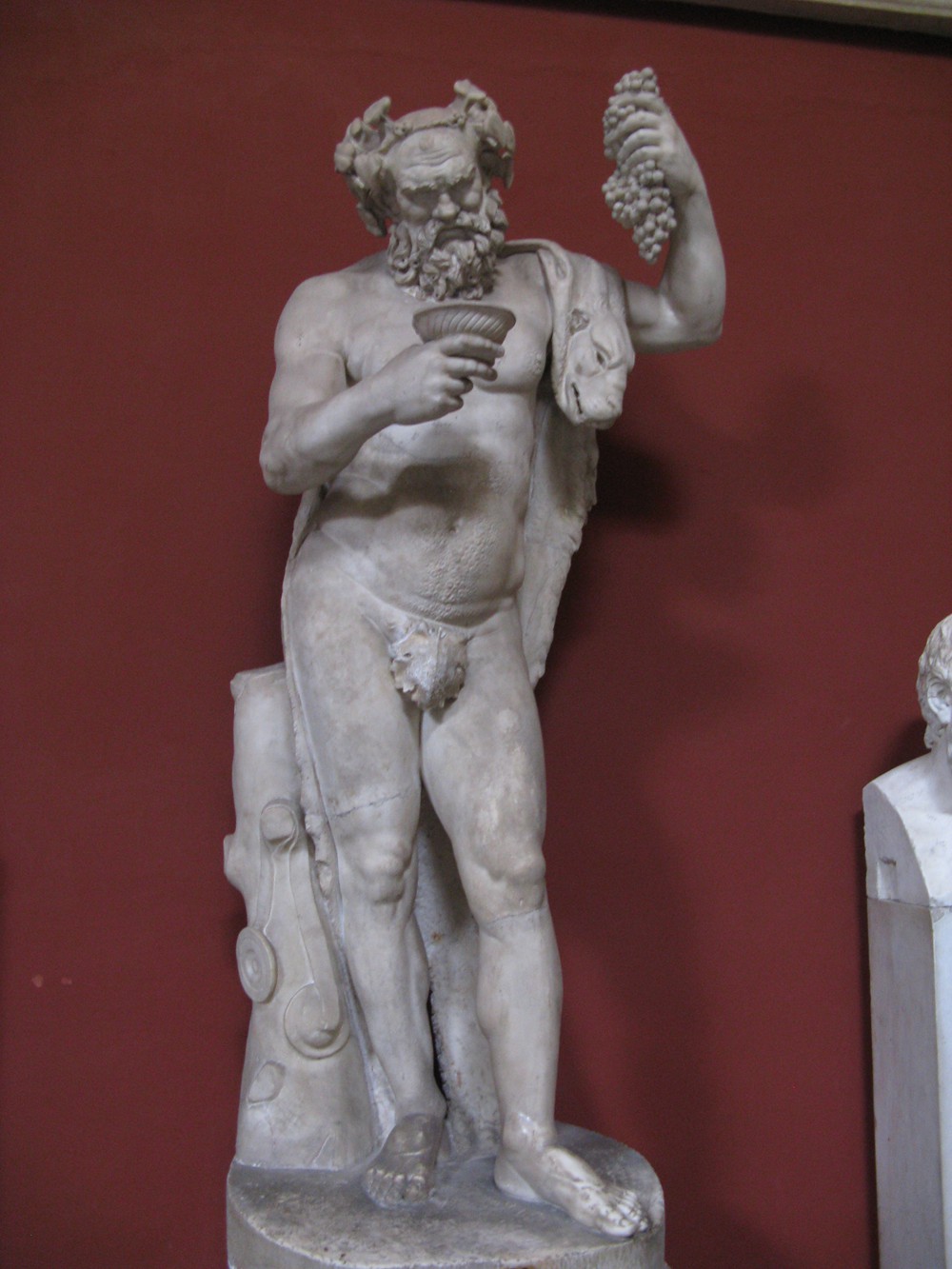
Not every Dionysus is a beautiful youth. In earlier Greek tradition the god was often shown mature and bearded, and this Bacchus statue follows that tradition. He has an ivy wreath, a full beard, a cup in one hand and a cluster of grapes in the other. The carved hair, beard and animal-skin drapery show how marble can capture texture as well as anatomy.
6. Dionysus with a Satyr, from the Via Latina (Vatican Museums, Rome)
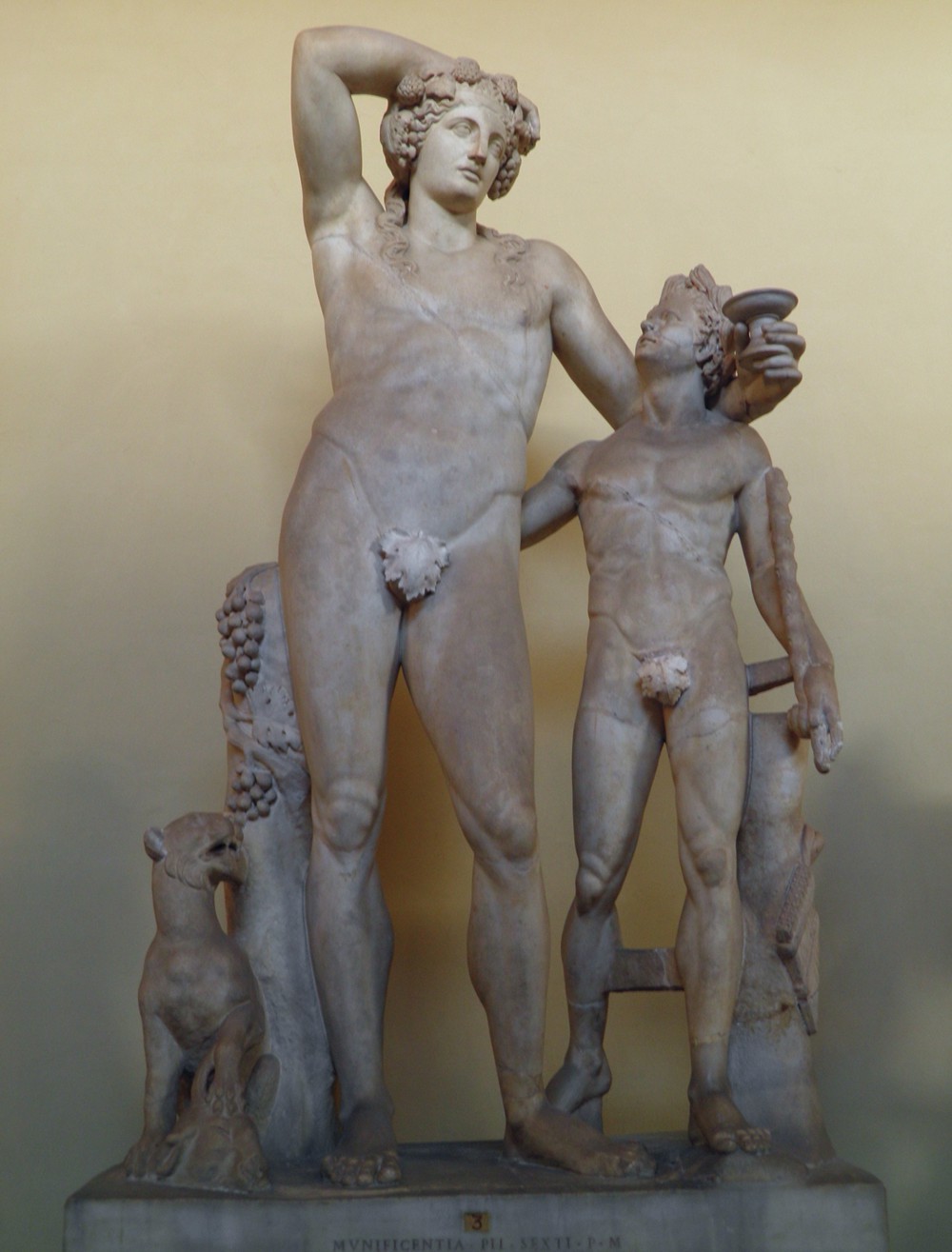
Dated to the second half of the 2nd century AD, this group shows the god resting his arm on a young satyr who raises a cup toward him. A vine-covered trunk with hanging grapes and a panther at the base complete the scene. It shows how Roman sculptors turned Dionysus into a full decorative composition, and it is a strong model for villa and garden projects.
7. Statue of Bacchus, Unknown Roman Artist
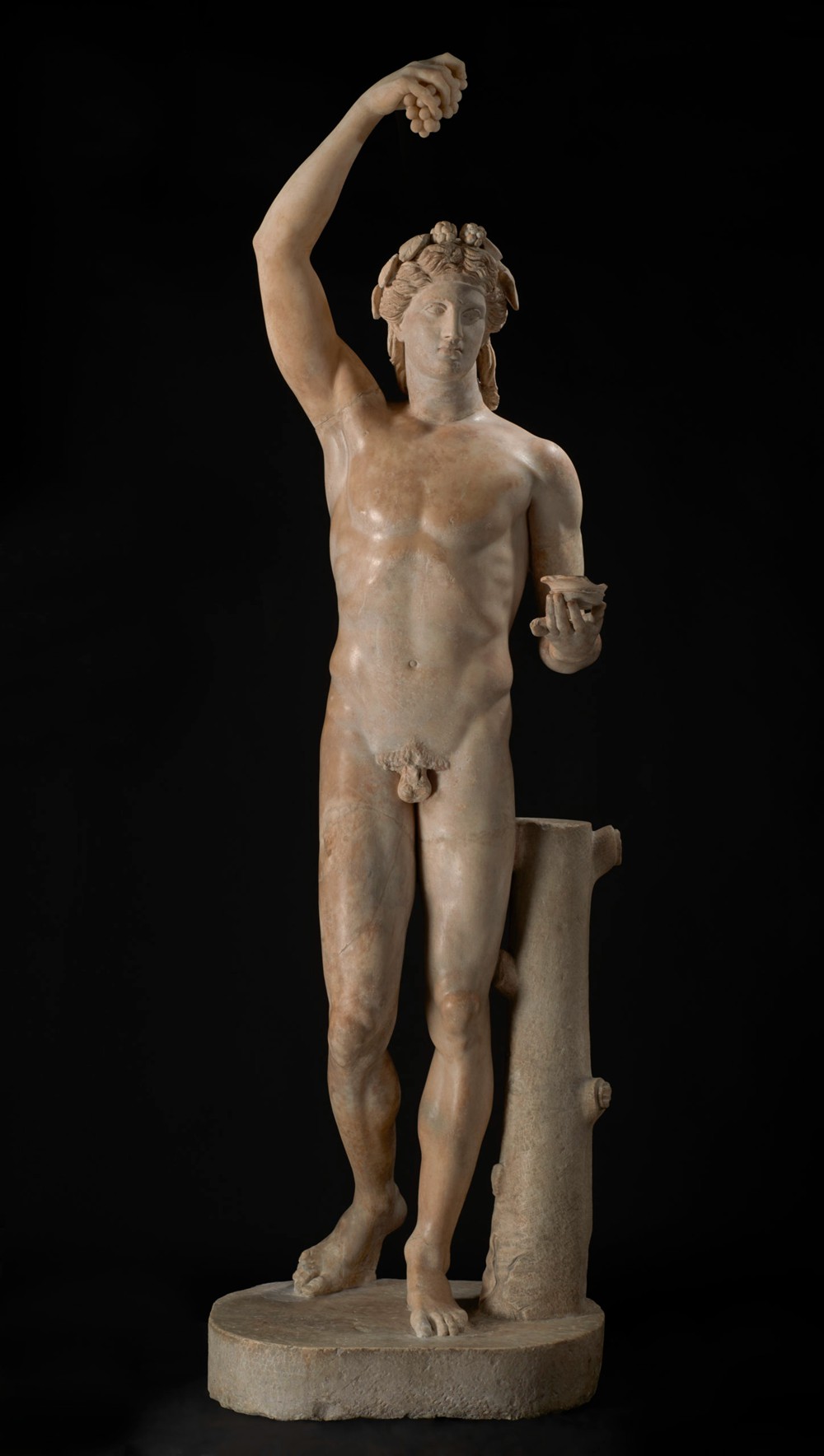
This elegant Roman-style figure stands in a relaxed pose, one arm stretched overhead holding grapes, the other hand holding a small cup. The smooth, warm-toned marble shows the classical ideal of the youthful body. Its simple tree-trunk support and clean silhouette make it easy to adapt for contemporary interiors and gardens.
8. Dionysos Leaning on a Female Figure (Metropolitan Museum of Art, New York)
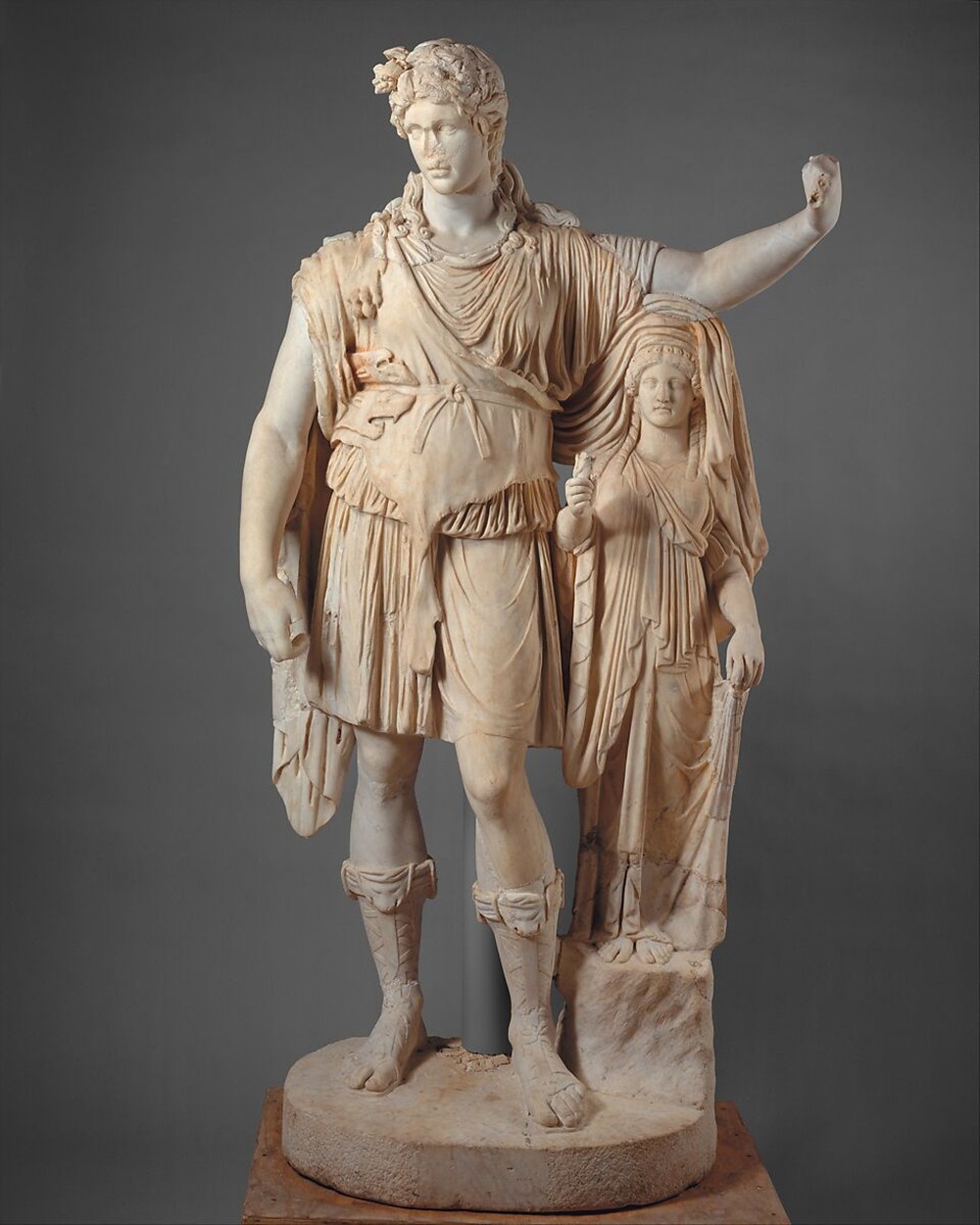
Here Dionysus appears fully dressed in a richly folded tunic, belted and draped, with high decorated boots and a vine-leaf wreath. He leans affectionately on a smaller draped female companion. The detailed drapery shows how marble can suggest fabric, movement and depth, and it demonstrates that Greek mythology statues of Dionysus come in many forms beyond the nude figure holding a cup.
Where Can Marble Dionysus Statues Be Used?
Castle Gardens
Dionysus suits castle gardens, where stone sculpture, clipped hedges and stone steps carry the same classical spirit. A marble Dionysus can anchor a focal point at the end of a garden avenue.
Private Villas and Estates
Large residences, courtyards and estates use marble Greek statues to give a sense of heritage and cultured leisure.
Wine Cellars and Vineyards
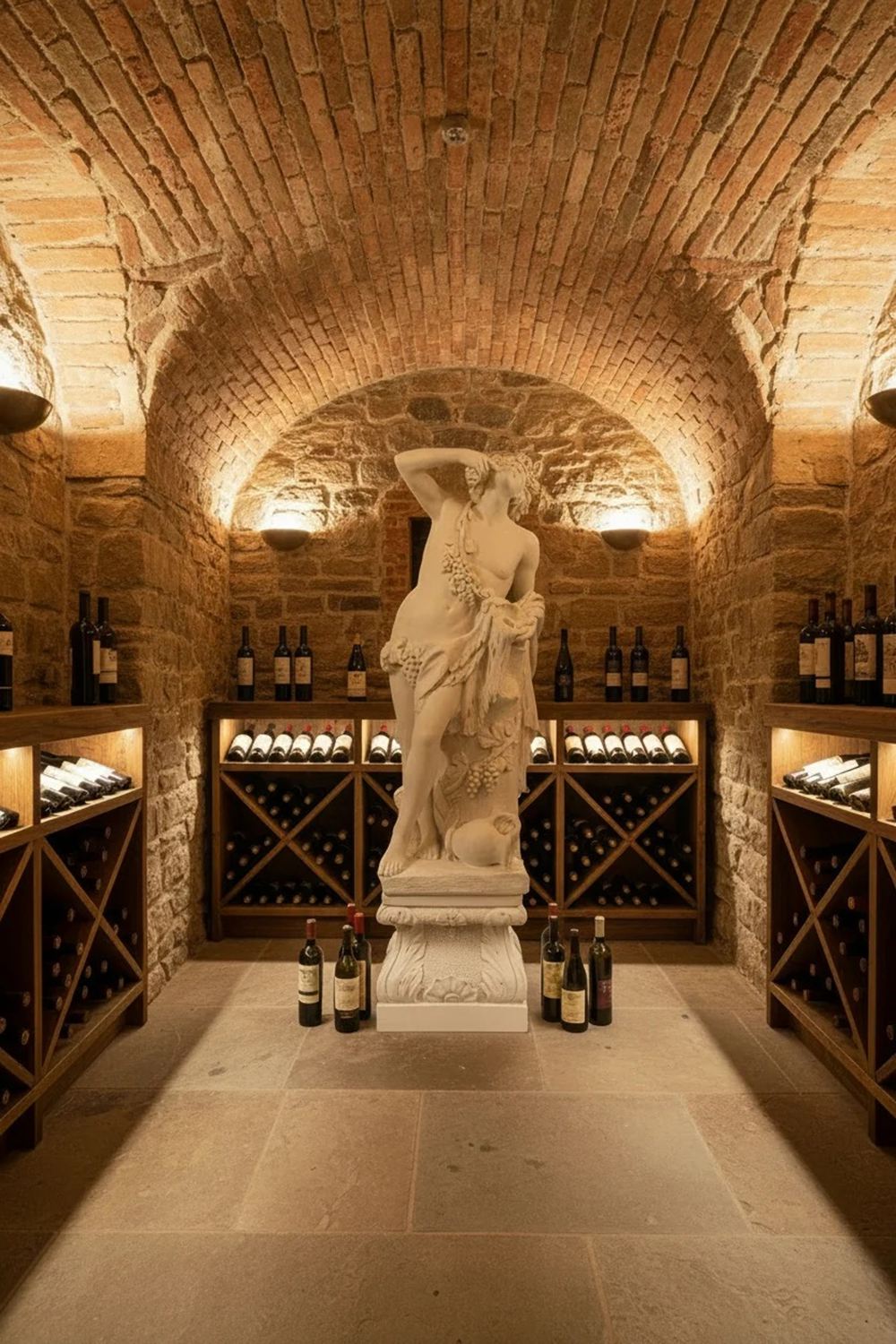
Few settings match the theme as naturally as a vineyard or cellar. A Bacchus statue at the entrance of a winery sets its identity at once.
Hotels and Luxury Resorts
A classical Dionysus sculpture in a lobby, courtyard or pool terrace brings a timeless Mediterranean atmosphere.
Garden Fountains
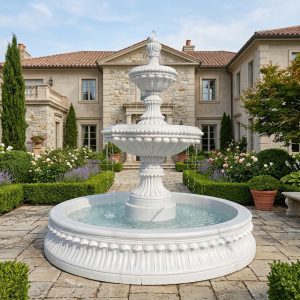
Dionysus pairs well with water. A fountain with grapevines, putti or a panther reflects the abundance and vitality of the god.
Restaurants and Wine-Tasting Spaces
Dionysus is especially fitting for:
- Italian restaurants
- French restaurants
- Mediterranean restaurants
- Wine bars
- Winery tasting rooms
Why Marble Is an Ideal Material for Dionysus Statues
Marble has been the sculptor’s material of choice for Greek mythology statues since antiquity, for good reasons:
- It captures the smoothness of the human body.
- Fine carving allows detailed facial features.
- Hair and curlscan be deeply carved.
- Draperycan show delicate folds.
- Grapes and vine leavescan be individually carved.
- Natural veiningmakes every piece unique.
Common stone choices include:
- White marble:a clean, classical look.
- Carrara marble:a refined grain and the traditional stone of Italian sculpture.
- Statuary marble:a high-purity, fine-grained stone for detailed figures.
- Beige marble:a warm tone that suits Mediterranean settings.
- Grey marble:a more dramatic, contemporary option.
Custom Marble Dionysus Statues from Our Sculpture Factory
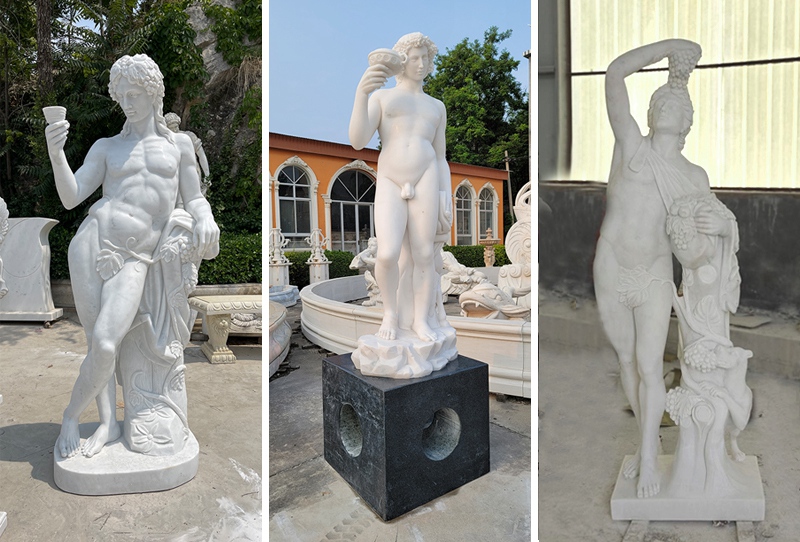
We are a marble sculpture factory, not a general decor supplier. Our sculptors hand-carve Dionysus and Bacchus statues from the stone up, whether you want a faithful reproduction of a museum masterpiece or an original design.
We can work with you on:
- Classical reproductions, such as Michelangelo’s Bacchus or a Roman Dionysus with satyr
- Custom designsadapted to your architecture and site
- Size and pose, from life-size figures to monumental pieces
- Marble type and finish, for indoor or outdoor use
- Added details, such as panthers, vines, cups, thyrsus and fountain bases
We also provide export packaging and worldwide shipping.
Bring Classical Mythology into Your Space with a Custom Marble Dionysus
From ancient Greek mythology to Roman gardens and European estates, Dionysus has remained a powerful subject in classical sculpture.
Today, a marble Dionysus statue can be more than a reproduction of an ancient figure. It can be a custom architectural artwork designed specifically for a castle, villa, garden, winery, hotel or private estate.
If you are looking for a custom marble Dionysus statue, send us your preferred design, size, marble type or reference image. Our marble sculpture factory can create hand-carved Dionysus statues for indoor and outdoor projects and provide export packaging and worldwide shipping.