Placement guide · Indoor & outdoor marble figures
Where to Place a Marble Figure Statue: A Practical Guide for Homes and Gardens
A good location makes a figure easy to see, gives it room to breathe, and supports the stone safely. Start with the statue’s actual size, then consider viewing distance, traffic, the base, and the conditions around it.

Where Can You Place a Marble Statue?
A marble figure can work in a living room, entry hall, covered terrace, courtyard, garden path, or open lawn. The question is not simply whether the statue fits on the floor. Ask whether a person can see its face and silhouette from the usual approach, move around it comfortably, and maintain it without difficulty.
Scale changes the answer. A figure meant for a side table may disappear at the end of a long driveway, while a life-size group can overwhelm a narrow foyer. The size guide on Trevi’s marble statues collection page offers these starting ranges:
| Approximate figure height | Places to consider | What to check |
|---|---|---|
| 12–24 in (0.3–0.6 m) | Indoor shelf, desk, console, or compact pedestal | Furniture capacity, stability, and protection from accidental knocks |
| 35–47 in (0.9–1.2 m) | Foyer, quiet room corner, sheltered terrace, or small garden bed | Viewing height, pedestal proportions, and circulation space |
| 59–71 in (1.5–1.8 m) | Entrance, courtyard, or garden focal point | Approach view, foundation or floor capacity, and delivery access |
| 79–118 in (2.0–3.0 m) | Large estate garden, generous plaza, or high-ceiling lobby | Site-specific engineering, installation equipment, and full-height sightlines |
These are visual-planning ranges, not structural rules. A seated, wide, or multi-figure composition may need much more floor area than a standing figure of the same height; a pedestal adds height and load.
Where to Place in the Room
Start with where you naturally pause. An entry hall, the end of a corridor, a stair landing with sufficient clearance, or a living-room corner can give the sculpture a deliberate view. Position the face and gesture toward the main approach rather than hiding the most expressive side against a wall.
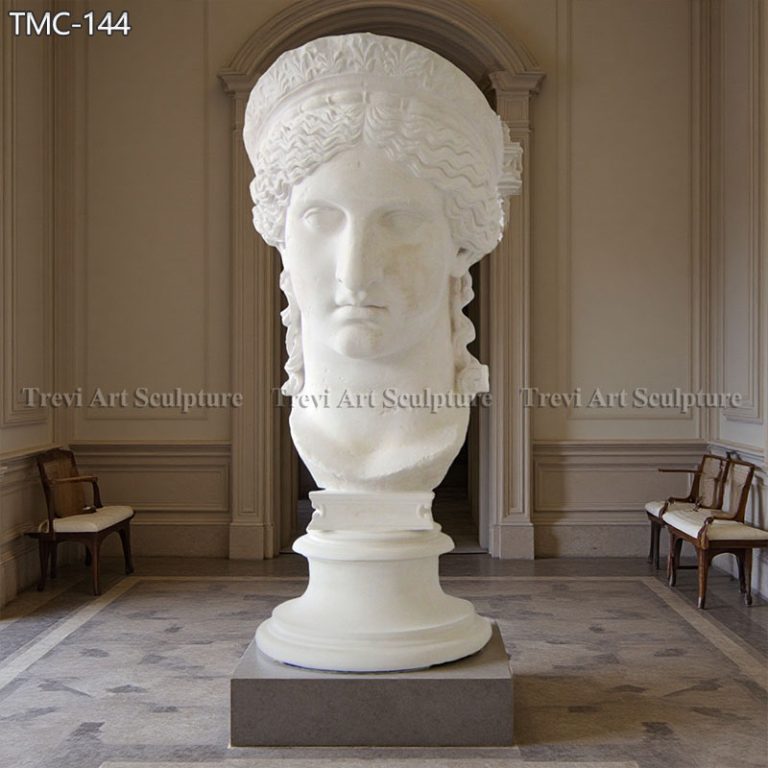
A smaller bust or figure can sit on a dedicated plinth or sturdy console away from doors, chair backs, and children’s usual play routes. For example, Trevi lists its Juno Ludovisi replica at 41 inches; that is better judged against the room’s ceiling, furniture, and viewing height than by the words “small statue” alone. Even a modest marble piece may be too heavy for ordinary shelving, so verify the finished weight and support capacity.
For a roughly five-foot figure, consider a foyer or a spacious room corner with an uncluttered background. Trevi’s five-foot Self-Made Man illustrates how a standing figure benefits from a clear frontal view. If you want a pedestal, mock up the combined height before ordering; the same sculpture can feel quite different when raised.
Look at the spot in daylight and after the room lights are on. Gentle side lighting can reveal carved detail, but avoid placing the piece where it blocks circulation or where an unstable surface, opening door, or passing bag might strike a projecting hand or accessory.
Where to Place in the Garden
Choose the sightline before the planting plan. A figure can mark the end of a path, anchor a courtyard, sit beside a terrace, or appear between two planting beds. Stand at the house door and at the path entrance: if the sculpture only looks right from one close-up angle, adjust its position or orientation while the site is still flexible.
In a compact courtyard, a medium figure works best when it does not crowd a gate or compete with dense shrubs. On a broad lawn, a smaller piece may get lost; a life-size statue or a composition on an appropriately scaled base is easier to read from farther away. The 72-inch Artemis Diana statue includes a stag, so the placement decision must account for the group’s overall width and profile, not just its listed height. If you are considering a matching set, such as the 6.5-foot Four Season Goddess statues, plan the rhythm and spacing of the whole group before laying foundations.

Do not let sprinklers repeatedly spray the stone or allow planting to rub against detailed carving. Avoid low spots where water pools around the base. Leave a practical route for future inspection and cleaning, even after the surrounding plants mature.
Check the Space Before Deciding on a Position
Before confirming a design, measure the figure, pedestal, and site as one project. Height alone is not enough. Record the maximum width and depth—including outstretched arms, wings, or companion figures—and mark the footprint on the floor or ground with tape. A cardboard silhouette or a person standing at the proposed height can help you judge the view from the doorway and seating areas.
- Indoors: Measure doors, turns, stairs, elevator dimensions, and ceiling height along the delivery route. Confirm the floor or furniture can support the verified statue-and-base weight; seek a qualified professional for uncertain loads.
- Outdoors: Check paving or foundation conditions, drainage, slope, underground services, and whether equipment can reach the site. A substantial figure may need a properly designed base and anchoring.
- In either setting: Keep door swings, walkways, seating, and maintenance access clear. Agree on the final footprint and height including any pedestal, not just the catalog figure height.
Do not guess the installation detail from a photograph. The correct base and fixing method depend on the stone’s actual dimensions, weight, form, site, and local conditions; arrange a site-specific assessment for a heavy or publicly accessible sculpture.
Plan for Outdoor Exposure and Maintenance
Outdoor marble gains character with exposure, but rain, airborne dirt, irrigation water, nearby foliage, and winter conditions affect how much care a location needs. A sheltered, well-drained spot can be easier to maintain than a damp corner beneath shedding trees. In a freeze–thaw climate, trapped water and repeated freezing increase the risk of stone weathering; discuss local conditions and stone choice before finalizing the installation.
Keep care gentle: remove loose debris, use clean water and a soft brush where appropriate, and test any stone-compatible cleaner in a discreet area first. Avoid household acids, bleach, wire brushes, and aggressive pressure washing. The U.S. National Park Service’s marble-cleaning guidance is written for headstones rather than decorative figures, but its warnings about salts, freeze–thaw cycles, harsh chemicals, and abrasive cleaning are useful cautions for marble care. For a valuable, weathered, or damaged sculpture, consult a stone conservator rather than experimenting with chemical treatments.
Send Your Site Photos Before Finalizing the Statue
If you are choosing between two figure sizes or are unsure about the pedestal, send photographs of the intended location before the dimensions are finalized. Useful images include a wide view from the main approach, a closer view of the proposed footprint, a side view showing nearby doors or planting, and a photo of the delivery route. Include a tape measure or known-size object for scale.
Along with the photos, share the available width and depth, the desired overall height, whether the site is indoors or outdoors, your local climate, and the destination. If you already like a design, include its product link. Trevi Art Sculpture can then discuss the sculpture’s proportions, possible custom sizing, stone and finish, base, and delivery details against the actual setting rather than a generic catalog image.
Plan the statue around your space
Send your site photos, rough measurements, preferred figure, and destination to start a placement and quotation discussion.
Frequently Asked Questions
Can a marble statue go in a small room?
Yes, if the footprint, weight, and circulation work. Try a small bust or figure on a verified support rather than forcing a life-size work into a tight walkway.
Should a garden statue face the house or the path?
Orient it toward the approach from which people most often see it. Check secondary views as well, especially if the figure has a pronounced gesture or multiple sides.
Does the pedestal count toward statue height?
It should count toward the height you plan for the space. Confirm whether a product’s listed dimension refers to the figure alone and request the complete installed height.
Can a large marble figure stand directly on soil?
Do not assume that bare soil provides suitable long-term support. Have the ground, drainage, base, and anchoring assessed for the sculpture’s actual weight and site conditions.
What should I send before ordering a custom size?
Provide site photos, measured width and depth, target overall height, a product or reference image, access constraints, and your destination. These details help align the proposed size with the location.