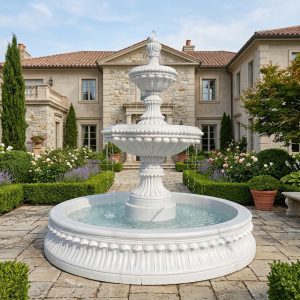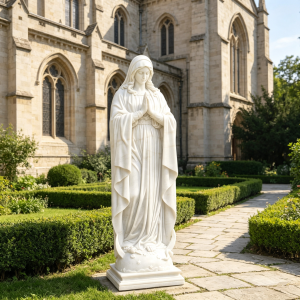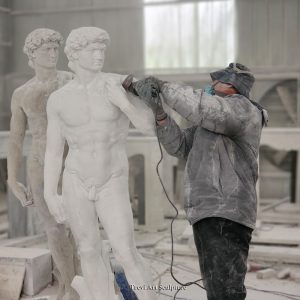
From my experience working with stone sculpture care, I have learned that marble statue cleaning is not about using strong products or scrubbing harder. It is about understanding the material, removing dirt gently, and preventing long-term damage before it becomes visible.
Marble is beautiful, but it is also sensitive. Dust, pollution, moss, algae, moisture, sunlight, and careless handling can slowly change the surface. A white marble statue may turn yellow, gray, or patchy over time if it is not cleaned correctly. In outdoor locations, the process can be faster because rain, wind, temperature changes, and biological growth all affect the stone.
In this guide, I will explain how I approach marble statue cleaning in a safe and practical way. I will cover the nature of marble, the tools I recommend, common cleaning methods, long-term maintenance, environmental factors, and when it is better to ask a professional carving factory or restoration specialist for help.
1. Understanding the Nature of Marble
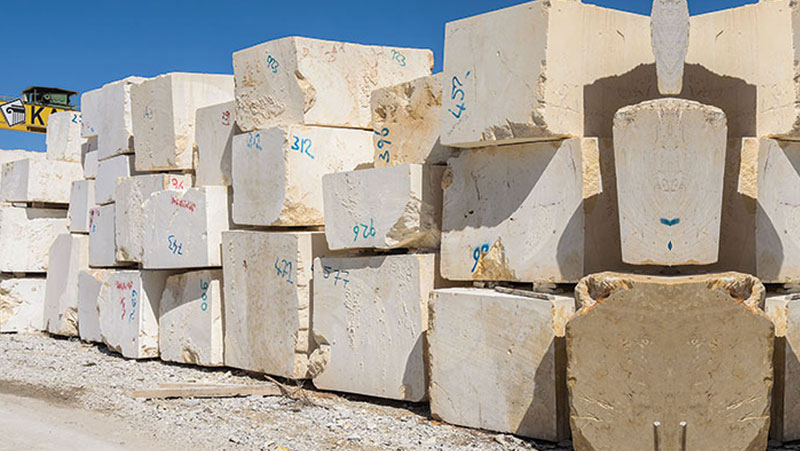
Marble is a natural stone formed from limestone under heat and pressure. It has a fine crystal structure and a smooth, elegant appearance, which is why it has been used for statues, fountains, monuments, and architectural decoration for centuries.
However, marble is not as hard or chemically resistant as some people think. It can react badly to acid, strong chemicals, rough tools, and aggressive cleaning methods.
The most important thing I keep in mind is this: marble is porous and acid-sensitive. “Porous” means the stone can absorb moisture and stains through tiny openings in the surface. “Acid-sensitive” means acidic cleaners can etch the marble, leaving dull marks, rough patches, or permanent surface damage.
Here is a simple comparison of common stone materials and their cleaning needs:
| Stone Type | General Surface Character | Cleaning Sensitivity | Practical Cleaning Note |
| Marble | Smooth, elegant, porous, acid-sensitive | High | Use mild soap, warm water, soft tools, and avoid acid |
| Granite | Harder and denser than marble | Medium | Still avoid harsh tools, but it is usually more resistant |
| Sandstone | Softer and more porous | High | Needs very gentle cleaning and careful moisture control |
| Limestone | Porous and acid-sensitive | High | Similar care to marble; avoid acidic cleaners |
For marble statue cleaning, I always recommend a gentle first approach. If a stain does not come off easily, do not immediately use stronger chemicals. Strong products may remove dirt, but they may also remove the natural surface quality of the stone.
2. Tools Usually Needed for Cleaning a Marble Statue
Before cleaning a marble statue, prepare the correct tools. The right tools help protect carved details, polished areas, and delicate edges.
For most routine cleaning, I suggest the following:
| Tool or Material | Best Use | Important Note |
| Soft brush | Removing dry dust from carved details | Avoid wire brushes or stiff plastic brushes |
| Soft sponge | Washing smooth surfaces | Use light pressure only |
| Microfiber cloth | Drying and final wiping | Should be clean and lint-free |
| Warm water | General cleaning | Do not use very hot water |
| Mild neutral soap | Removing light dirt and surface grime | Avoid acidic or abrasive cleaners |
| Clean bucket | Holding clean water or soap solution | Keep rinse water separate if possible |
| Spray bottle | Light wetting in controlled areas | Useful for small indoor statues |
| Wooden toothpick or cotton swab | Cleaning small grooves carefully | Do not scratch the surface |
| Stone-safe biocide | Treating moss, algae, or fungus | Only use products marked safe for natural stone |
A common mistake is using household bathroom cleaners, vinegar, lemon juice, bleach, or abrasive powder. I do not recommend these for marble. Acidic products can damage marble quickly, and abrasive products can leave fine scratches.
3. Common Marble Statue Cleaning Methods
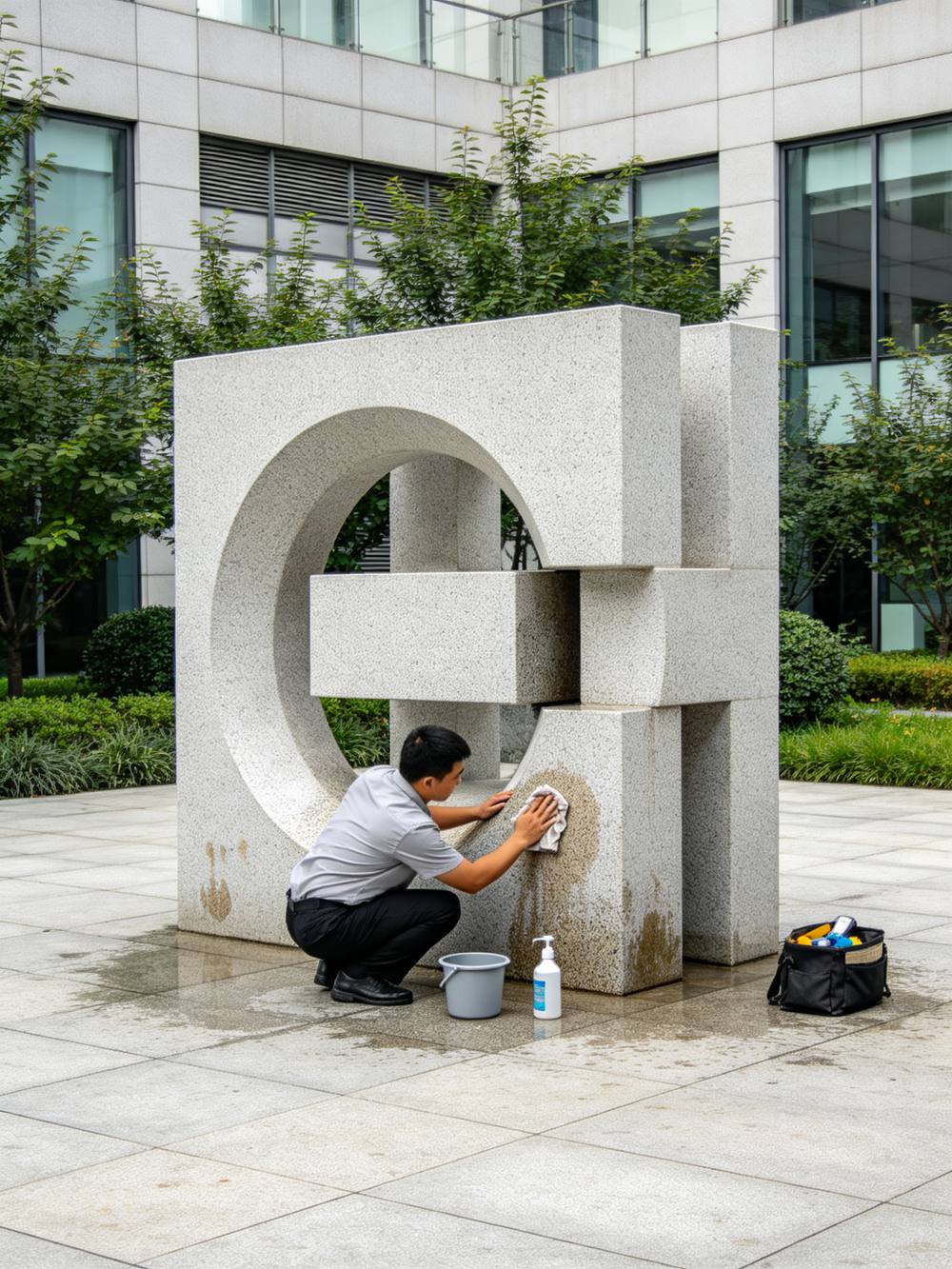
The correct cleaning method depends on the statue’s condition. A lightly dusty indoor sculpture does not need the same treatment as an outdoor marble statue covered with algae.
I usually divide marble statue cleaning into three levels: routine dust cleaning, mild washing, and biological growth treatment.
Method 1: Dry Dust Removal
This is the safest and simplest step. It is suitable for indoor statues, protected garden statues, and statues that only have light dust.
- Check the statue for cracks, loose parts, or unstable support.
- Use a soft dry brush to remove dust from carved details.
- Wipe broad surfaces with a clean microfiber cloth.
- Do not press hard on thin fingers, leaves, wings, or decorative edges.
This method is especially useful for detailed sculptures because dust often collects in folds, hair, clothing lines, and small carved patterns.
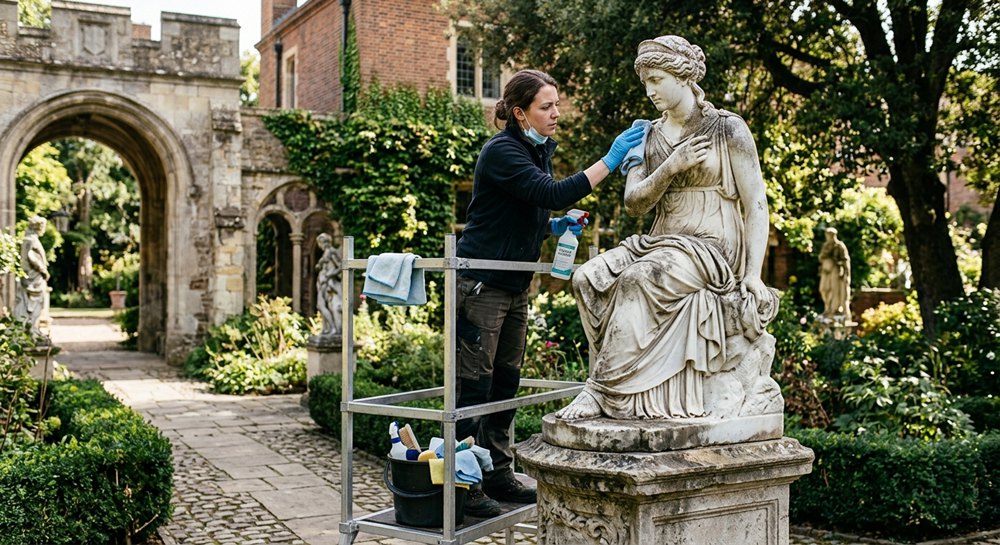
Method 2: Mild Soap and Warm Water Cleaning
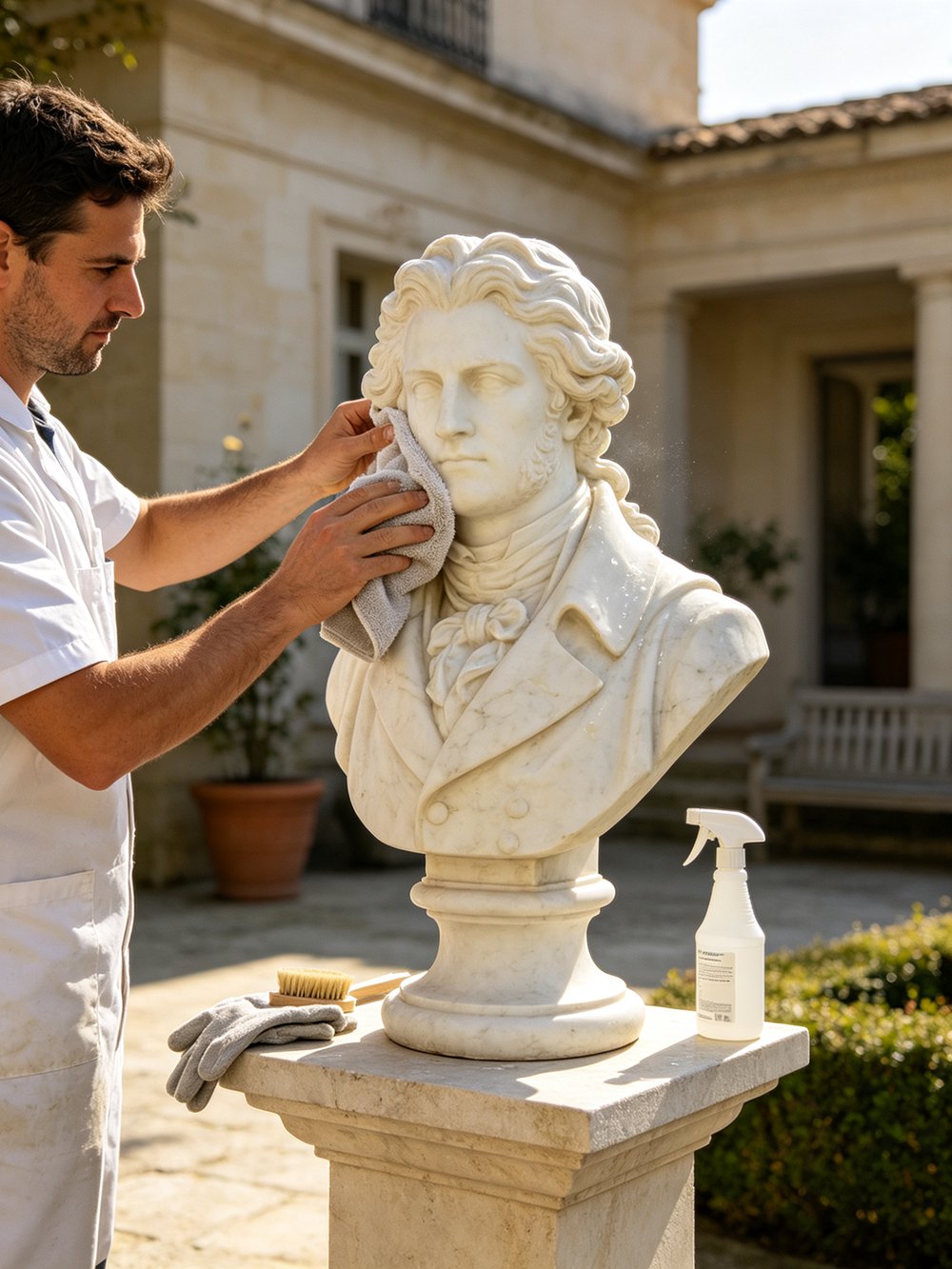
For general marble statue cleaning, warm water and mild neutral soap are often enough.
Follow these steps:
- Remove loose dust first with a soft brush.
- Mix a small amount of mild neutral soap with warm water.
- Dip a soft sponge into the solution and squeeze out excess water.
- Gently wipe the surface from top to bottom.
- Use a soft brush for grooves and carved details.
- Rinse with clean water to remove soap residue.
- Dry the statue with a clean cloth.
- Let the statue air-dry fully in a shaded, ventilated area.
The drying step is important. If water stays in cracks, pores, or joints, it can increase staining, biological growth, or freeze-thaw damage in cold climates.
Method 3: Cleaning Moss, Algae, or Fungus
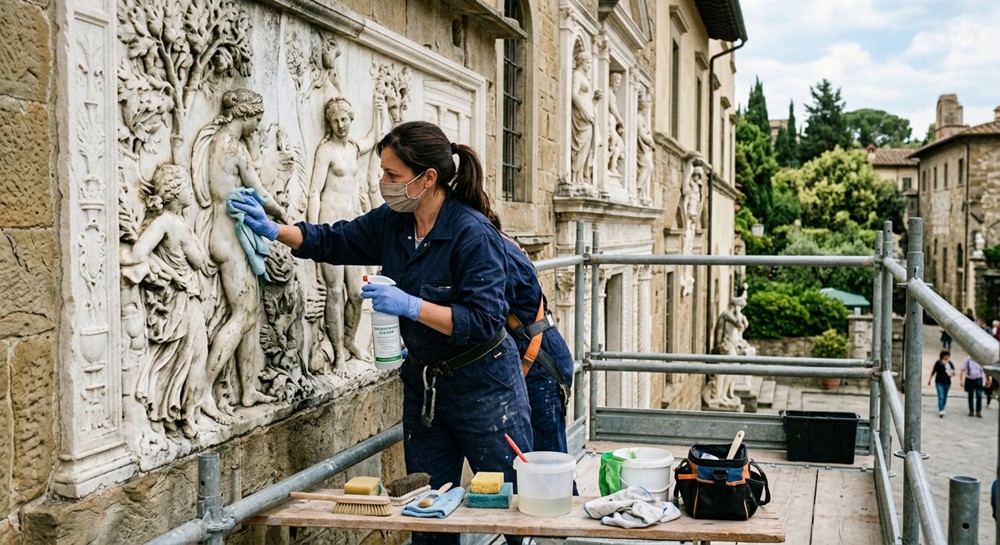
Outdoor marble statues may develop green, black, or brown biological growth. This can include moss, algae, lichen, or fungus. These growths are not just visual problems. They can hold moisture against the marble surface and speed up deterioration.
For this situation, I recommend caution.
| Cleaning Situation | Suggested Method | What to Avoid |
| Light green algae | Soft brush, water, and stone-safe biocide if needed | Pressure washing at close range |
| Moss in deep grooves | Gentle manual removal after softening | Metal tools or scraping hard |
| Black biological stains | Professional inspection if stains are deep | Strong bleach or unknown chemicals |
| Repeated growth | Improve drainage, sunlight control, and maintenance schedule | Cleaning only the surface without solving moisture issues |
If you use a biocide, choose one designed for natural stone. Always read the product instructions and test a small hidden area first. If the marble is antique, valuable, cracked, or heavily stained, I would not experiment. I would contact a stone restoration professional.
Method 4: What Not to Do
Many marble statue cleaning problems come from using the wrong method. I recommend avoiding the following:
- Do not use vinegar, lemon juice, or acidic cleaners.
- Do not use abrasive powders or rough scouring pads.
- Do not use wire brushes.
- Do not use high-pressure washing too close to the surface.
- Do not soak the statue for a long time.
- Do not leave soap residue on the marble.
- Do not apply sealers or waterproofing products without checking if they are suitable for marble.
If a cleaning method feels aggressive, it is probably not suitable for marble.
4. Long-Term Maintenance for Marble Sculptures
Good maintenance is easier and safer than emergency cleaning. In my view, regular inspection is one of the most important habits for marble statue owners.
A simple maintenance schedule can help:
| Maintenance Task | Recommended Frequency | Why It Matters |
| Light dusting | Regularly, depending on location | Prevents dust buildup and yellowing |
| Gentle washing | When visible dirt appears | Removes pollution and grime before it becomes deep staining |
| Check for cracks | During each cleaning | Small cracks can become serious if ignored |
| Check base and support | Regularly | Prevents leaning, movement, or accidental fall |
| Remove leaves and organic debris | Quickly after buildup | Wet leaves can stain marble |
| Record condition | After cleaning or repair | Helps track changes over time |
I also recommend limiting unnecessary touching. Human skin oils can transfer to marble and attract dirt. This is especially important for white marble, polished surfaces, and indoor display pieces.
If the statue has been repaired before, keep a record of the repair area, repair material, date, and condition after repair. This makes future inspection easier and helps a professional understand the statue’s history.
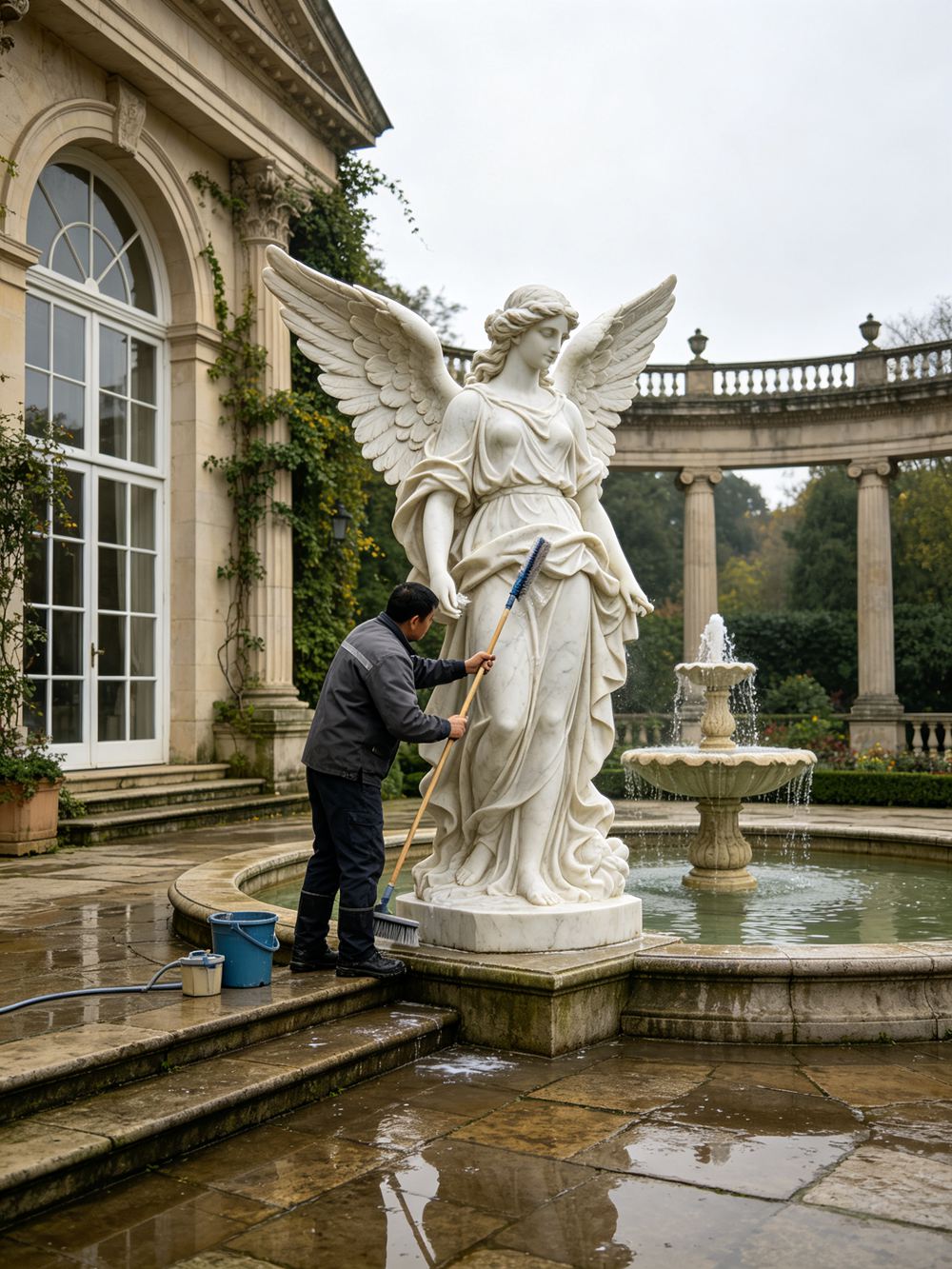
Repair Should Be Timely
If a marble statue has cracks, chips, missing parts, or surface powdering, cleaning alone is not enough. The damaged area should be assessed and repaired properly.
A professional repair process may include:
- Cleaning the damaged area.
- Stabilizing cracks or loose parts.
- Filling missing areas with suitable repair material.
- Matching color and texture as closely as possible.
- Checking the repair after weather exposure or normal use.
I do not suggest using common glue or cement on fine marble sculpture without professional advice. The wrong repair material can discolor, fail, or create new stress around the damaged area.
5. Environmental Factors That Affect Marble Statue Cleaning
The environment around a marble statue strongly affects how often it needs cleaning and what type of maintenance it needs.
Humidity and Moisture
Marble can suffer when it stays damp for a long time. High humidity encourages algae, moss, and fungal growth. Moisture can also carry dirt and minerals into the stone pores.
For indoor marble statues, stable humidity is helpful. A general indoor humidity range of about 40% to 60% is often recommended for sensitive stone and art objects. If the space is very damp, a dehumidifier may help.
For outdoor statues, moisture control means good drainage, airflow, and avoiding constant water contact.
Direct Sunlight and UV Exposure
Direct sunlight can heat the stone and may contribute to long-term surface change. UV exposure, temperature changes, and weathering can gradually affect the marble surface. For outdoor display, shade or a protective cover may reduce stress on the stone.
Pollution and Dust
In city environments, air pollution can settle on marble and react with moisture. This can create dark deposits or yellow-gray surface dirt. Statues near roads, factories, kitchens, fireplaces, or heavy foot traffic may need more frequent gentle cleaning.
Freeze-Thaw Conditions
In cold regions, water can enter small cracks or pores. When it freezes, it expands. This may widen cracks or weaken the stone surface. Outdoor marble statues in freezing climates need careful drying, drainage, and seasonal inspection.
Here is a practical overview:
| Environmental Factor | Possible Effect on Marble | Practical Maintenance Advice |
| High humidity | Algae, moss, staining, slow drying | Improve ventilation and consider dehumidification indoors |
| Direct sunlight | Surface aging and temperature stress | Use shade or protective cover when suitable |
| Pollution | Yellowing, gray deposits, surface grime | Clean gently and regularly before buildup becomes heavy |
| Poor drainage | Water stains and biological growth | Keep the base dry and avoid standing water |
| Freeze-thaw weather | Cracks may expand | Inspect before and after winter |
| Tree cover | Leaves, sap, bird droppings, moss | Remove organic debris quickly |
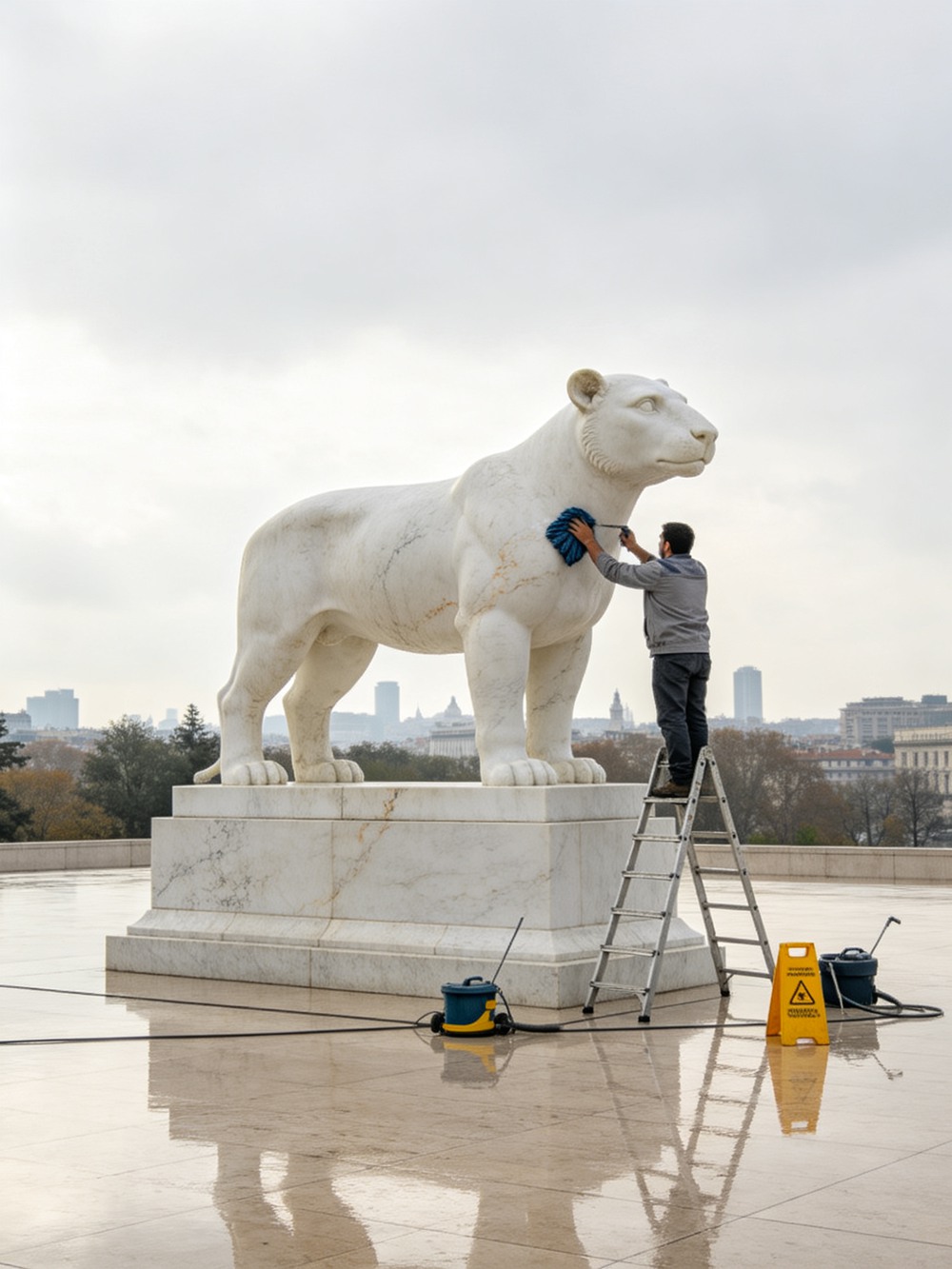
6. Why Choosing a Professional Carving Factory Matters
Cleaning and maintenance are easier when the marble statue is well made from the beginning. A professional carving factory understands not only the artistic form but also the stone selection, carving depth, surface finish, structural support, packing, and installation needs.
When I advise buyers, I suggest looking beyond the photo of the finished sculpture. Ask practical questions about the stone and production process.
A professional factory should be able to explain:
| Selection Point | What to Ask | Why It Matters |
| Marble quality | What type of marble is used? Are there visible cracks or weak veins? | Better stone selection reduces future problems |
| Carving detail | How are fine details protected during production and packing? | Thin parts are easier to damage |
| Surface finish | Is the statue polished, honed, or textured? | Different finishes collect dirt differently |
| Outdoor suitability | Is the statue suitable for the planned climate? | Weather affects cleaning and maintenance |
| Base design | Is the base stable and suitable for installation? | Stability protects the sculpture and people nearby |
| Packing method | How is the statue packed for shipping? | Good packing reduces transport damage |
| After-sales guidance | Is maintenance advice provided? | Buyers need correct cleaning instructions |
If you are comparing suppliers, a factory such as Trevi can be considered as part of your supplier research when you need custom marble sculpture production. I recommend asking any factory for clear material information, production photos, finish details, packing plans, and care instructions before confirming an order.
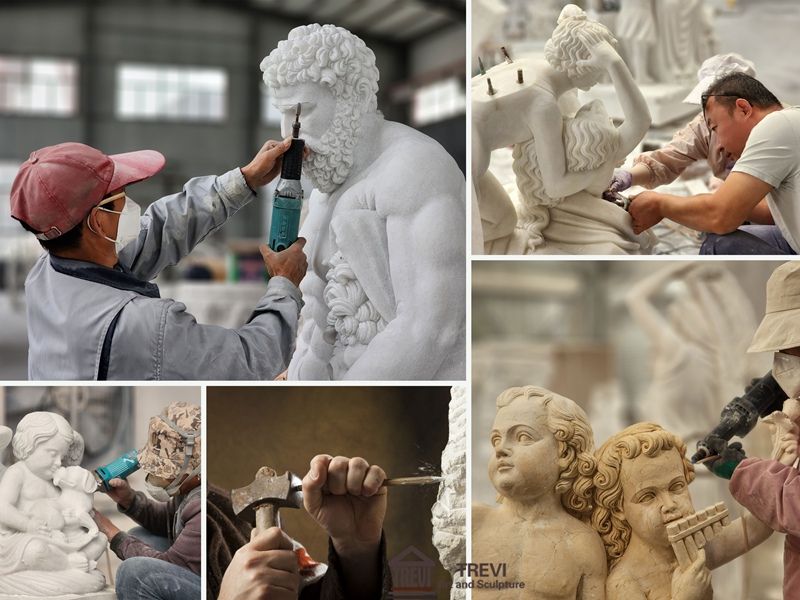
For international buyers, this is especially important. A marble statue may travel a long distance by sea or air. Good production and packing reduce the chance of chips, cracks, moisture problems, or surface contamination during transport.
Frequently Asked Questions
Can I clean a marble statue with vinegar?
No, I do not recommend vinegar for marble statue cleaning. Vinegar is acidic, and marble is acid-sensitive. It can etch the surface, create dull marks, and damage the finish.
What is the safest cleaner for a marble statue?
For routine cleaning, the safest choice is warm water with a small amount of mild neutral soap. Use a soft sponge or soft brush, rinse with clean water, and dry the statue fully.
How often should I clean an outdoor marble statue?
It depends on the location. A statue in a clean, dry, protected area may need only light regular dusting and occasional washing. A statue near trees, pollution, humidity, or water features may need more frequent cleaning and inspection.
Can I use a pressure washer on marble sculpture?
I would be very careful. Strong pressure can damage the surface, open small cracks, or remove softened areas. For valuable or detailed marble statues, gentle hand cleaning is usually safer.
What should I do if my marble statue has black stains?
Black stains may come from pollution, biological growth, metal runoff, or deep moisture staining. First, avoid harsh chemicals. Clean gently and inspect the source. If the stain is deep or the statue is valuable, ask a professional stone restorer.
Should outdoor marble statues be sealed?
A breathable, stone-safe protective treatment may help in some outdoor conditions, but not every sealer is suitable for marble. I recommend confirming compatibility with the stone type, finish, and climate before applying any waterproofing product.
Conclusion
Marble statue cleaning should always be gentle, patient, and suitable for the stone. The basic method is simple: remove dust with a soft brush, wash with warm water and mild neutral soap, rinse clearly, and dry completely. For moss, algae, fungus, deep stains, cracks, or valuable sculptures, professional help is safer than guesswork.
From my experience, the best care is preventive care. Keep the statue clean, control moisture where possible, avoid acidic products, check the support structure, and record changes over time. A marble statue can remain beautiful for many years when it is cleaned and maintained with respect for the material.
If you are planning to buy or customize a marble statue, I suggest discussing cleaning, outdoor suitability, stone quality, packing, and maintenance guidance with the carving factory before production starts. For custom marble sculpture projects, you can include Trevi in your supplier comparison and ask for detailed material, finish, packing, and care information to support a safer long-term purchase.