Roman columns are a striking design element, and a closer examination reveals a wealth of history behind them. Whether you are an architect, interior designer, villa owner, real estate developer, or even a buyer for church or landscape projects, you will likely consider incorporating Roman columns into your design. In this article, we will take a professional perspective on marble carving to provide you with a comprehensive overview of the origins, characteristics, and applications of five classic Roman column styles.
Where Do Roman Columns Come From?
Roman column orders originated from Greek column orders.
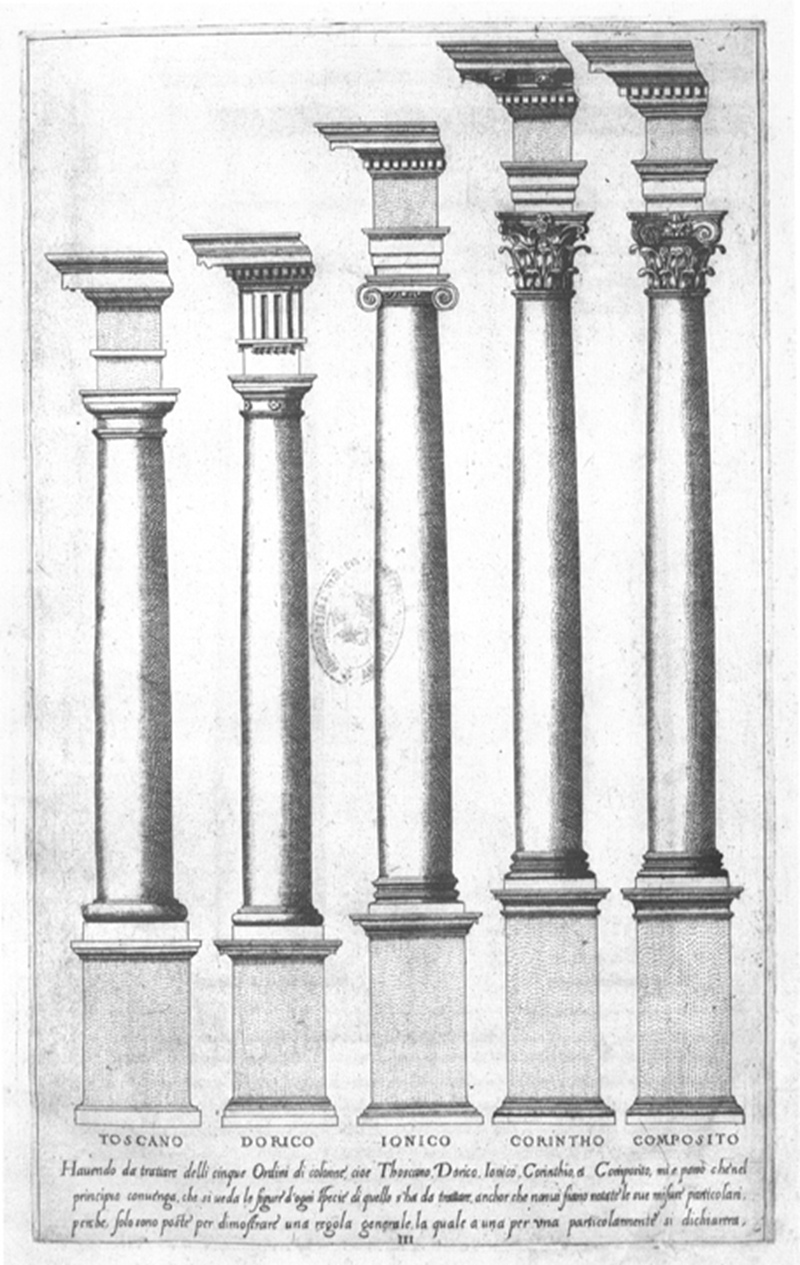
The Romans developed the ancient Greek column orders into five classical orders: Doric, Ionic, Corinthian, Composite, and Tuscan. Among these, the Doric, Ionic, and Corinthian orders originated in ancient Greece and have served as the foundational styles for thousands of years. Both the later Tuscan and Composite orders were derived from and designed based on these three classical orders.
The Romans differed from the Greeks. The Greeks sought harmony between humanity and the cosmos through abstract thinking and expressed their cosmological concepts through art that best embodied their ideas; The Romans, however, seemed to have no time to express such idealism. They were strong-willed and practical people with sharp, logical minds, skilled in lawmaking, engineering, and administration. They sought not spiritual or heavenly ideals, but rather the realities of their living environment.
What Are the Main Parts of a Roman Column?
Roman columns are generally composed of three parts: the capital, the shaft, and the base.
While the dimensions of these components have evolved over thousands of years—with the shaft and base developing into a wide variety of styles and forms—the form of the capital has remained constant. Consequently, Roman column styles are primarily distinguished by their capitals.
What Are the 5 Types of Roman Columns?
Quick Comparison of the 5 Roman Column Types
Here’s a clear and concise comparison table of the five Roman column types (which expand on the Greek orders with added Roman innovations):
| Column Type | Origin | Capital Style | Shaft Features | Base | Overall Style & Impression | Common Uses |
| Tuscan Order | Roman (simplified) | Very plain, minimal molding | Smooth, unfluted | Simple | Solid, sturdy, unadorned | Military buildings, utilitarian structures |
| Doric Order (Roman) | Greek (adapted by Romans) | Simple, round capital (echinus + abacus) | Usually fluted (sometimes smooth in Roman version) | Has a base (unlike Greek Doric) | Strong, masculine, balanced | Temples, public buildings |
| Ionic Order | Greek | Volutes (scroll-shaped) | Slender, fluted | Decorative base | Elegant, refined | Libraries, academic buildings |
| Corinthian Order | Greek (popularized by Romans) | Acanthus leaf decoration | Slender, fluted | Elaborate base | Ornate, luxurious | Grand temples, monuments |
| Composite Order | Roman (innovation) | Mix of Ionic volutes + Corinthian leaves | Slender, fluted | Highly decorative | Most elaborate and decorative | Triumphal arches, imperial architecture |
Doric Order
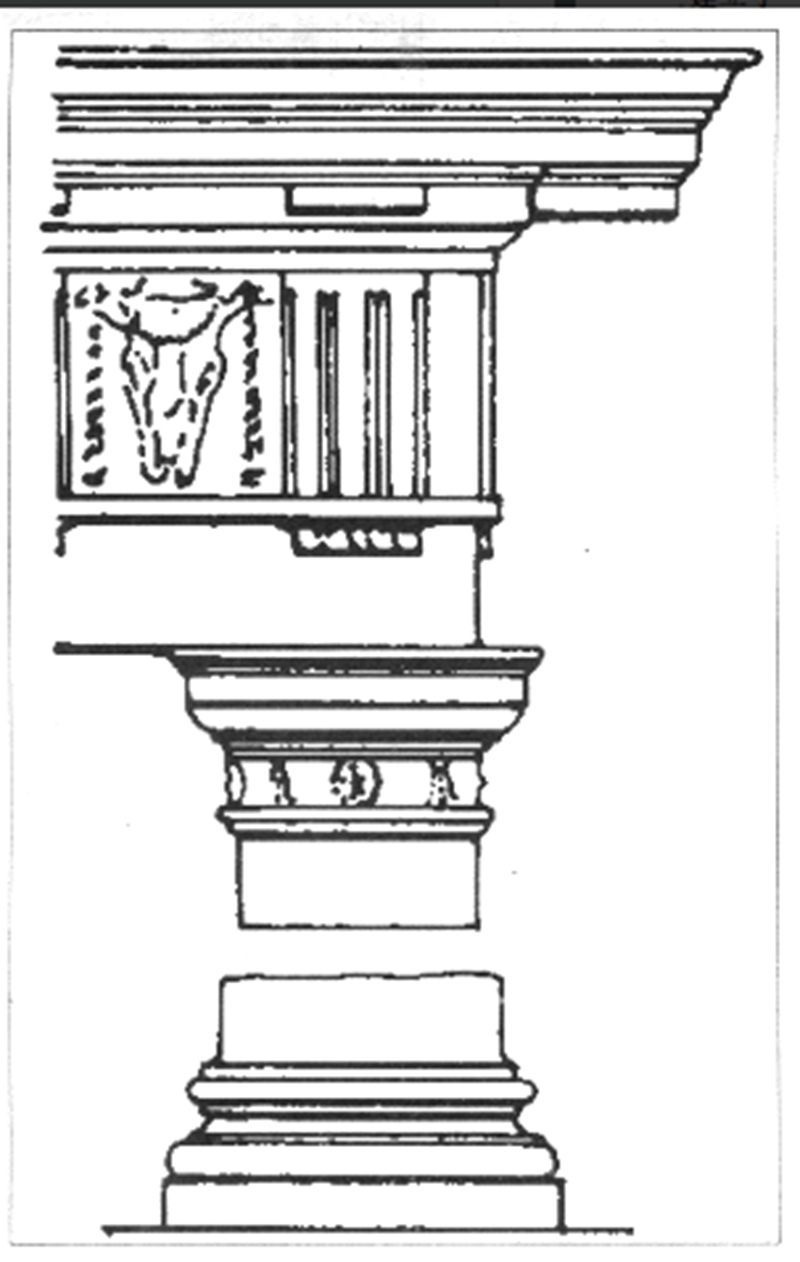
The Doric order is one of the three classical Roman column orders with a relatively long history; it is often referred to as the “masculine” order. This order typically lacks a base; the traditional shaft stands directly on the plinth and is carved with 22 deep flutes. The capital and shaft also maintain a specific proportion, with the standard construction ratio being 1:5.5 for the ratio of the shaft’s base diameter to its height; and the height-to-diameter ratio is 4 or 6:1. While the forms of the capitals have evolved, the fundamental principles of the order remain unchanged.
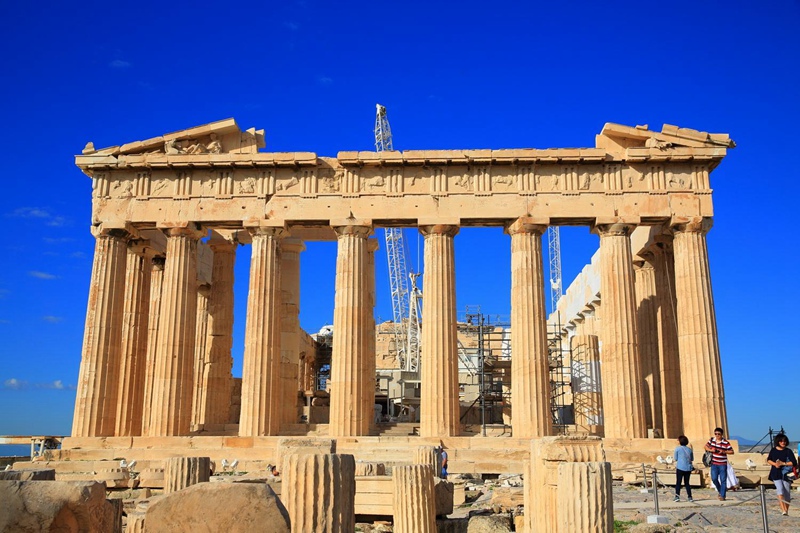
Representative example of the Doric order: the Parthenon
Ionic Order
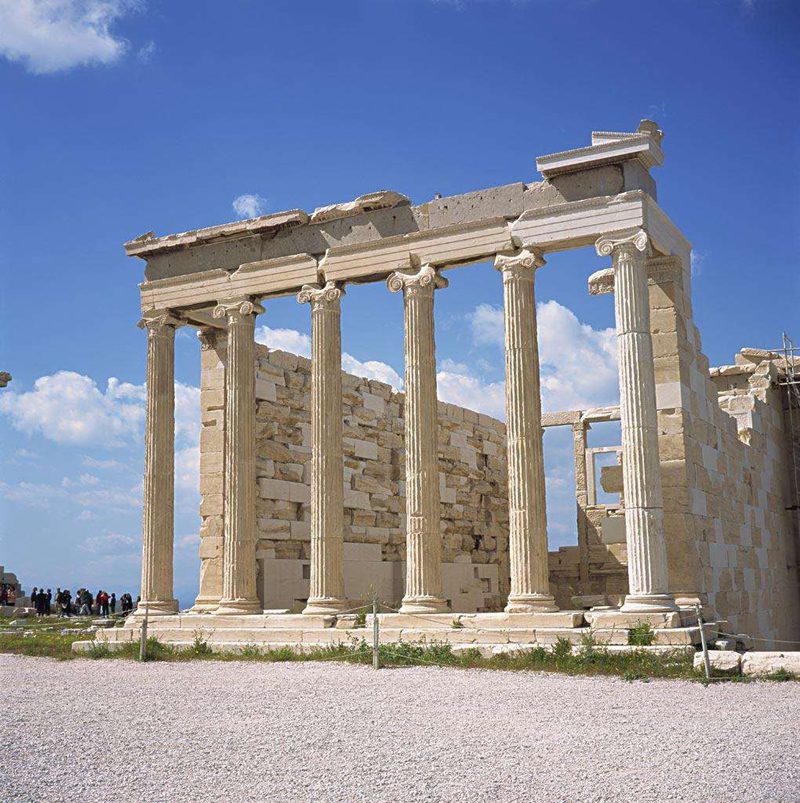
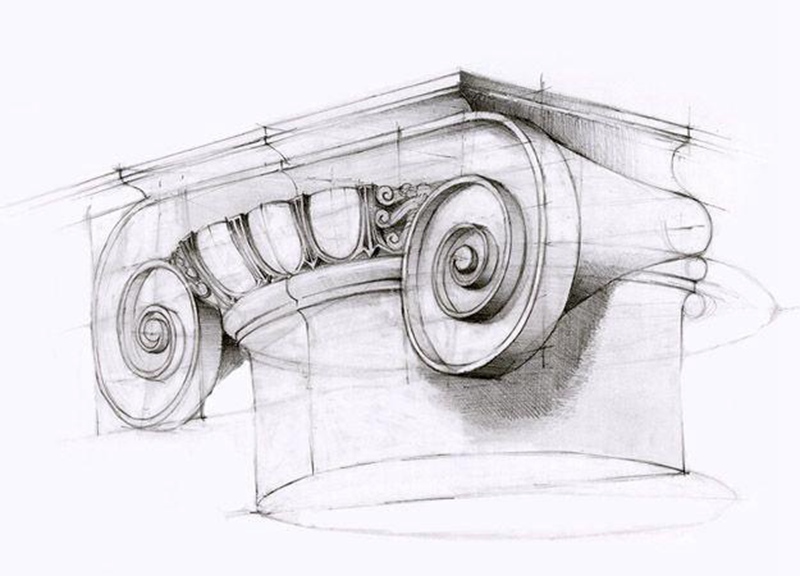
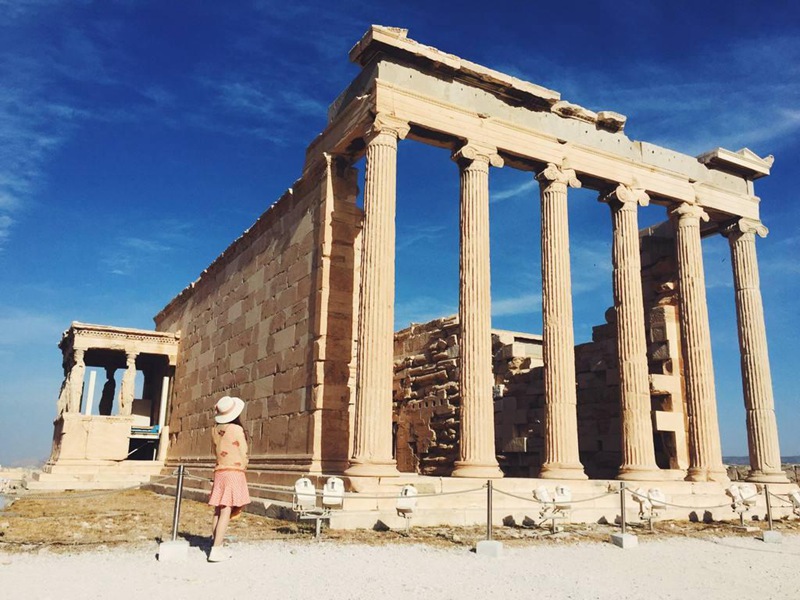
The Ionic Order is also one of the three classical column orders with a relatively long history; it is often referred to as the “feminine” order. Due to its elegant and noble character, the Ionic column appears extensively in numerous ancient Greek buildings, such as the Temple of Nike on the Acropolis of Athens and the Erechtheion. In China, the Ionic order can also be found in the Bingyang Central Cave of the Longmen Grottoes, a product of the cultural fusion of Greece, Persia, India, and China.
Corinthian Order
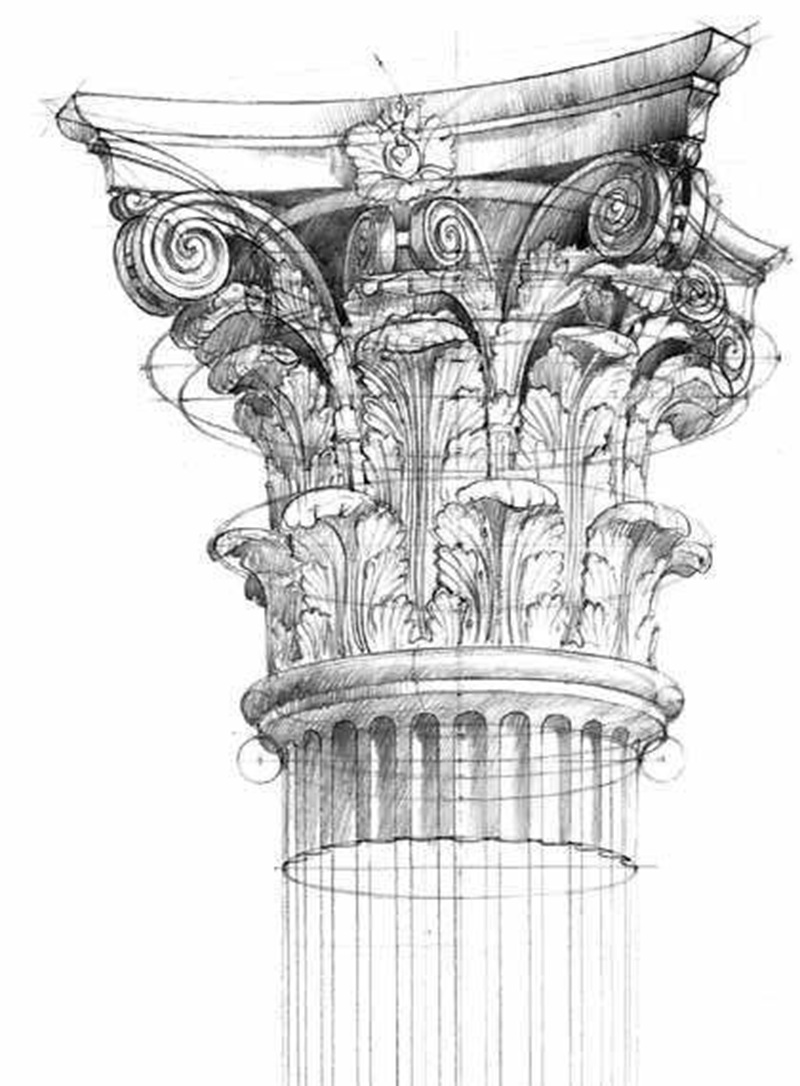
The Corinthian order is also one of the three Roman column styles with a relatively long history. Its four sides feature scroll-shaped decorative patterns surrounded by two rows of leaf motifs, giving it a very ornate and delicate appearance. The Greek Corinthian order is slimmer in proportion than the Ionic order, with capitals adorned with acanthus leaves, resembling a basket filled with flowers and foliage. Compared to the Ionic order, the Corinthian order is more ornate; the Temple of Zeus in Athens employs the Corinthian order.
The Story Behind the Corinthian Order:
Unlike the previous two orders, this one has a story behind it. Legend has it that in ancient times, there was a beautiful young girl in the town of Corinth. Just as she was about to get married, she suddenly fell ill and passed away. Her family was deeply saddened, but her nanny, who had spent every day with her, was especially heartbroken. So she gathered the toys and other cherished items the girl had played with as a child, placed them in a flower basket, and set it upon the girl’s grave. The following spring, a buttercup sprouted from the grave. As its stems and leaves grew, they eventually encircled the small basket, forming a truly beautiful shape. Later, inspired by this wondrous tale, people designed a column style featuring vine-like scrolls at the top and patterns of buttercup stems and leaves below.
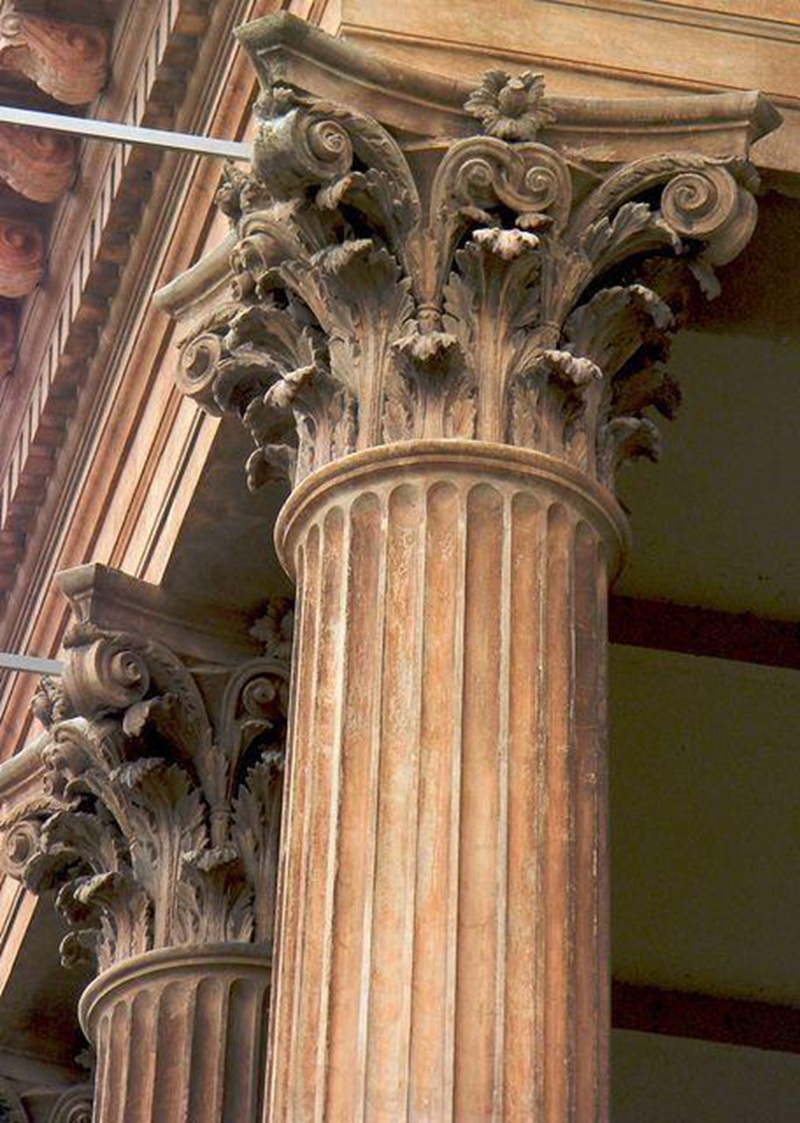
These three-column orders reached a peak of development during the Roman period. The Romans perfected these three styles and, building upon them, created two new column orders.
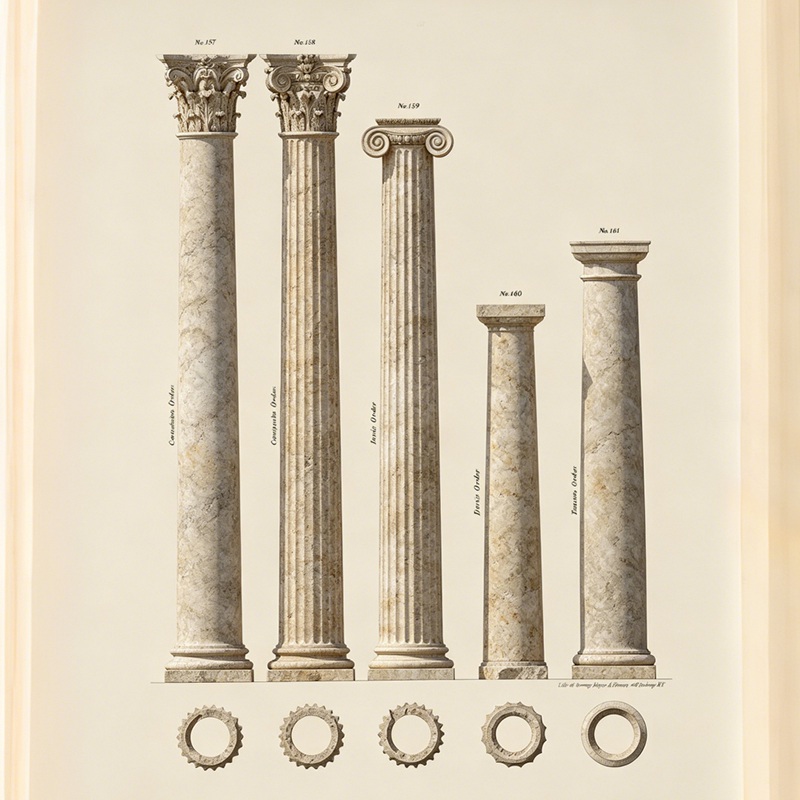
Tuscan Order (second from the right)
The Tuscan Order is an early Roman column style derived from the Doric order. It is one of the simplest and most austere column styles, characterized by a smooth shaft without fluting, minimal ornamentation on the capital and base, and overall heavy, powerful lines that emphasize structural stability and functionality. Compared to other orders, it has virtually eliminated all decorative details, making it commonly used in military buildings, warehouses, or spaces requiring a sense of solidity. In modern architecture, it is also frequently employed in designs that pursue a minimalist style.
Composite Roman Column (second from left)
This order combines elements of the Ionic and Corinthian styles, adding the volutes from the Ionic capital to the Corinthian fluted shaft. The shaft is typically slender and fluted, creating an overall visual effect that is solemn and majestic. It symbolizes power and glory and is commonly found in triumphal arches, monumental structures, and large public spaces, serving as a quintessential representation of the Roman Empire’s aesthetic and architectural achievements.
The Use of Roman Columns in Historical Architecture
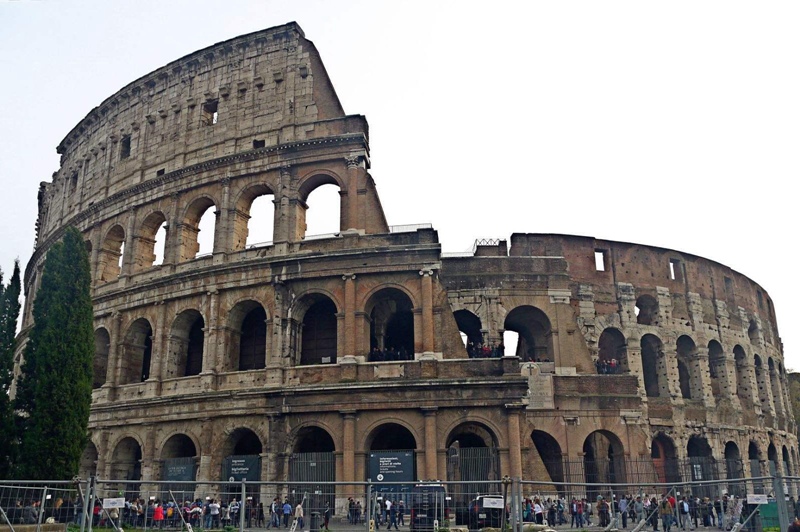
The Colosseum
The Colosseum represents the pinnacle of Roman column design during the Roman period. It is a structure that combines three ancient Roman column orders: the first tier features Doric columns, the second tier Ionic columns, and the third tier Corinthian columns, all encircling the building in three concentric layers.
The Parthenon
A representative example of the Doric order
The Acropolis of Athens
A representative example of the Ionic order
The Temple of Zeus
A representative example of the Corinthian order
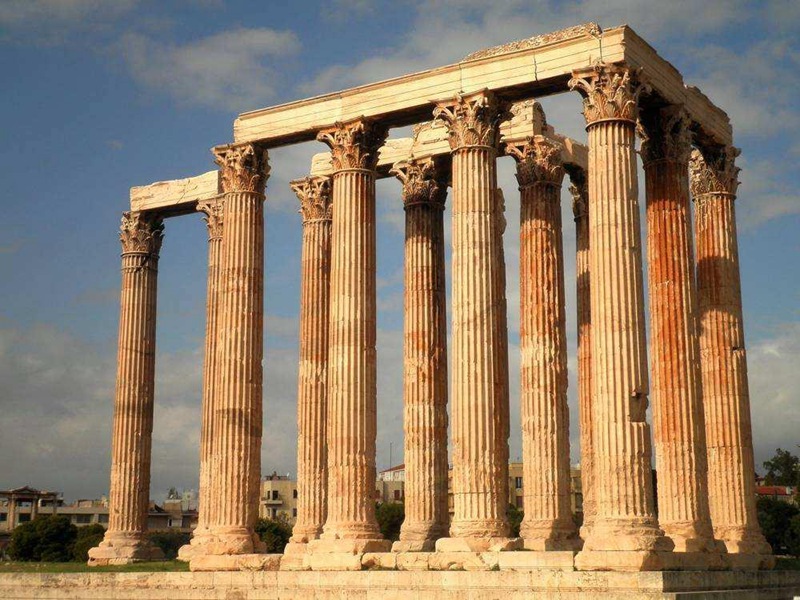
In contemporary architecture and decorative design, the five Roman column orders—from the simple Tuscan to the highly ornate Composite—continue to play an important role in shaping visual identity and spatial atmosphere.

Minimalist styles like the Tuscan and Doric are especially popular in modern homes and commercial spaces for their clean lines and understated elegance, while the Ionic, Corinthian, and Composite orders remain in demand for luxury villas, hotels, and public buildings where a sense of grandeur and classical beauty is desired.

At our marble carving factory, we specialize in crafting a wide range of Roman column designs with high-quality materials and fine craftsmanship. Whether you prefer classic or customized styles, we welcome you to contact us for more designs and quotations.
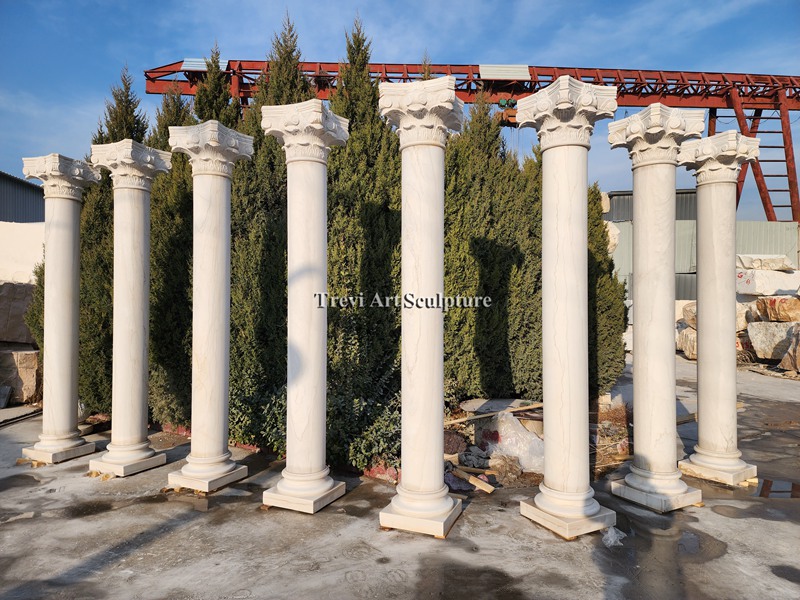
Get the same one: Marble Outdoor Ancient Roman Columns Pillars for Sale MOKK-572
FAQ
1. What are the main types of Greek columns?
The three primary Greek column orders are Doric, Ionic, and Corinthian. These classical styles form the foundation of all Roman column designs, with later Roman innovations like Tuscan and Composite evolving from them.
2. What is the difference between Greek and Roman columns?
Greek columns focus more on proportion, harmony, and ideal beauty, while Roman columns emphasize practicality, engineering, and decorative richness. Romans also introduced new variations such as the Tuscan and Composite orders, making their system more diverse.
3. Which Roman column style is best for modern homes?
For contemporary residential projects, Tuscan and Doric columns are often preferred due to their clean lines and simplicity. For more luxurious or classical interiors and exteriors, Corinthian or Composite columns are popular choices because of their ornate details.
4. Can Roman columns be customized in marble?
Yes, marble columns can be fully customized in terms of size, proportions, carving details, and finishes. Whether you need classic designs or unique architectural elements, professional marble carving factories can tailor columns to fit your project perfectly.
5. How much do marble Roman columns typically cost?
The price usually depends on the size, material quality, design complexity, and quantity. Standard marble columns may start from a few hundred dollars, while large, highly detailed, or custom-carved columns can cost significantly more. For an accurate quote, it’s best to contact a manufacturer with your specific requirements.