In Rome, Italy, there is a bridge that perfectly blends architecture and sculpture—the Ponte Sant’Angelo. Spanning the Tiber River and leading directly to the majestic Castel Sant’Angelo, it is one of the main routes to the Vatican.
Also known as Hadrian’s Bridge, it was built by Emperor Hadrian, who constructed what is now Castel Sant’Angelo. The bridge is paved with marble and features ten marble statues of angels, each holding an instrument of Jesus’ crucifixion. The Ponte Sant’Angelo is the work of Bernini, a renowned Italian sculptor and architect, a leading figure of the Baroque style, and one of the greatest artistic masters of the 17th century. There are a total of 12 statues on both sides of the bridge: aside from Saints Peter and Paul, there are 10 angels.
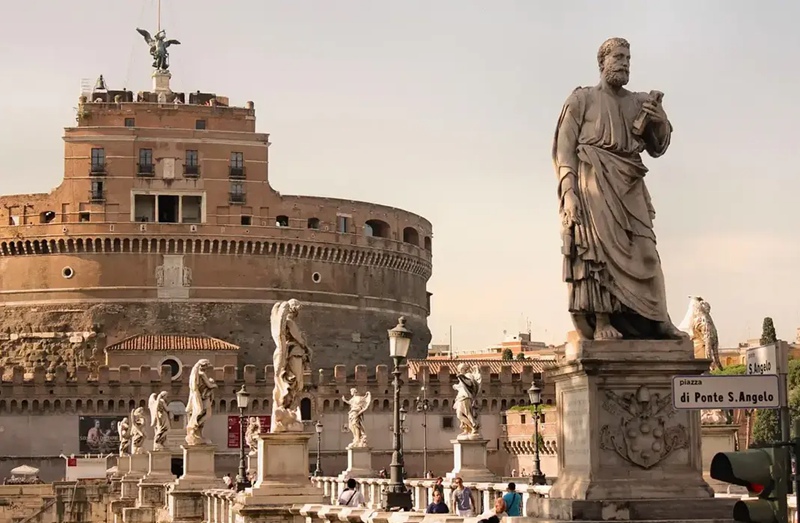
It should be noted that, in fact, only two of the ten angels were created by Bernini himself; the other eight were crafted by his assistants.
Let’s first take a look at the two statues Bernini created himself.
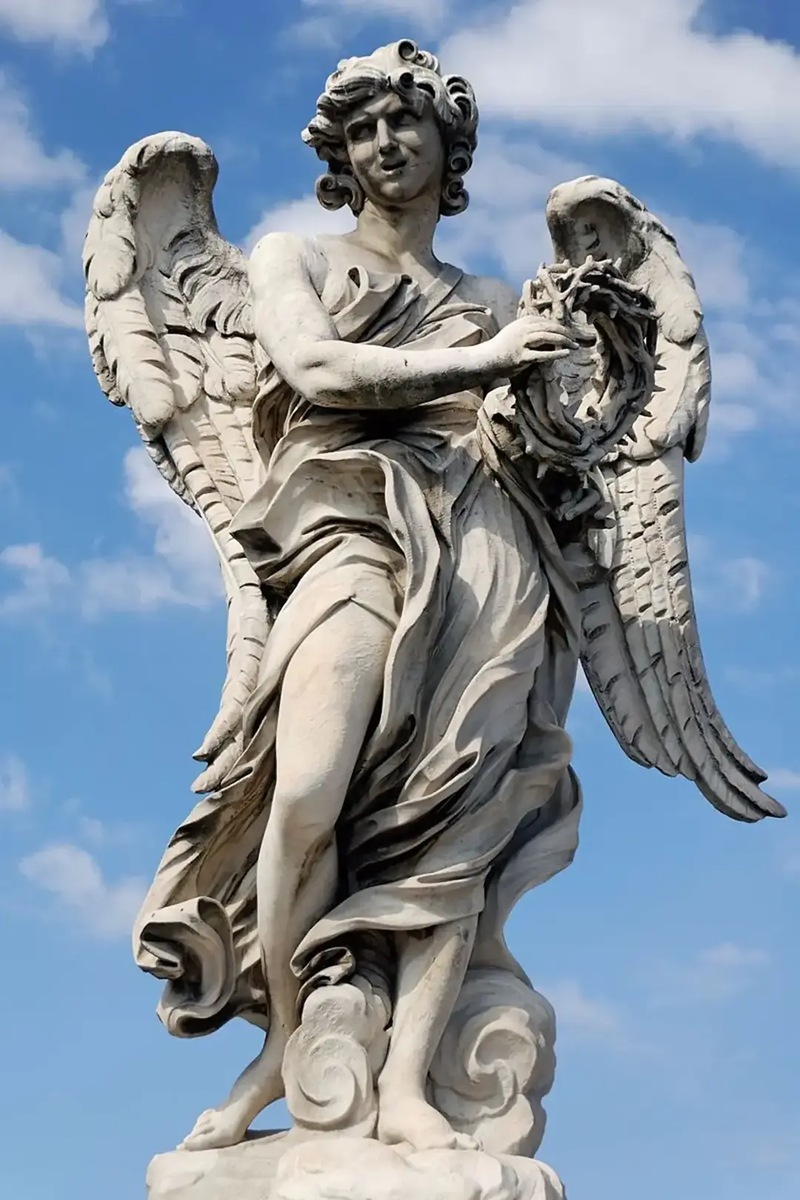
Angel with the Crown of Thorns
Bernini’s original sculpture is housed in the Church of Sant’Andrea.
The crown of thorns is a standard symbol of Jesus’s Passion; King Herod’s soldiers mocked Jesus as the King of the Jews and fashioned the crown of thorns to humiliate him.
They said, “Aren’t you the King of the Jews? Why don’t you have a crown?” “We’ll give you one, then—though this crown is woven from thorns.”
The angel’s wings and the folds of its robe in this sculpture clearly bear Bernini’s signature style.
The “Angel Holding the Crown of Thorns” on the Ponte Sant’Angelo is a replica created by Paolo Naldini.

Angel with the Inscription
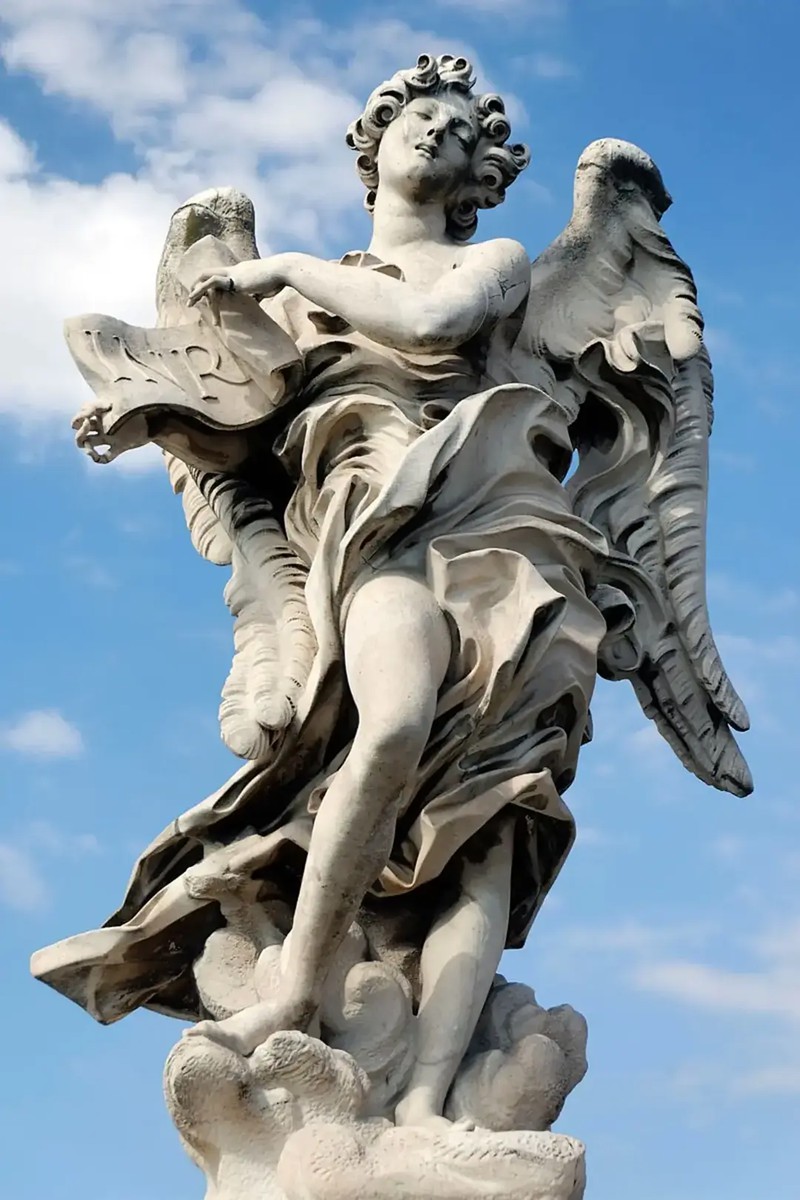
The original sculpture of this angel was created by Bernini.
Bernini’s assistant, Giulio Cartari, made this replica, which was placed on the Ponte Sant’Angelo.
“INRI” is an abbreviation of the Latin phrase “Iesus Nazarenus Rex Iudaeorum,” meaning: Jesus of Nazareth, King of the Jews. This inscription was written by the Roman governor who had Jesus crucified, merely to mock him.
During Jesus’s crucifixion, the soldiers used it to humiliate him, and the “INRI” inscription appears in many depictions of the Passion.
Angel with the Cross
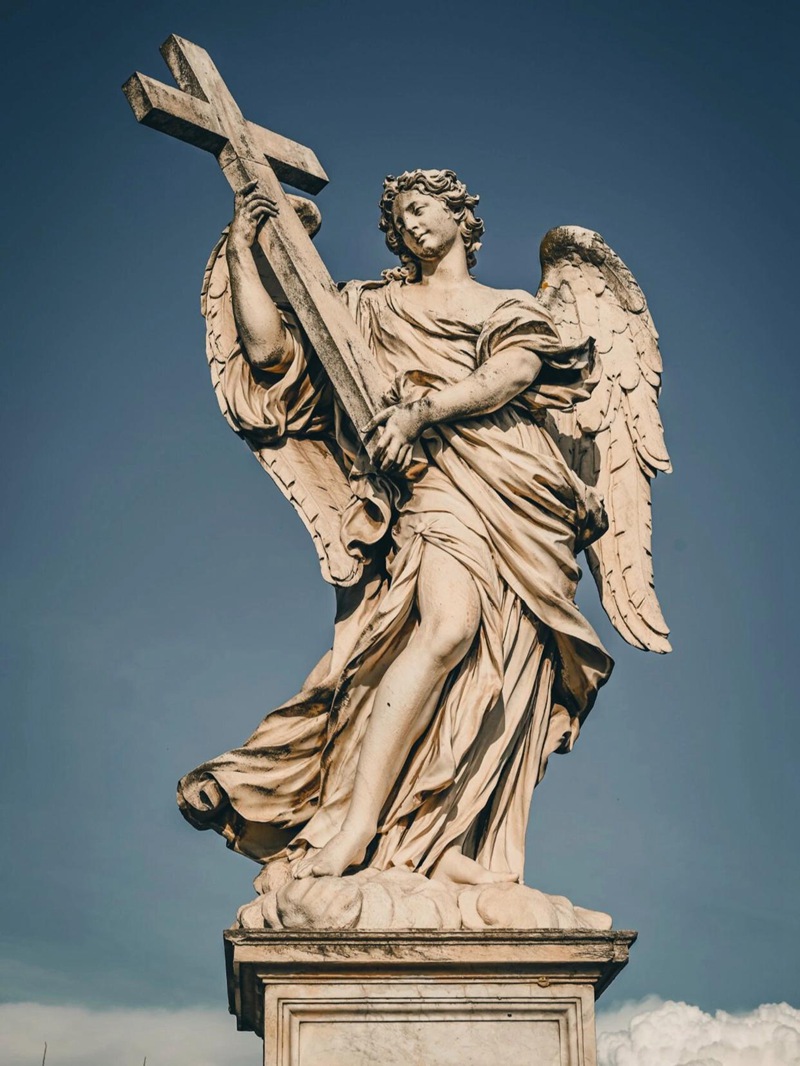
The cross is the instrument of Jesus’ crucifixion and a symbolic relic of Christianity.
This angel sculpture was created by Ercole Ferrata.
Ferrata, a native of Como near Milan, was Bernini’s principal assistant and contributed to the creation of many of Bernini’s works, including *The Blessed Ludovica Albergati-D’Ornano*. Among the generation of sculptors that followed Bernini and other Baroque masters, Ferrata’s workshop was the most successful, making him Bernini’s finest successor.
Angel with the Column
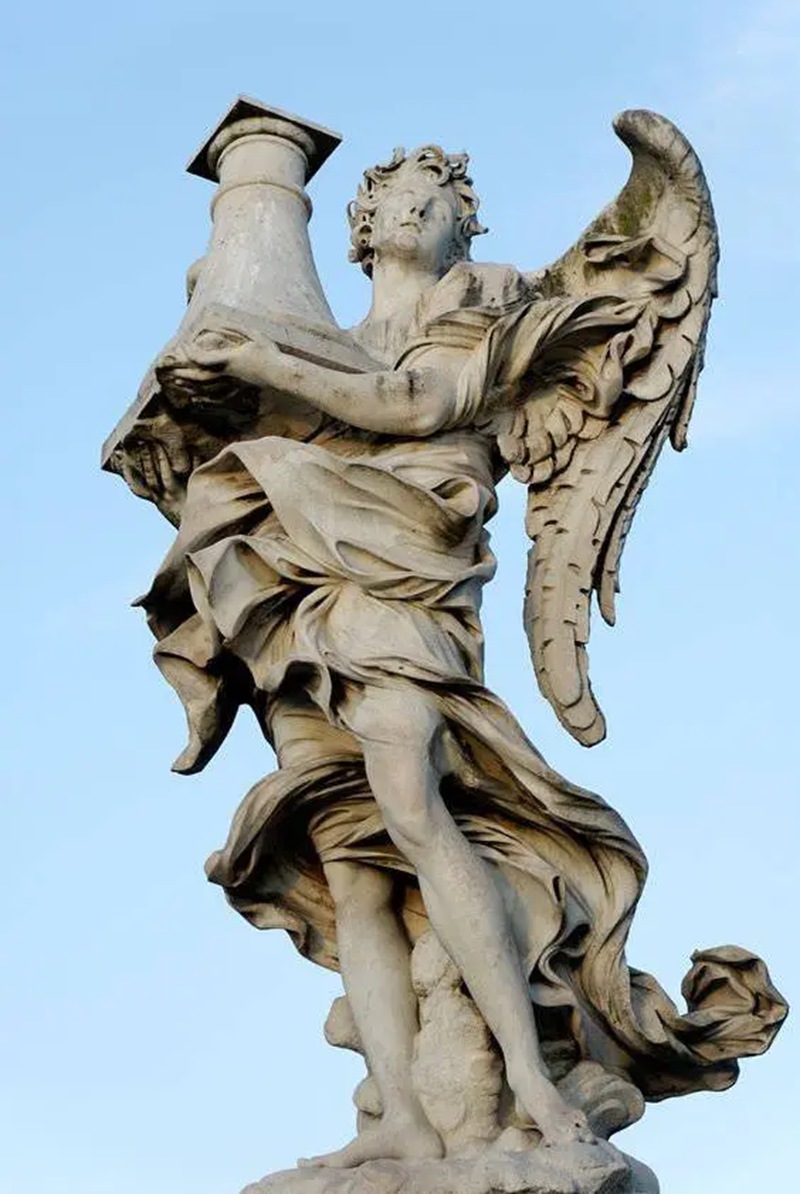
This angel sculpture was created by Antonio Raggi.
The objects held by the angels are all related to the Passion of Christ. After Jesus was arrested by the Roman magistrates, he was bound to a pillar and subjected to severe torture by flogging before being crucified. This is the very pillar to which Jesus was bound at that time.
Angel with the Whips
This sculpture was created by Lazzaro Morelli; the whips symbolize the leather thongs used to flog Jesus at the time. This is easy to understand, as whips were instruments of torture in many places, and they were certainly a common element among the various forms of torture Jesus endured before his crucifixion.
A brief introduction to the sculptor: He was the teacher of Giuseppe, the sculptor who created Christ in the Veil. Born in Florence, he worked in Bernini’s studio, where he crafted the lions and horses for the famous Fountain of the Four Rivers and also contributed to the creation of several statues of saints in St. Peter’s Square.
He was an outstanding apprentice of Bernini and mentored several talented successors, making significant contributions to Baroque sculpture.
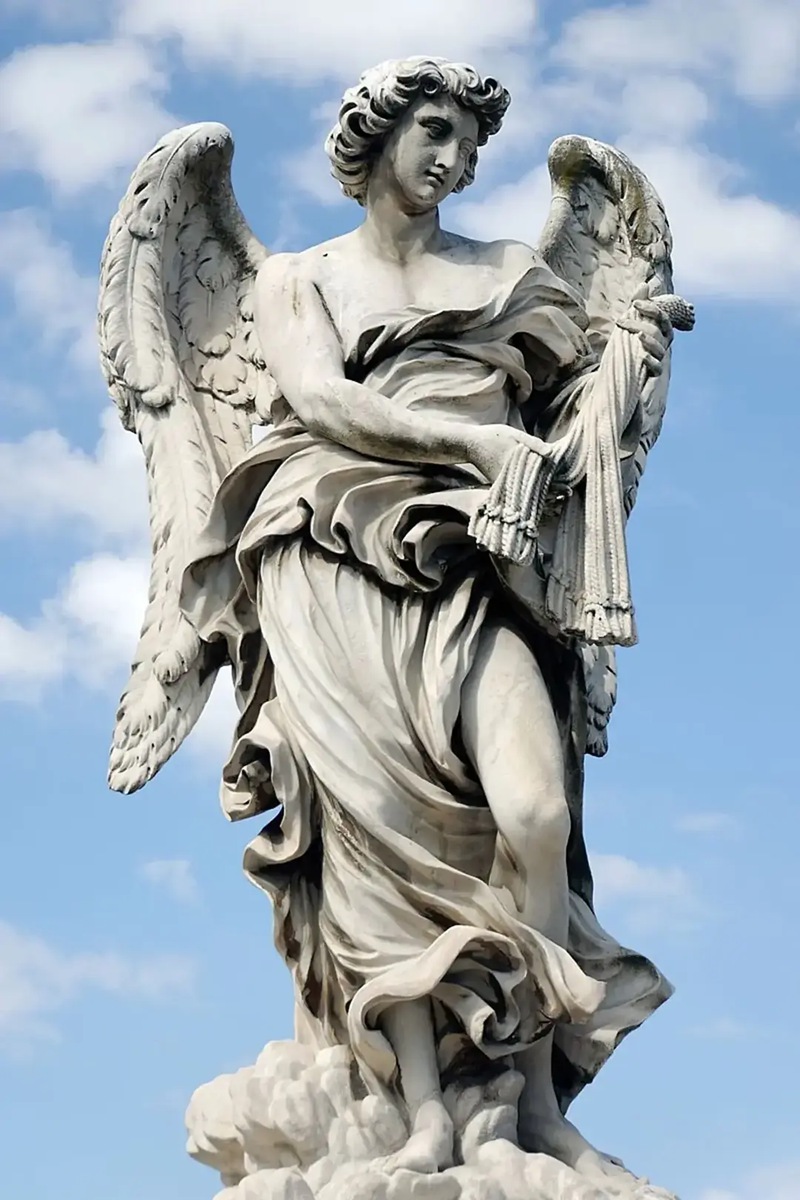
Angel with the Sudarium (Veronica’s Veil)
This is a work by Cosimo Fancelli and Angers Avic Levinthal.
This veil belonged to St. Veronica, a figure from Christian legend.
During his Passion, Jesus had to carry the cross for a long distance. On the way to Calvary, Veronica, a young woman from Jerusalem, saw Jesus in such a pitiful state. Moved by her devotion to the Son of God and the suffering He endured, she used her veil to wipe His face, which was covered in blood and sweat. As a result, His holy image was forever imprinted on her veil. This is the story of “the Veil of Saint Veronica,” a very common subject in religious art.
The angel in this image is holding that very veil.
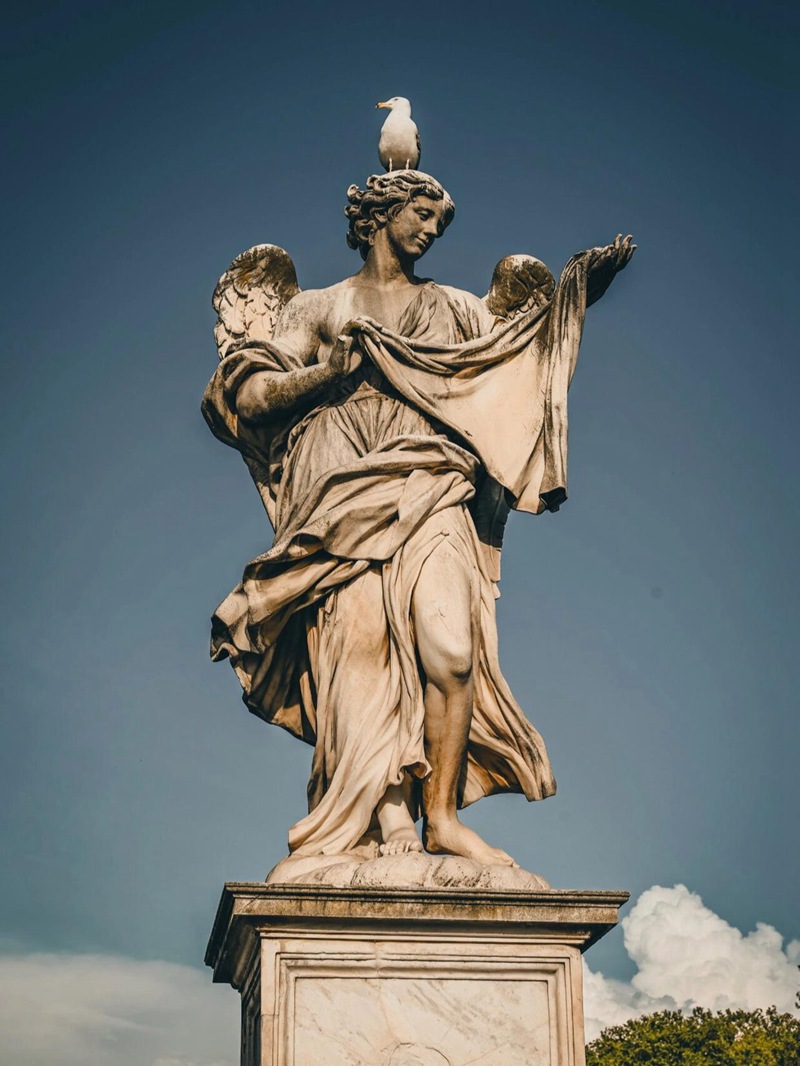
Angel with the Garment and Dice
This statue of an angel was created by Paolo Naldini.
Before his Passion, Jesus suffered not only physical torture but also profound spiritual humiliation. Herod’s soldiers dressed him in a purple robe for his punishment, as purple was a color of great prestige at the time, symbolizing royalty. The Romans intended to mock Jesus, satirizing him as a false king and humiliating him.
As for the dice on the purple robe, the story goes like this: After Jesus was nailed to the cross, the Roman soldiers began rolling dice to decide how to divide his garments, an act filled with contempt and mockery. But before they had finished dividing them, Jesus died.
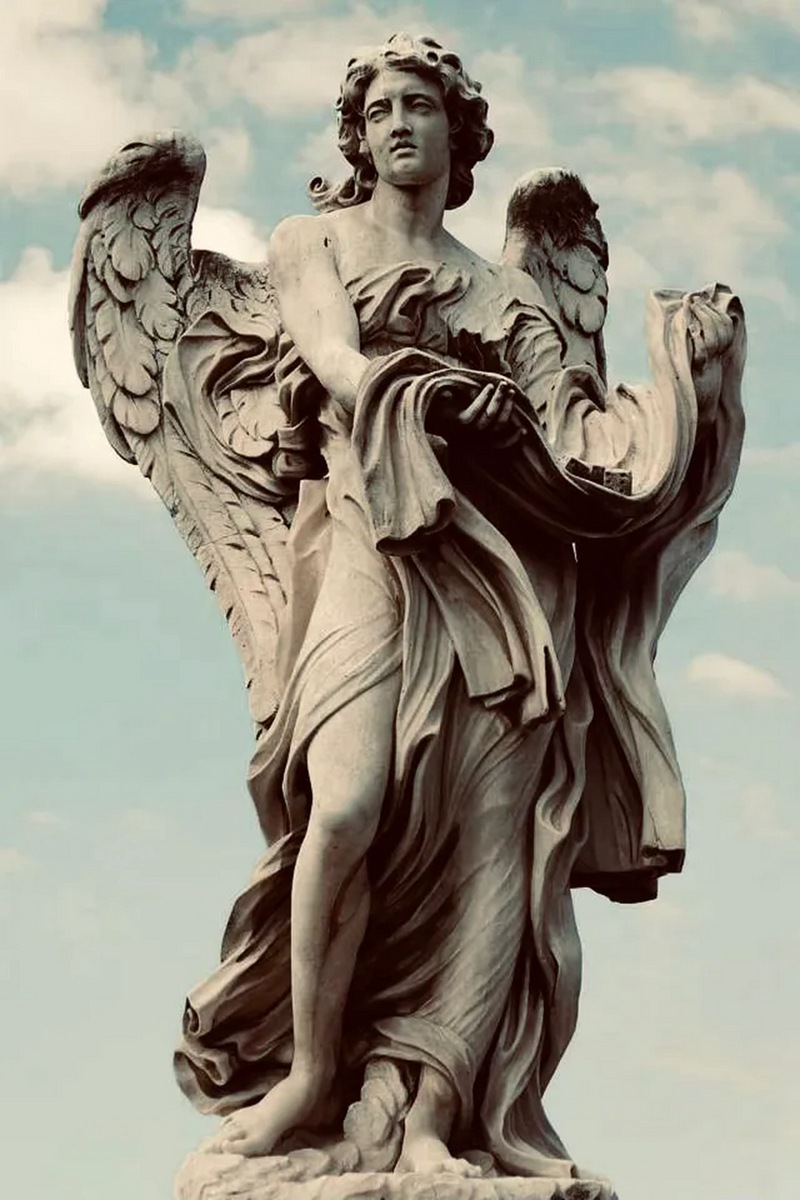
Angel with the Nails
This angel statue was created by Girolamo Lucenti.
The sculpture is straightforward: the angel is displaying the nails driven into Jesus’ body. Since Jesus was crucified, the nails are the murder weapon.
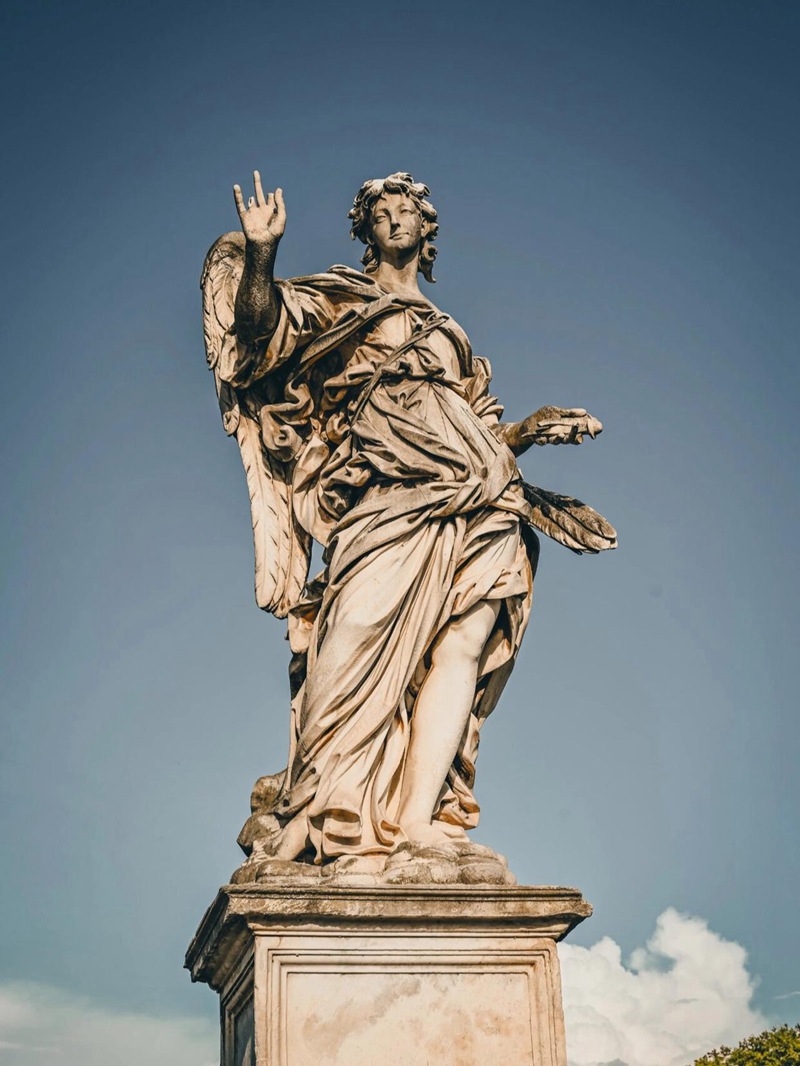
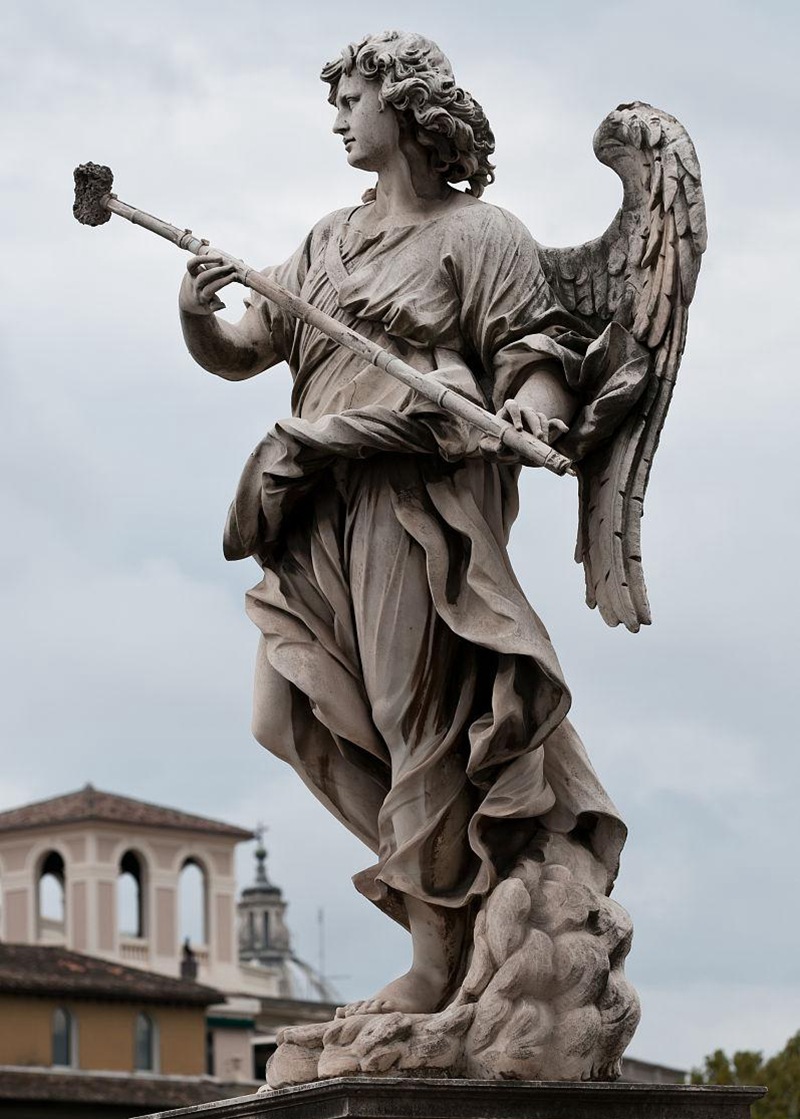
Angel with the Sponge
Angel with the Sponge was created by Antonio Giorgetti.
While Jesus was suffering on the cross, he cried out in agony, “I am thirsty.” A compassionate soldier then dipped a sponge in vinegar and held it to his lips so he could drink. People at the time believed that this vinegar could alleviate pain by numbing and soothing the senses. This scene has since become a classic subject in religious art.
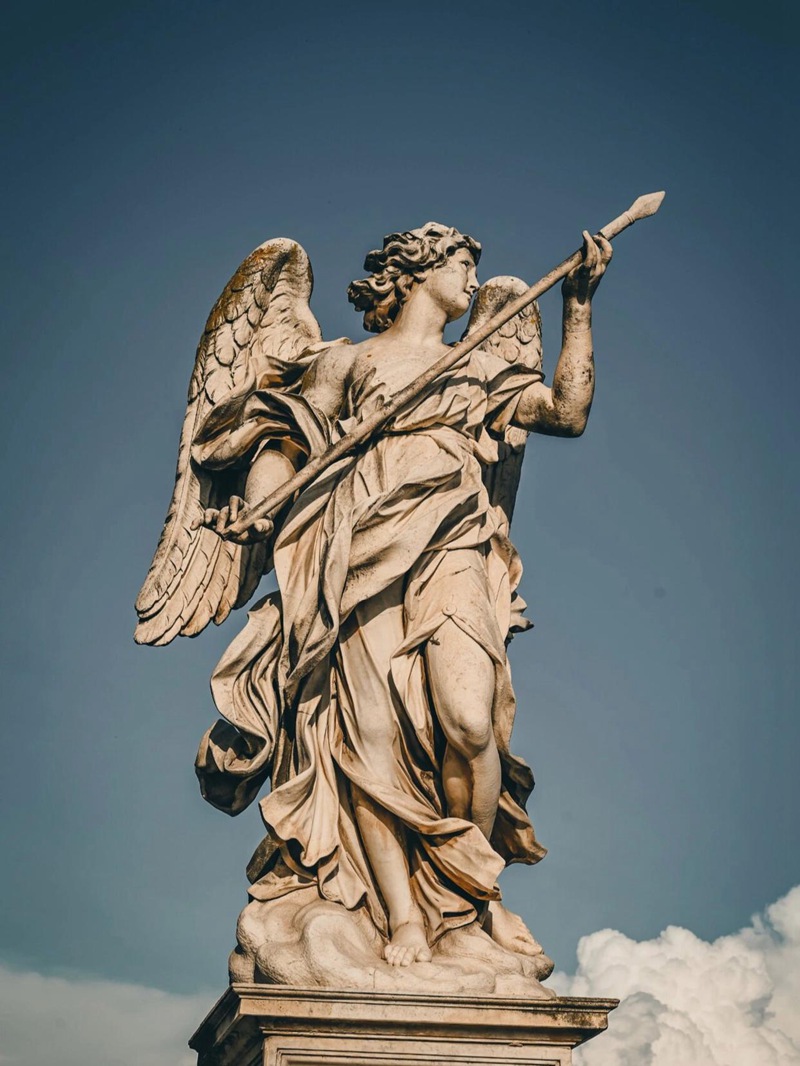
Angel with the Lance
This sculpture, Angel with the Lance, was created by Domenico Guidi.
This sculpture of an angel holding a lance draws on the famous Christian legend of “Longinus’s Lance.”
The spear belonged to Longinus. Longinus was a soldier under King Herod who was tasked with crucifying Jesus. He had very poor eyesight and was nearly blind. When Jesus was bound to the cross, Longinus pierced Jesus’ side with the spear to test whether he was dead. A miracle then occurred: Jesus’ blood spurted into Longinus’ eyes, and his sight was instantly restored.
From that moment on, he transformed from an accomplice of King Herod into a faithful follower of Jesus.
He laid down his spear and became a Christian on the spot.
This once-deadly weapon also became a Christian relic, giving rise to many legends in later generations.
From Classic to Contemporary: The Charm of Angel Sculptures
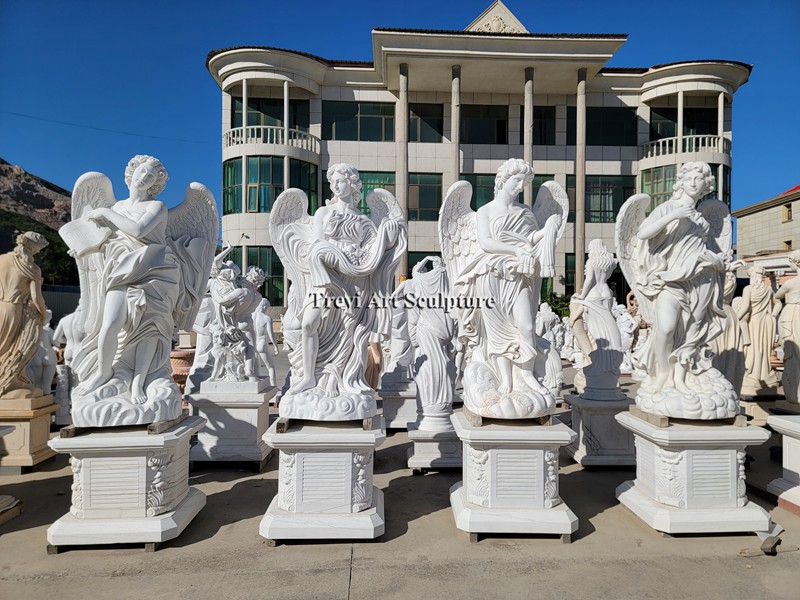
Bernini’s angel sculptures belong not only to Rome but to the entire history of world art. To this day, this emotional and dynamic Baroque style remains widely used in churches and religious spaces, private gardens and estates, villa courtyards, and monumental sculpture projects.
If you, too, are moved by these classic angel sculptures, our factory can create high-quality, custom-made Baroque-style marble angel sculptures for you. Please contact us to receive more design options and quotes, and let classic art come to life in your space.
FAQ
1. What is the Ponte Sant’Angelo?
Ponte Sant’Angelo is a historic bridge in Rome that spans the Tiber River, connecting the city center to Castel Sant’Angelo. Originally built in the 2nd century AD under Emperor Hadrian, it later became famous for its stunning Baroque angel statues designed by Gian Lorenzo Bernini. Today, it is one of the most iconic and picturesque bridges in Rome.
2. How many angel statues are placed along the sides of Ponte Sant’Angelo?
There are 10 angel statues placed along the sides of Ponte Sant’Angelo. Each angel holds an object related to the Passion of Christ, such as the cross, nails, or crown of thorns, symbolizing different moments of Jesus’s crucifixion.
3. Why is Castel Sant’Angelo so famous?
Castel Sant’Angelo is famous for its rich history and unique transformation over time. It was originally built as Emperor Hadrian’s mausoleum, then later served as a fortress, a papal residence, and even a prison. Its strategic location and connection to the Vatican via the Passetto di Borgo make it historically significant. Today, it is a museum and a major landmark in Rome.
4. Who is the statue on top of Castel Sant’Angelo?
The statue on top of Castel Sant’Angelo represents Archangel Michael. According to legend, the archangel appeared above the castle sheathing his sword, signaling the end of a plague in Rome. This moment gave the castle its current name, which means “Castle of the Holy Angel.”