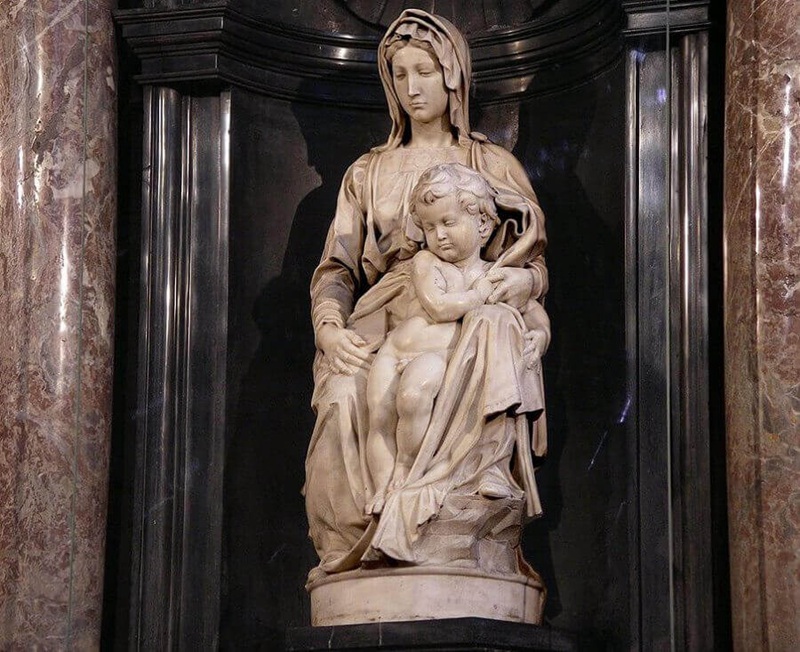
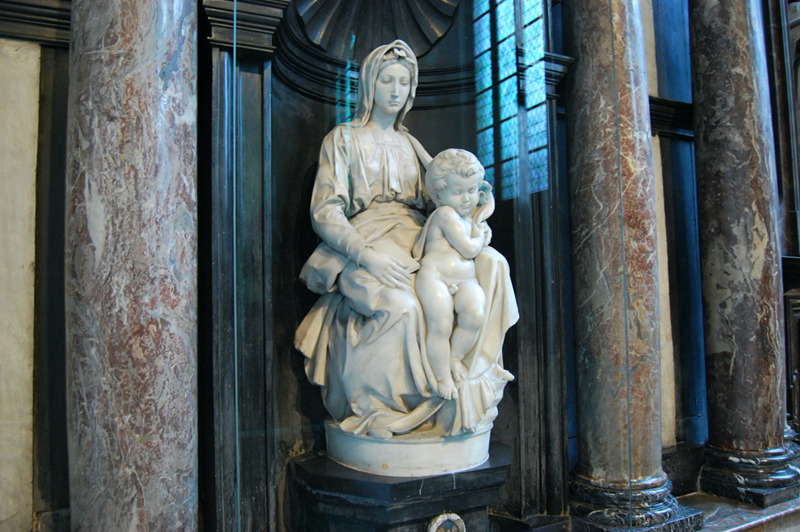
The Bruges Madonna, crafted between 1501 and 1504 (some sources suggest 1506), is one of Michelangelo’s early masterpieces and the only marble sculpture by the artist to leave Italy during his lifetime. Its creation reflects a blend of Michelangelo’s artistic breakthroughs, a specific commercial commission, and a fascinating history of ownership and movement throughout the centuries.
Why Did Michelangelo Sculpt the Bruges Madonna?
Michelangelo’s creation of the Bruges Madonna was not merely the fulfillment of a commission but an intentional rebellion against the conventions of religious art at the time. He rejected the popular aesthetic of portraying the Virgin Mary as a “joyful housewife” and the Christ child as a playful, mischievous toddler. Instead, he infused the sculpture with a solemnity and weight that captured the divine dignity and burden of salvation. The Virgin’s restrained yet heavy expression and the Christ child’s poised, resolute demeanor convey a profound sense of destiny and spiritual gravity, departing radically from the festive and decorative portrayals typical of the era.
How Did Michelangelo Sculpt the Bruges Madonna?
The Portrait in Stone: The Meaning of Sculpting
Michelangelo famously said, “The sculpture is already complete within the marble block, before I start my work. It is already there; I just have to chisel away the superfluous material.” To Michelangelo, the chisel was not a tool of domination but a probe of the soul, a means of introspection. Each strike of the hammer was a question posed to himself: Who am I? Through this relentless self-examination, Michelangelo uncovered not just the image but the essence of his subjects. In his hands, the cold marble became a vessel for the fiery spirit of creation.
A Masterpiece at 31: When the Madonna Became More Than Gentle
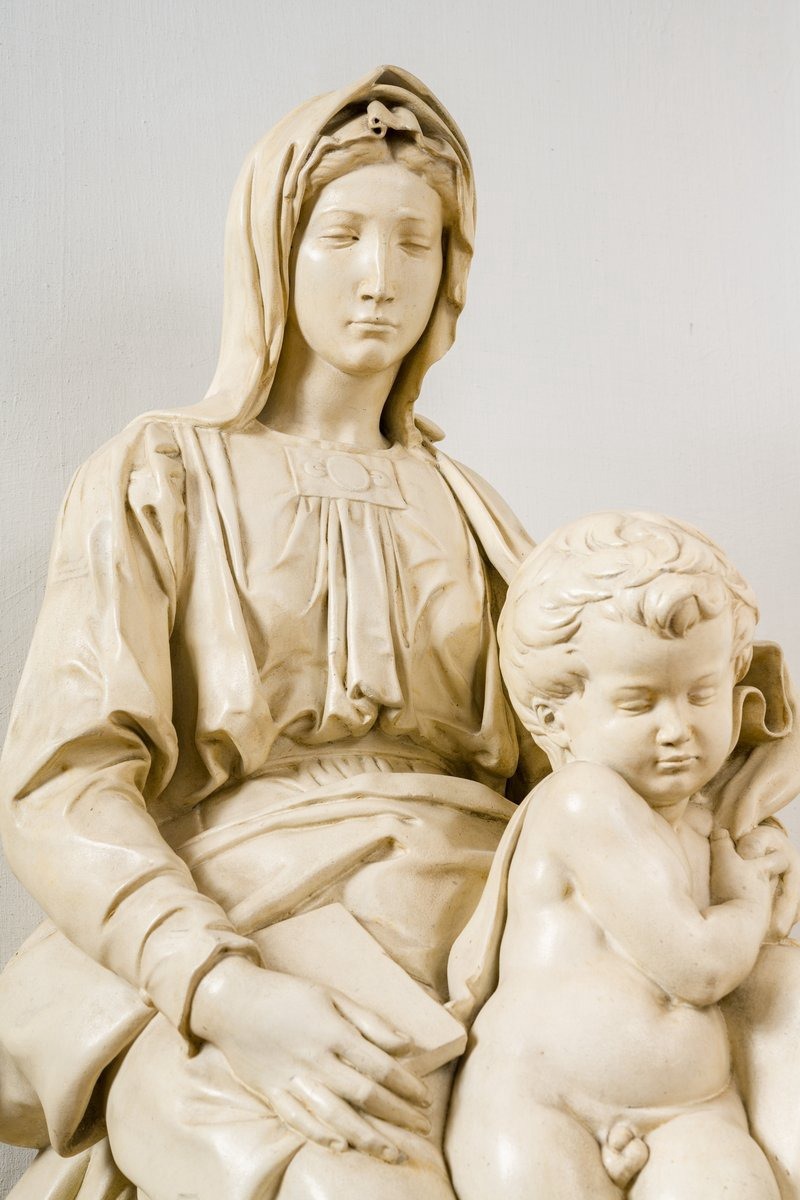
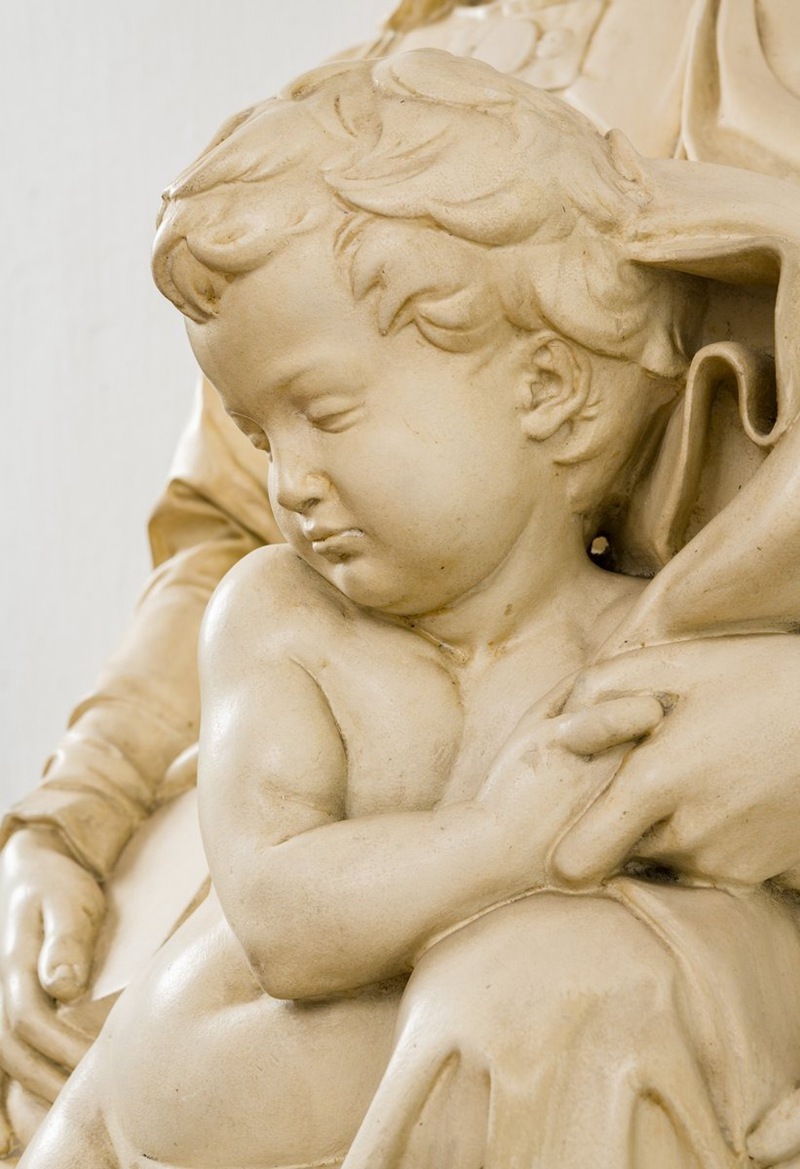
Completed in 1508 when Michelangelo was just 31 years old, the Bruges Madonna cemented his reputation as one of the greatest masters of his time. Challenging the era’s aesthetic norms, Michelangelo deliberately avoided portraying the Virgin Mary as a radiant, joyful figure. Instead, he gave her a restrained and profoundly introspective expression, embodying the weight of divine purpose. Meanwhile, the Christ child is depicted sitting upright, his gaze unflinching, as if ready to leave his mother’s side and embrace his sacrificial destiny. The sculpture exudes a cold, solemn majesty, reminding viewers that divinity carries no frivolity—only purpose.
Wolfflin’s Echo: A Cross-Century Validation
The art historian Heinrich Wolfflin once remarked, “The Bruges Madonna demonstrates a new artistic spirit, resonating with a harmony that is both bold and enduring.” This sentiment, articulated over 400 years after Michelangelo’s time, continues to resonate today. The Bruges Madonna transcends its medium, transforming from a static sculpture into a timeless dialogue between the artist and the observer, amplifying the human experience of pain into the divine inevitability of destiny.
From Bruges to Today: Three Centuries of Reflection
Housed in the Church of Our Lady in Bruges, the Madonna has not faded with time but instead has become a mirror—reflecting the stylistic ideals of the 16th century while also challenging modern viewers to confront their own perceptions of the sacred. Each gaze upon the sculpture becomes an invitation to self-reflection: How much of my own vanity am I willing to chisel away in the pursuit of true faith?
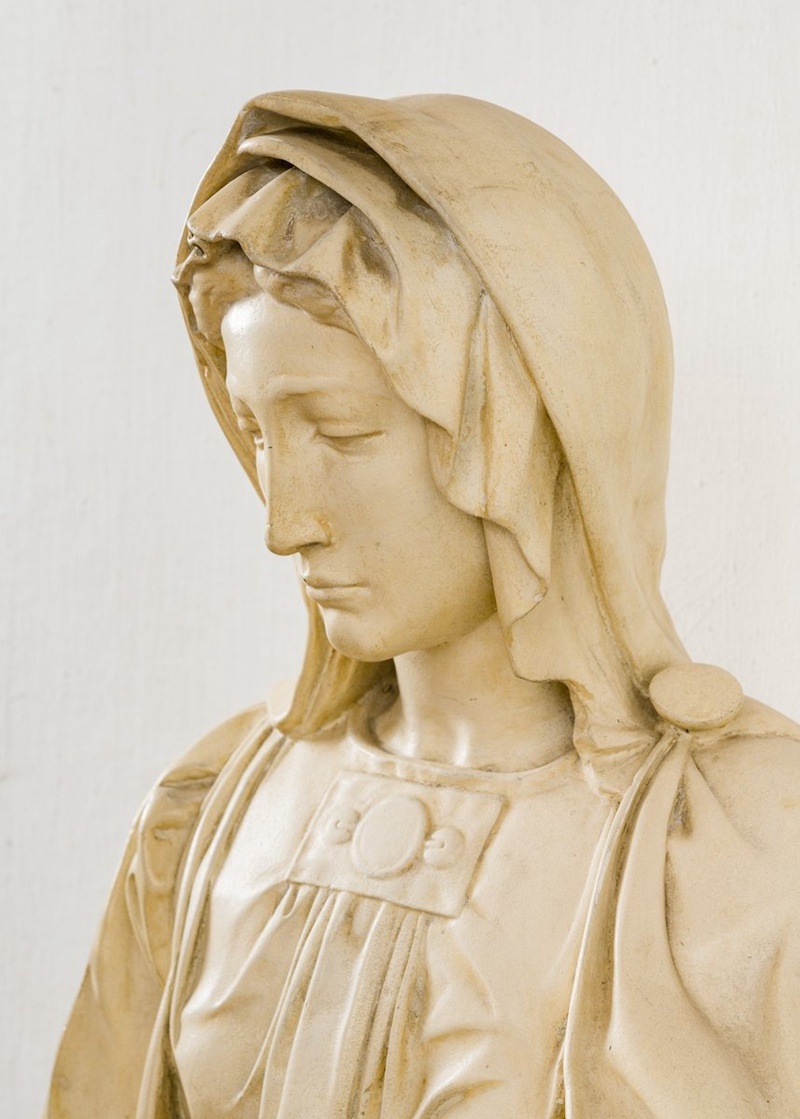
Replicas of the Bruges Madonna Around the World
The Bruges Madonna has inspired countless replicas scattered across the globe, a testament to its enduring significance. Each reproduction serves as a bridge, connecting modern admirers with Michelangelo’s timeless vision of divinity and humanity. These replicas capture the essence of the original while allowing its spirit to be shared far beyond its home in Bruges.
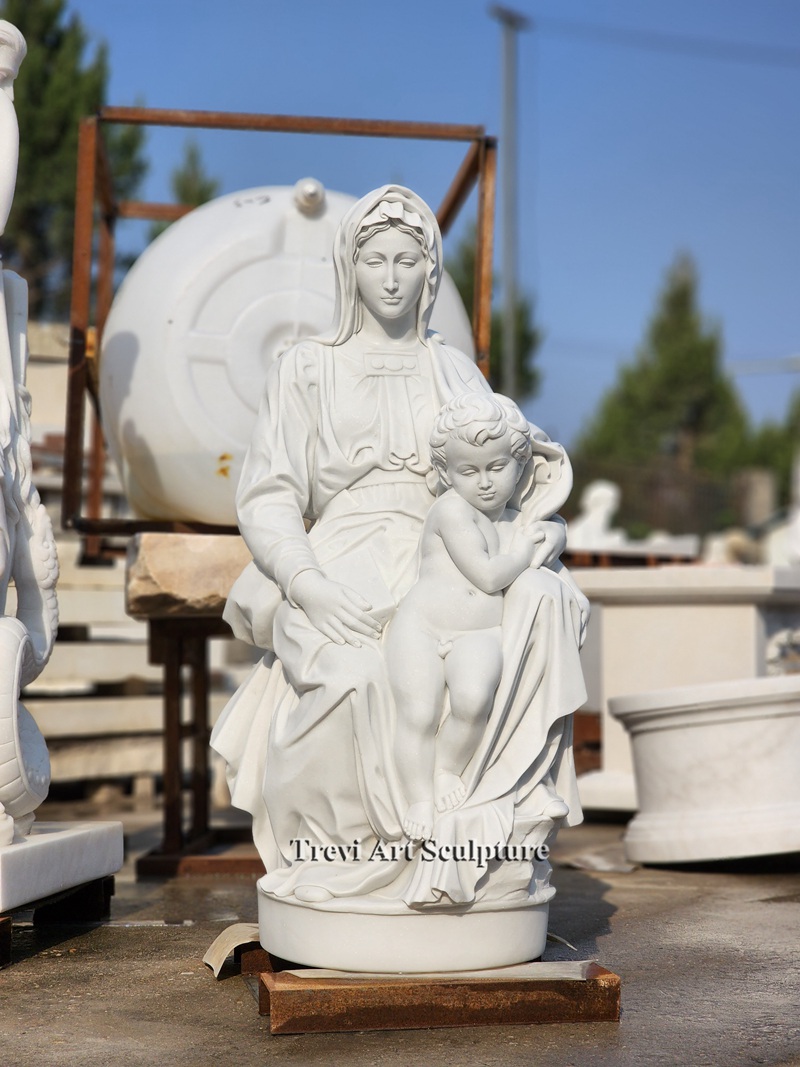
Bringing the Bruges Madonna to Life Again
At our factory, we have a team of highly skilled religious sculpture artists who specialize in recreating classic Virgin Mary statues like the Bruges Madonna. If you are interested in owning a faithful replica of this iconic sculpture, we would be delighted to discuss your needs. Please feel free to contact us to learn more information.