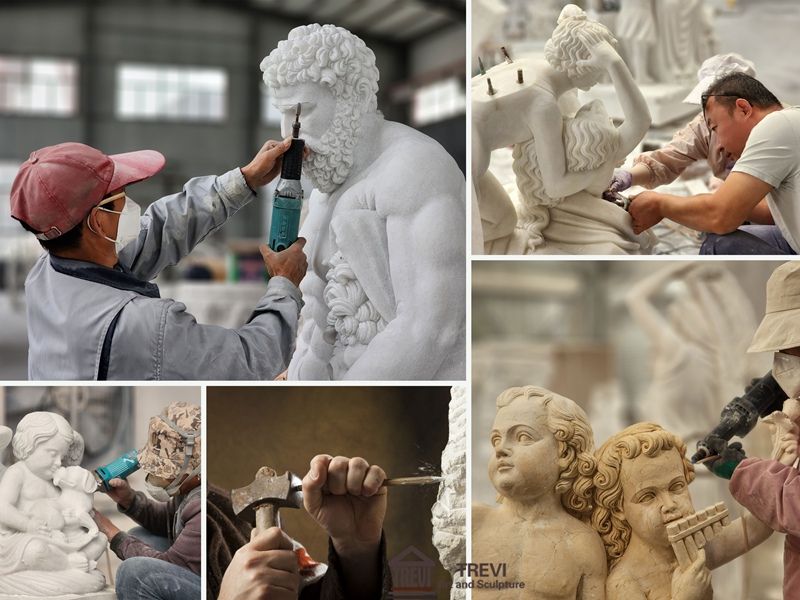
As a sculptor with over forty years of experience in the marble industry, I often encounter a common misconception: people see marble as just another building material. However, to me, marble is not merely stone; it is a “captured soul.” This perspective shifts the narrative from viewing marble as a commodity to appreciating it as a medium of artistry.
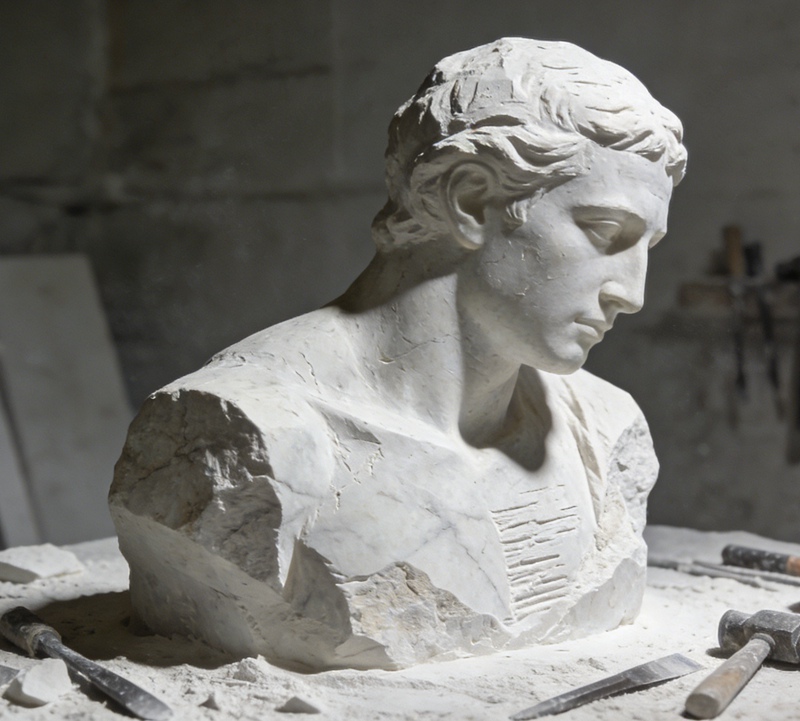
Often, a client will walk into my studio, run their hand over a finished bust, and ask, “Why is the price so high when it’s just stone?”
My answer is always the same: You aren’t paying for the stone. You are paying for the 1% that survived the mountain, the risk of a single heartbeat’s mistake, and the centuries of history held within its grain.
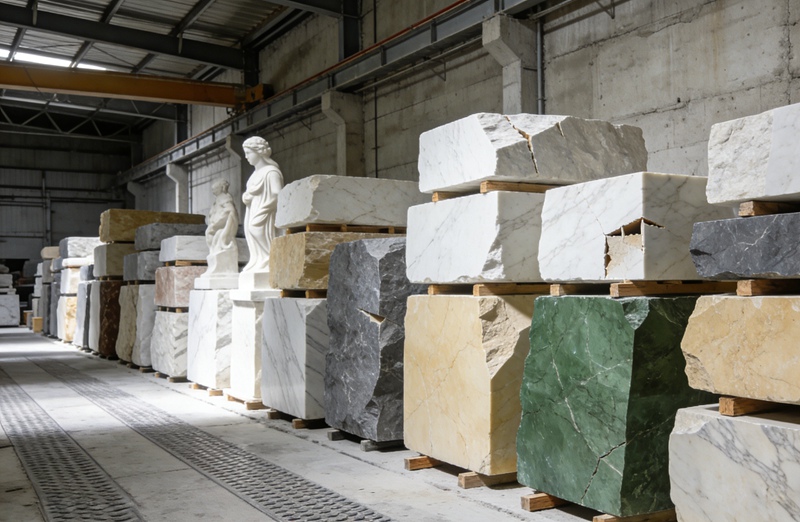
Why Only 1% of Marble Can Be Used for Sculpture
Not all marble is good for carving statues. In fact, only about 1% of marble from quarries is suitable for sculpture. Most marble is used for buildings, tiles, or decoration.
This is because marble sculpture needs to be strong, pure, and consistent, while most marble does not meet these standards.
Why High-Quality Marble Is So Rare
Only a few quarries in the world produce marble that is good enough for sculptures. A famous example is the Carrara marble quarry in Italy.
The natural conditions needed to create this kind of marble are very special. They take millions of years to form, and cannot be recreated by humans. That’s why this material is rare and valuable.
Simple Differences: Sculpture vs. Construction Marble
Here’s an easy way to understand the difference:
| Feature | Sculpture Marble | Construction Marble |
|---|---|---|
| Grain | Very fine and even | Rough and uneven |
| Density | Strong and compact | Softer, less dense |
| Purity | Clean, very few impurities | More impurities and spots |
Why These Differences Matter
Marble sculpture must be able to handle detailed carving without breaking.
- Fine-grain helps artists carve small details
- High density makes the stone stronger
- High purity keeps the surface clean and smooth
If the marble is too rough or has too many impurities, it can crack or look uneven. That’s why only a small percentage of marble is chosen for sculpture work.
Waste Rates
One of the industry’s harsh realities is the waste involved in finding the perfect stone. To secure a flawless block for a large sculpture, I often have to reject tons of construction-grade material due to invisible cracks or other imperfections. This waste significantly contributes to the overall cost.
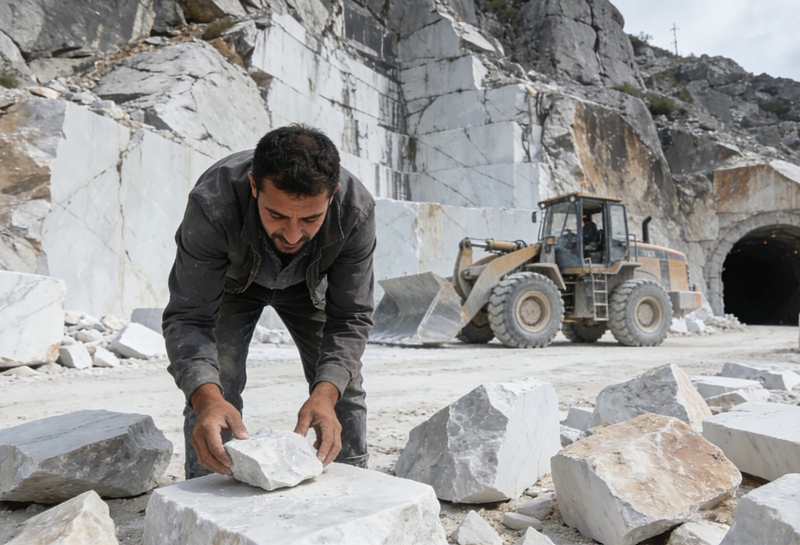
Logistics: The High Stakes of Moving Giants
The process of extracting and transporting marble is fraught with challenges. In the high-altitude regions of the Apuan Alps in Italy, the risks are considerable.
Risk Costs
The extraction process is labor-intensive and perilous. The marble blocks must be carefully cut and transported, which involves substantial risk and expense. Unlike construction slabs, sculptures require monolithic blocks, making transportation costs skyrocket.
Integrity
While building materials can be cut and modified, sculptures need whole pieces. This requirement means that the logistics of moving these massive blocks are complex and costly, further driving up the price.
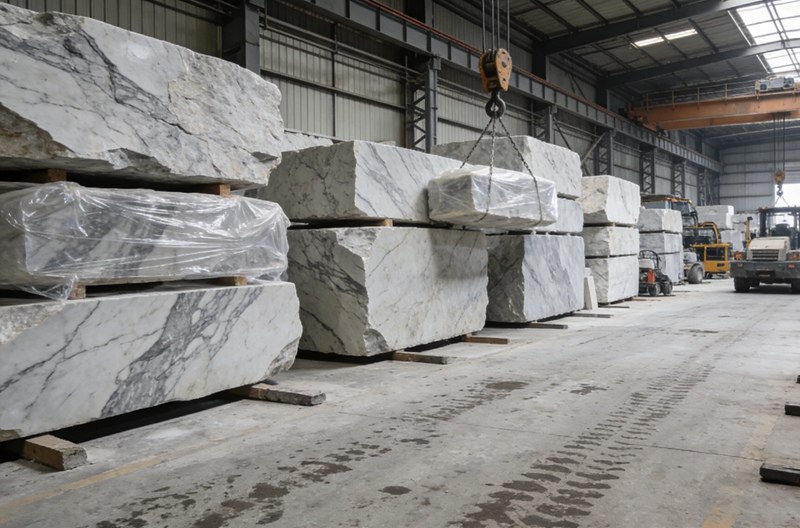
The Cost of Perfection: Zero Margin for Error
In the world of sculpture, there is no room for error. Each chisel strike is irreversible, setting the sculptor on a path that cannot be undone.
Irreversibility
In digital art, you hit Ctrl+Z. In oil painting, you paint over the mistake. In marble, every strike is a permanent decision.
I remember a project five years ago—a life-sized veil draped over a figure. After four months of carving, I encountered a “sand hole”—a tiny pocket of air and grit hidden deep inside the stone from millions of years ago. To fix it, I had to re-engineer the entire anatomy of the garment. This “hidden risk” is factored into the price. You are paying for the sculptor’s ability to navigate a minefield for six months without a single fatal error.
Hidden Losses
During the carving process, I often encounter unexpected challenges, such as internal voids or sudden color variations. To mitigate these risks, I invest significant time in assessing the stone before beginning the actual work.
Time Costs
Transforming a raw block into a lifelike figure can take months or even years of painstaking labor. The time and skill required to achieve a masterpiece are part of the hidden costs that contribute to the artwork’s final price.
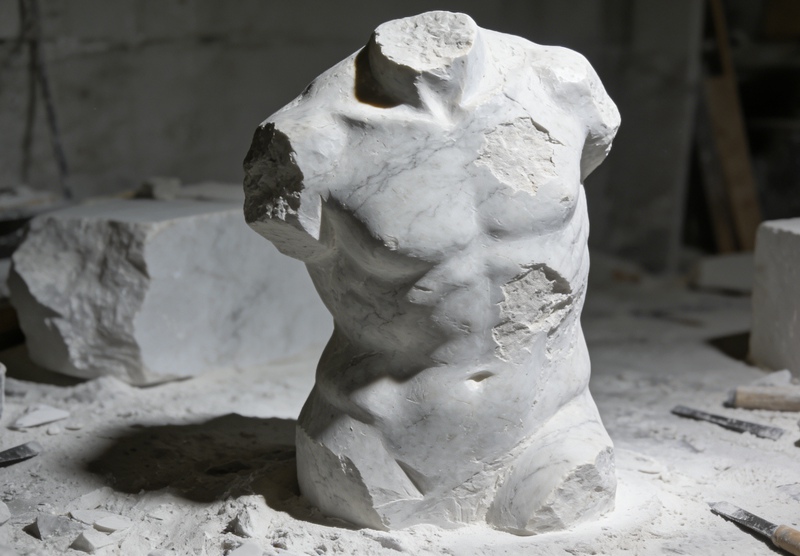
The Legacy Value: Investment Beyond Utility
One of the most compelling reasons for the high cost of marble sculptures is their longevity. These pieces are not just art; they are investments that can be passed down through generations.
Artistic Lifespan
Unlike synthetic materials, marble sculptures can last for centuries. They are living assets, carrying the weight of history and artistry.
Handcrafted Touch
The difference between CNC machine work and hand-finishing is stark. The soul imbued in a hand-carved piece is what truly justifies its price. This craftsmanship is often what clients are willing to pay for, as it adds an intangible value to the work.
Conclusion: You’re Buying Time, Not Just Mineral
In summary, the high cost of marble is not merely a reflection of the stone itself but of the centuries of geological evolution and the pinnacle of human craftsmanship that it represents.
As I often say, “Price is what you pay; value is what you leave behind.” Investing in a marble sculpture is not just about acquiring a piece of art; it’s about embracing a legacy that transcends time.