The story of David and Goliath is one of the most enduring “underdog” tales in history. But in the world of art, the real battle isn’t between the boy and the giant—it’s between the two great marble statues that define the Renaissance and the Baroque eras.
While both Michelangelo and Bernini chose the same subject, they captured two entirely different “Davids.” Here is a breakdown of how these two legends reimagined the biblical hero.
1. The Moment in Time
The biggest difference between these two statues is the timing of the action.
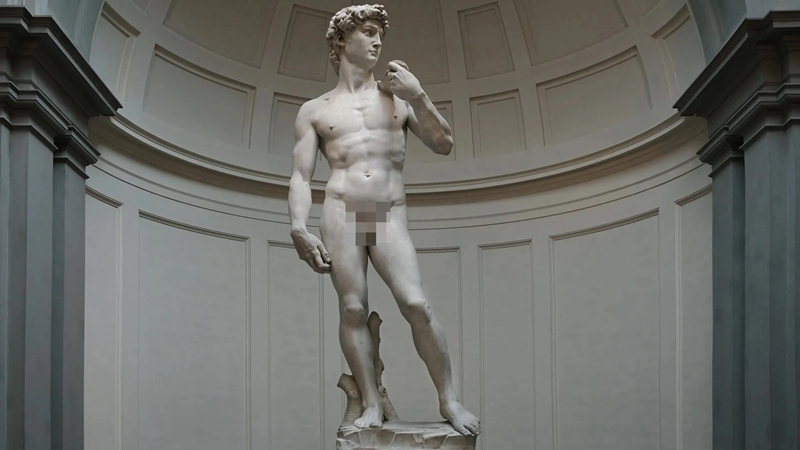
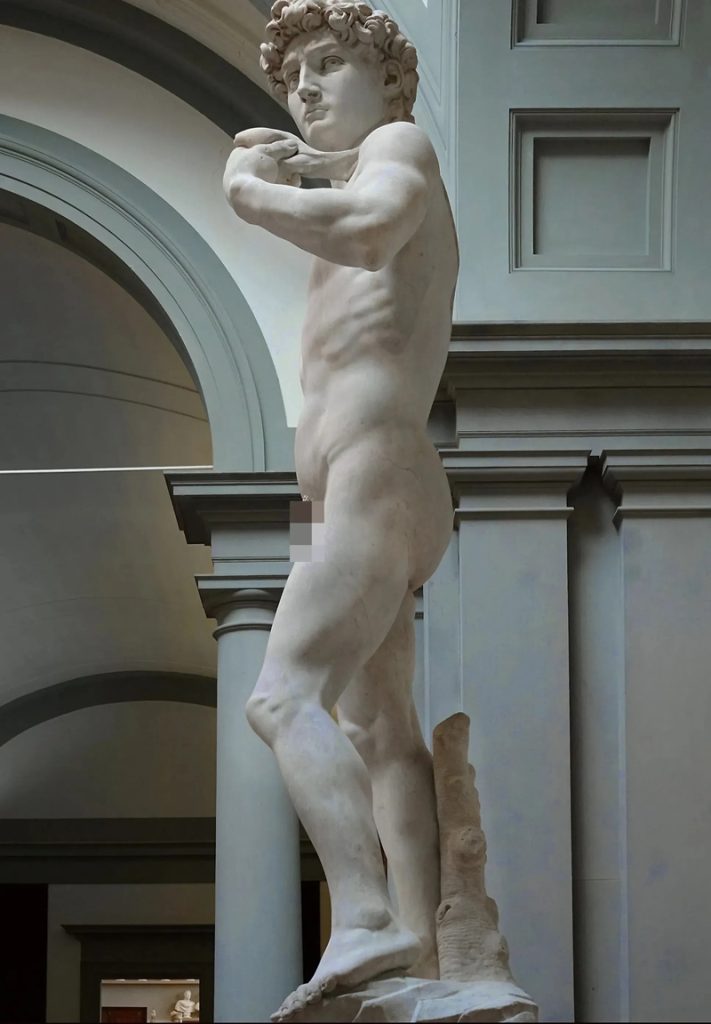
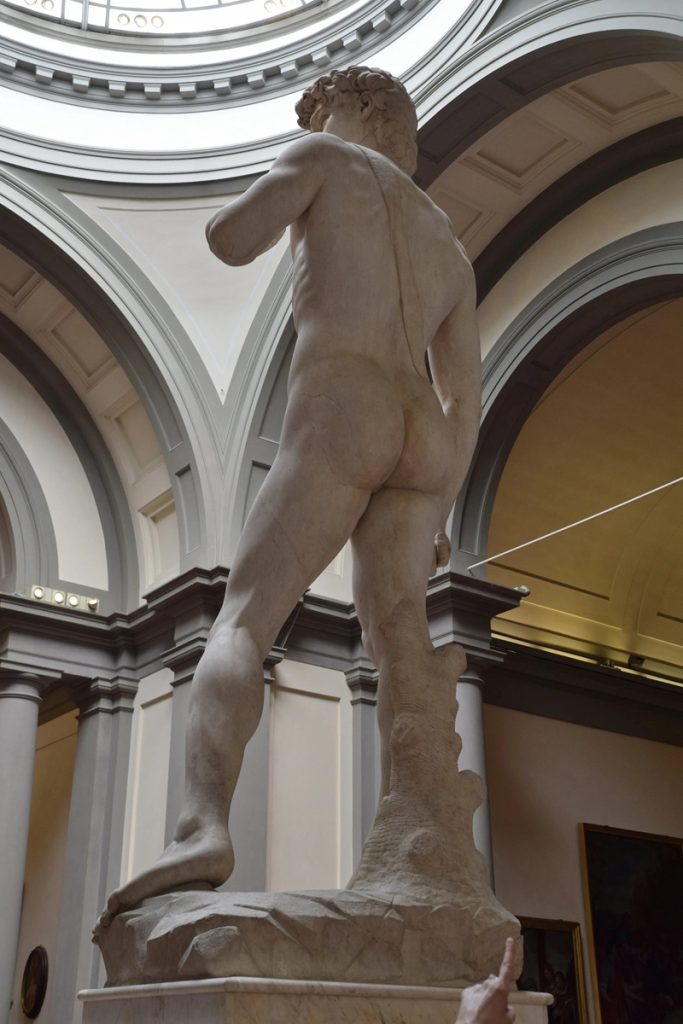
Michelangelo (High Renaissance, 1504): This is the “Before.” Michelangelo’s David is a moment of intellectual tension. He hasn’t thrown the stone yet; he is watching, calculating, and preparing. It represents the Renaissance ideal of man as a rational, thinking being.
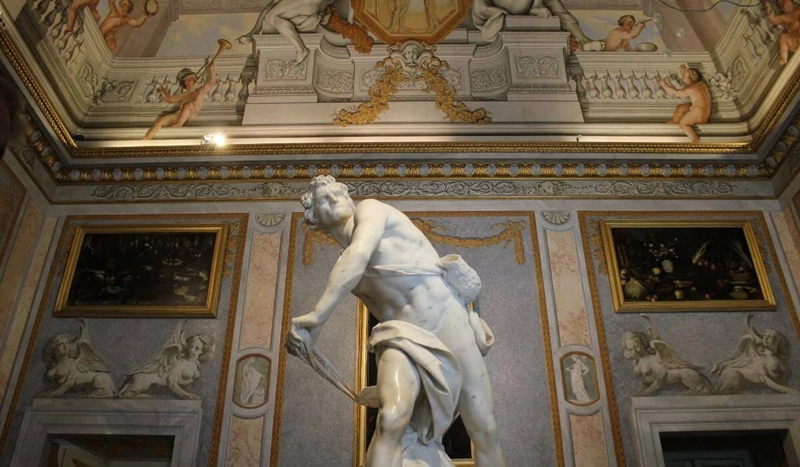
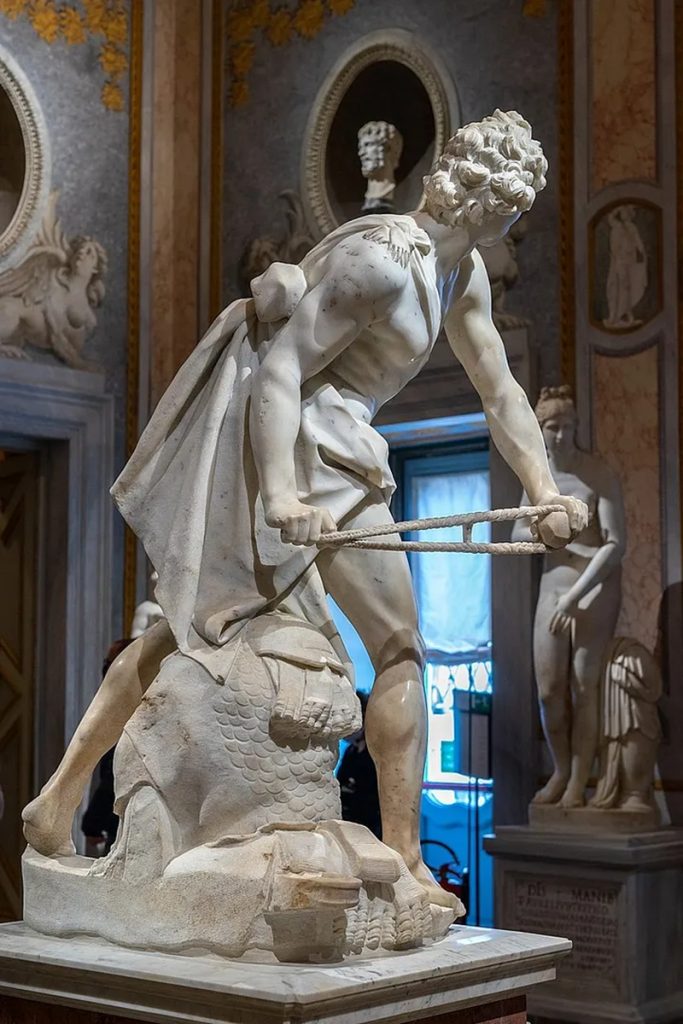
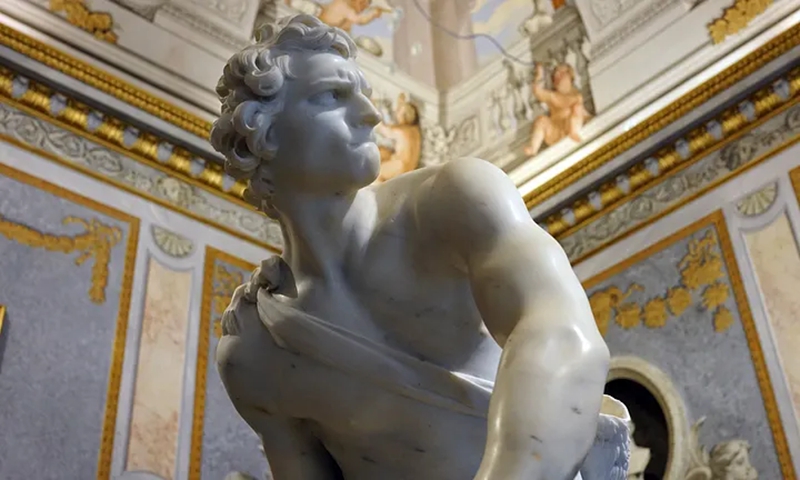
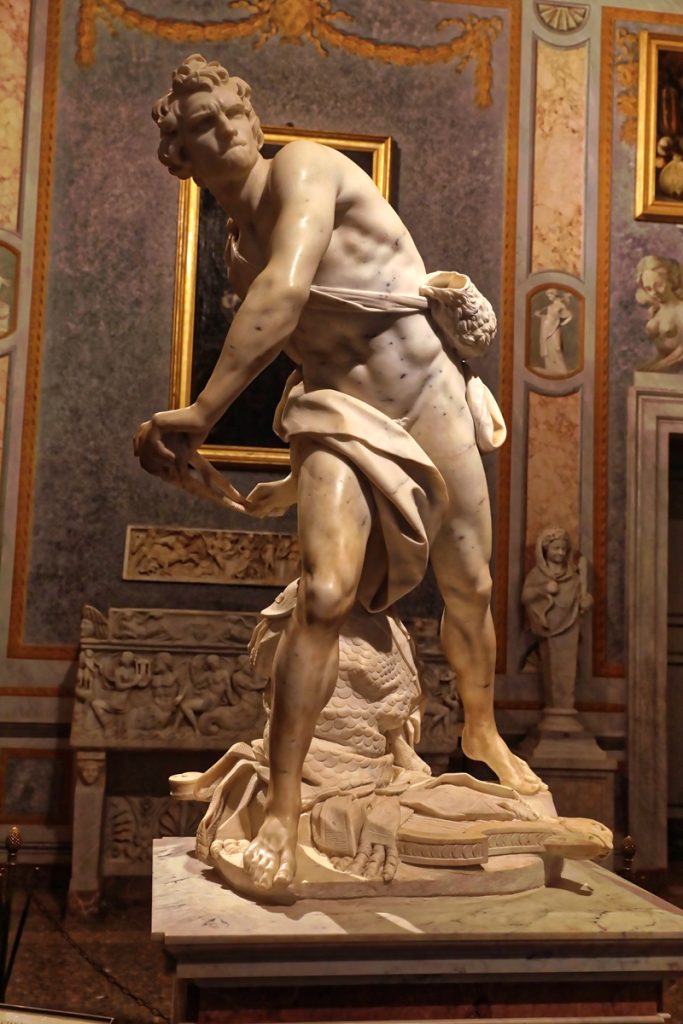
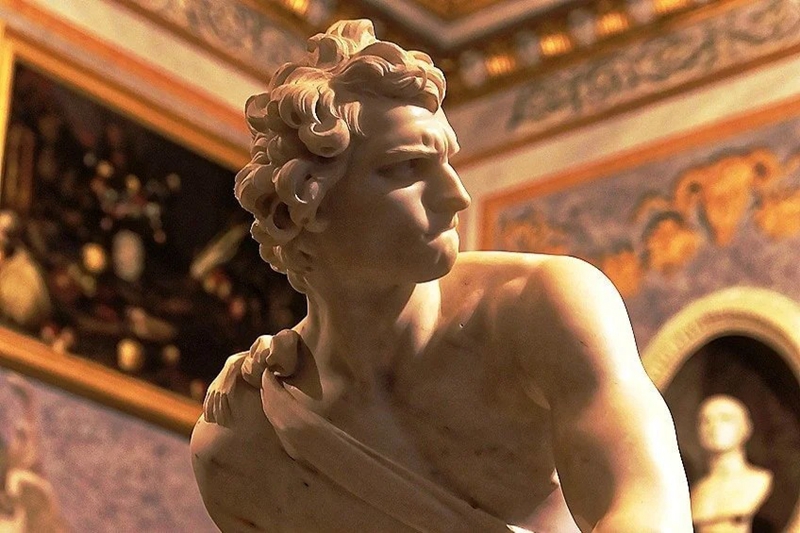
Bernini (Baroque, 1623): This is the “During.” Bernini captures the peak of the action. David is mid-twist, his body coiled like a spring, about to unleash the projectile. It’s all about movement, adrenaline, and the physical reality of the fight.
2. Size Matters
The Giant: Michelangelo’s version is a colossus, standing over 5 meters (17 feet) tall. It was meant to be seen from below, perched high on a cathedral.
The Human: Bernini’s version is life-sized. Because it’s scaled to a human level, the drama feels more immediate and personal, as if you are standing right in the line of fire.
3. Composition and Energy
If you walk around these statues, you’ll feel a completely different vibe from each.
| Feature | Michelangelo’s David | Bernini’s David |
| Stance | Contrapposto: A relaxed, classical standing pose with weight on one leg. | Dynamic Spiral: A “serpentine” pose that forces the viewer to move around it. |
| Vibe | Still, monumental, and “god-like.” | Explosive, gritty, and human. |
| Space | Self-contained; he exists in his own perfect bubble. | Breaks the “fourth wall”; he seems to be throwing the stone into your space. |
4. Psychology and Expression
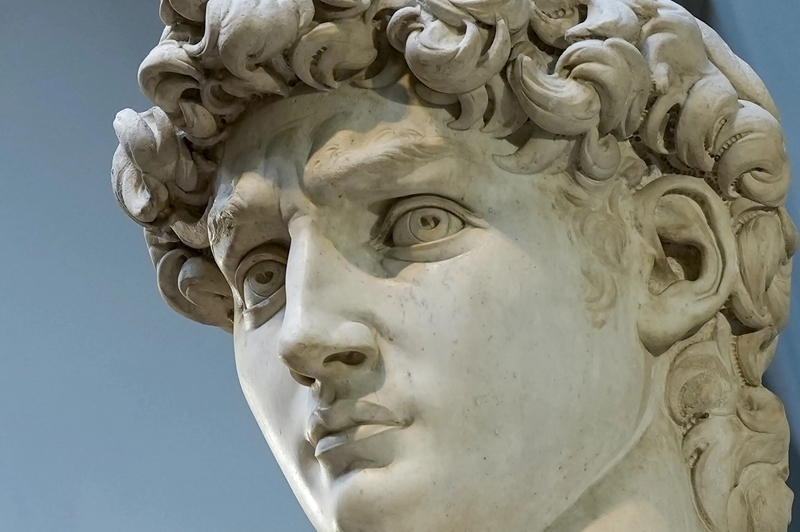
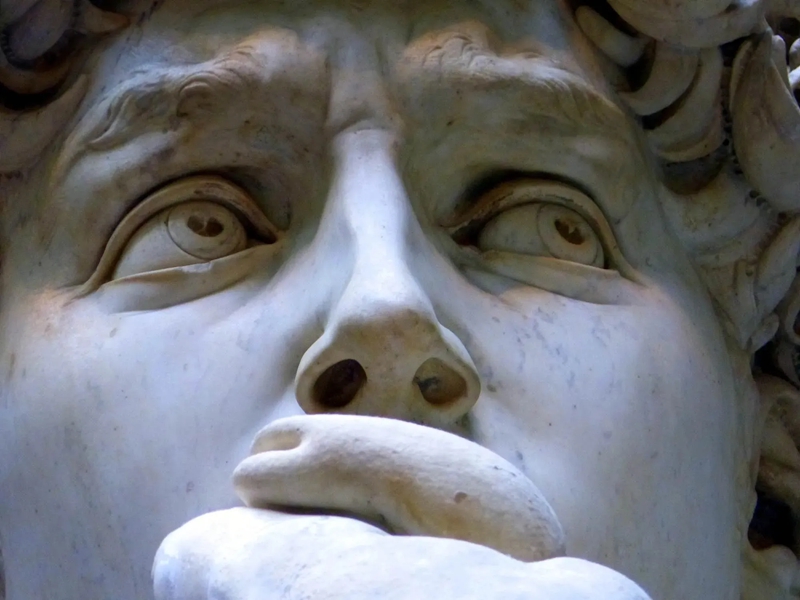
Look closely at their faces, and you’ll see two very different men.
Michelangelo’s David has a “terribilità”—a terrifying, intense gaze. His brow is furrowed, but his face remains classically beautiful. He represents the idealized hero.
Bernini’s David is far more relatable. He is biting his lip in concentration, his muscles are strained, and his brow is knotted with the effort of the physical feat. Fun fact: Bernini actually modeled the face after his own while looking in a mirror!
The Verdict: Which is “Better”?
There is no winner, only preference:
If you value balance, harmony, and the perfection of the human form, Michelangelo is your man.
If you crave drama, movement, and psychological intensity, Bernini’s David will take your breath away.
Michelangelo gave us a David who looks like a god; Bernini gave us a David who looks like he’s actually going to win the fight.
Michelangelo’s and Bernini’s David Replicas
For art lovers and collectors, owning a replica of these iconic sculptures is a way to bring a piece of art history into your own space. High-quality replicas of both Michelangelo’s and Bernini’s David allow you to appreciate the craftsmanship, details, and legacy of these masterpieces up close.
Imagine Michelangelo’s serene, classical David gracing your living room or Bernini’s dynamic, expressive David adding drama to your space. Whether you prefer the calm heroism of the Renaissance or the intense energy of the Baroque, these replicas are perfect for anyone who admires the genius of these legendary artists.

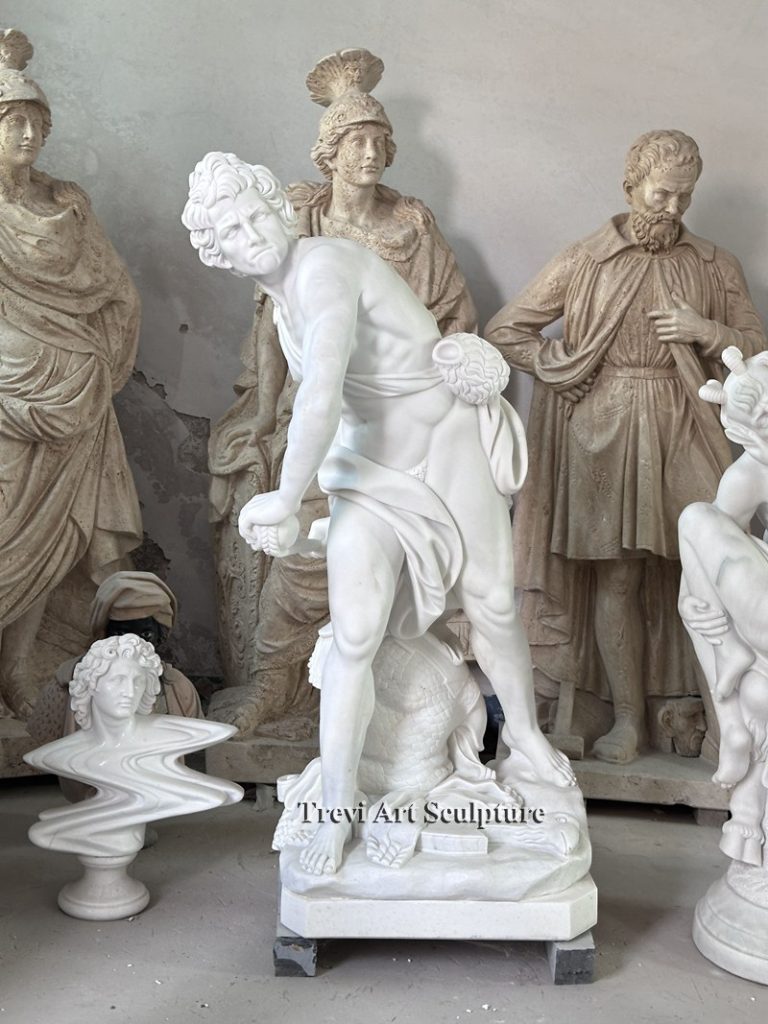
If you’re interested in owning a replica of Michelangelo’s or Bernini’s David, feel free to contact us. We’ll guide you in selecting the perfect piece to suit your taste and space, bringing the timeless beauty of these masterpieces into your home.