Why Does a Layer of “Stone-Wrought Veiling” Leave the World in Awe?
Among all subjects in marble female sculpture, the “Veiled Sculpture” is undoubtedly one of the most astonishing categories.
Its allure lies in a visual illusion that borders on the impossible:
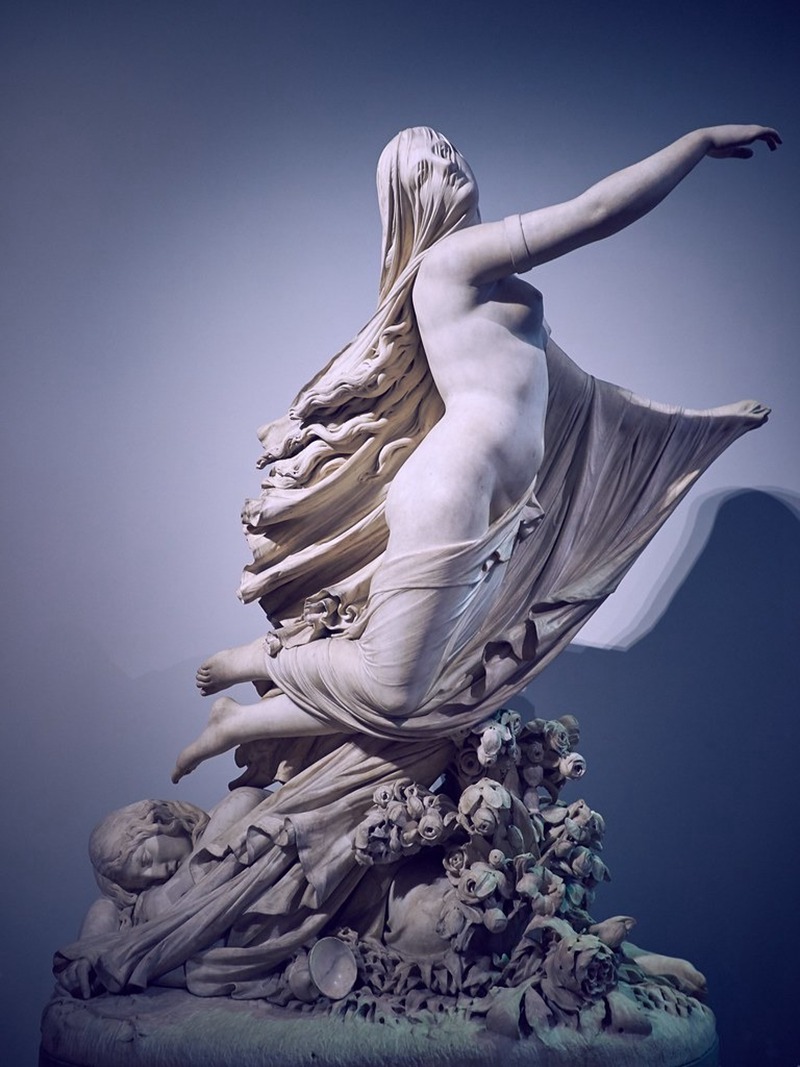
Hard, solid stone is made to appear as a light, translucent, and form-fitting “veil.” This art form represents not only the pinnacle of technical skill but also an expression of mystery, faith, and the human condition. From 18th-century Europe to contemporary high-end garden décor, the veiled sculpture has consistently stood as the “technical ceiling” of the sculptural arts.
The Origins of Veiled Sculpture:
From Ancient Greece to the 19th-Century Zenith
The history of veiled sculpture can be traced back to Ancient Greece:
• Ancient Greek sculptors experimented with the “Wet Drapery” technique to make the fabric cling closely to the human form.
• This tradition was continued during the Roman era.
• It was rediscovered and given renewed importance during the Renaissance.
However, the art form truly reached its zenith in Italy during the 18th and 19th centuries.
Key breakthroughs include:
• 1753: The “Veiled Christ” pioneered a style of extreme realism.
• The 1850s: Sculptor Giovanni Strazza created The Veiled Virgin, stunning the art world.
From that point onward, the “veiled female figure” became one of the most sought-after subjects in the realm of sculpture.
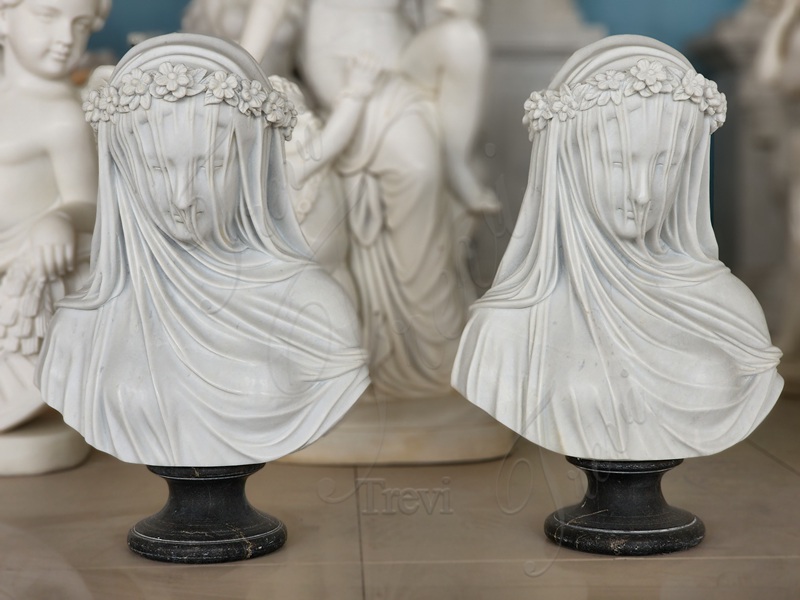
The Marvel of Veiled Sculpture: Why Is It So Difficult?
1. The “Confrontation” Between Material and Vision
Marble is inherently hard and opaque; yet, the sculptor strives to:
• Make the “veil” appear translucent
• Render the facial features as if faintly glimpsed
At its core, this is an art of “deceiving the eye.”
2. Mastery of Light and Shadow is Key
Artists achieve this effect by combining polished surfaces with rough textures, and varying the thickness of the stone to control light reflection—thereby making the stone appear “as soft as fabric.”
3. Extreme Technical Difficulty
Even a minor error can cause the stone to fracture or the intricate details to crumble; consequently, veiled sculpture is regarded as the ultimate test of sculptural craftsmanship.
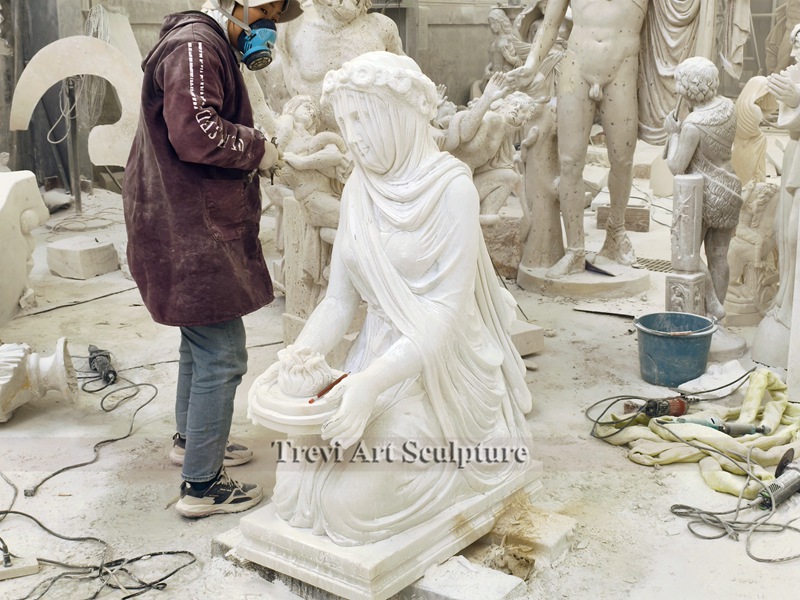
A Show of 12 Classic Veiled Sculptures
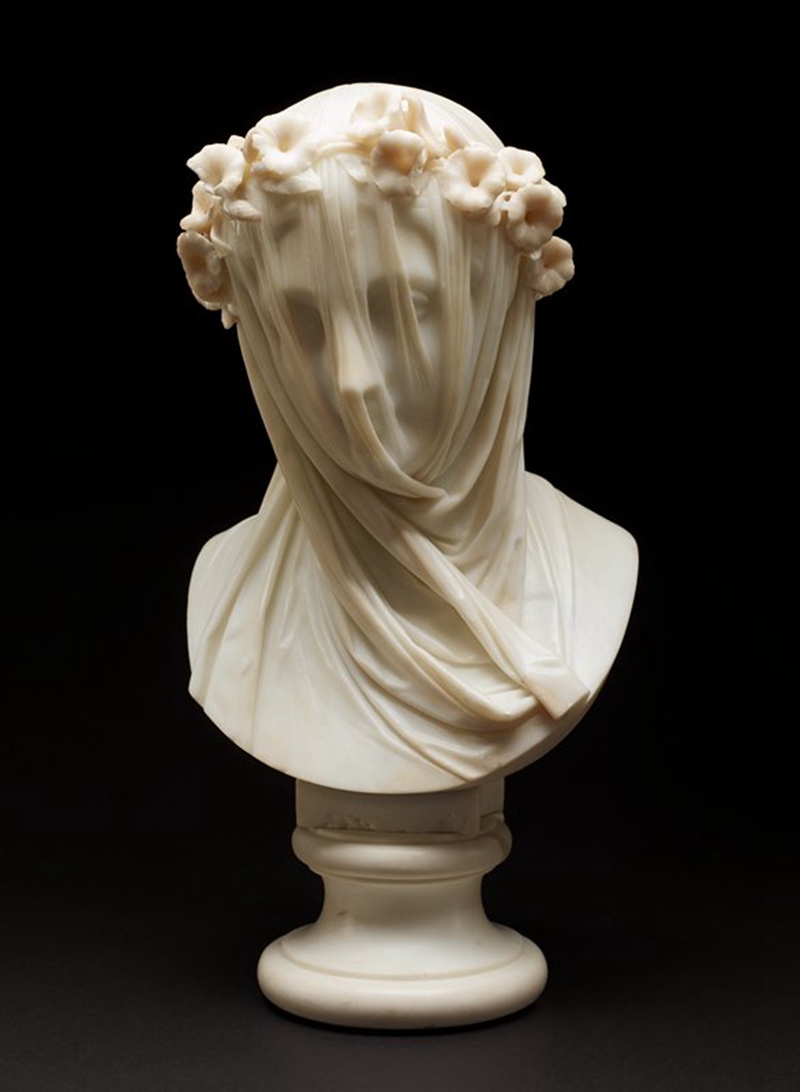
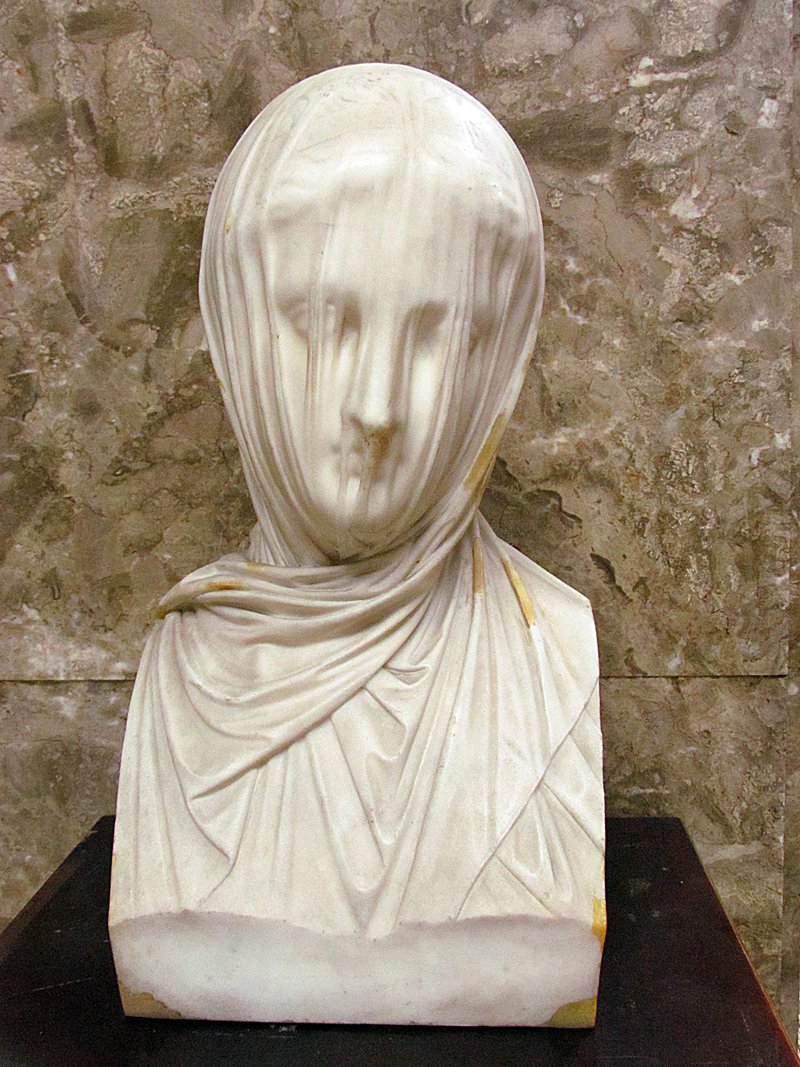
1. Veiled Lady Bust
Artist: Various 19th-century European sculptors
Description:
The Veiled Lady Bust is one of the most recognizable forms of veiled sculpture. Typically depicting a young woman with a serene expression, the translucent veil clings delicately to her facial features, revealing the contours of her nose, lips, and eyes beneath. The veil appears almost weightless, cascading naturally over the head and shoulders. This type of sculpture is widely used in gardens and interiors due to its balance of elegance, mystery, and classical beauty.
2. Veiled Virgin
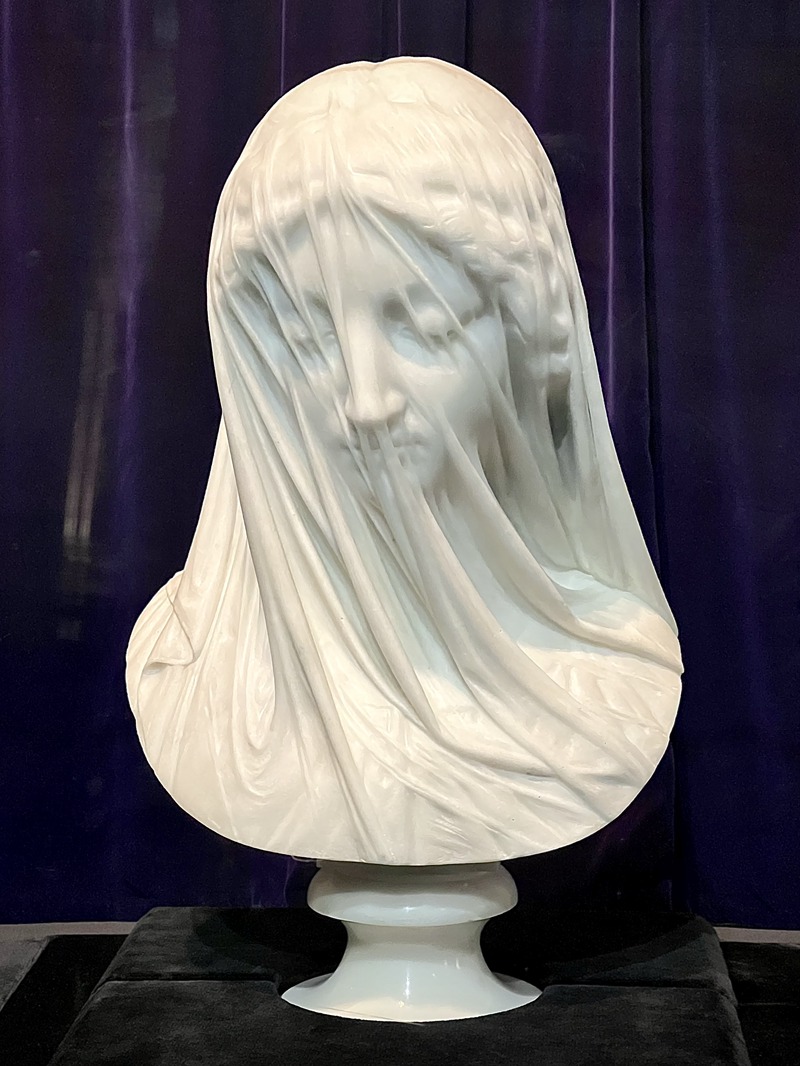
Artist: Giovanni Strazza
Description:
This masterpiece portrays the Virgin Mary covered by an impossibly thin marble veil. The fabric adheres closely to her face, making her expression visible while still maintaining a sense of divine separation. The softness of the veil contrasts with the firmness of the marble, creating a striking illusion of transparency. The sculpture conveys purity, grace, and spiritual serenity.
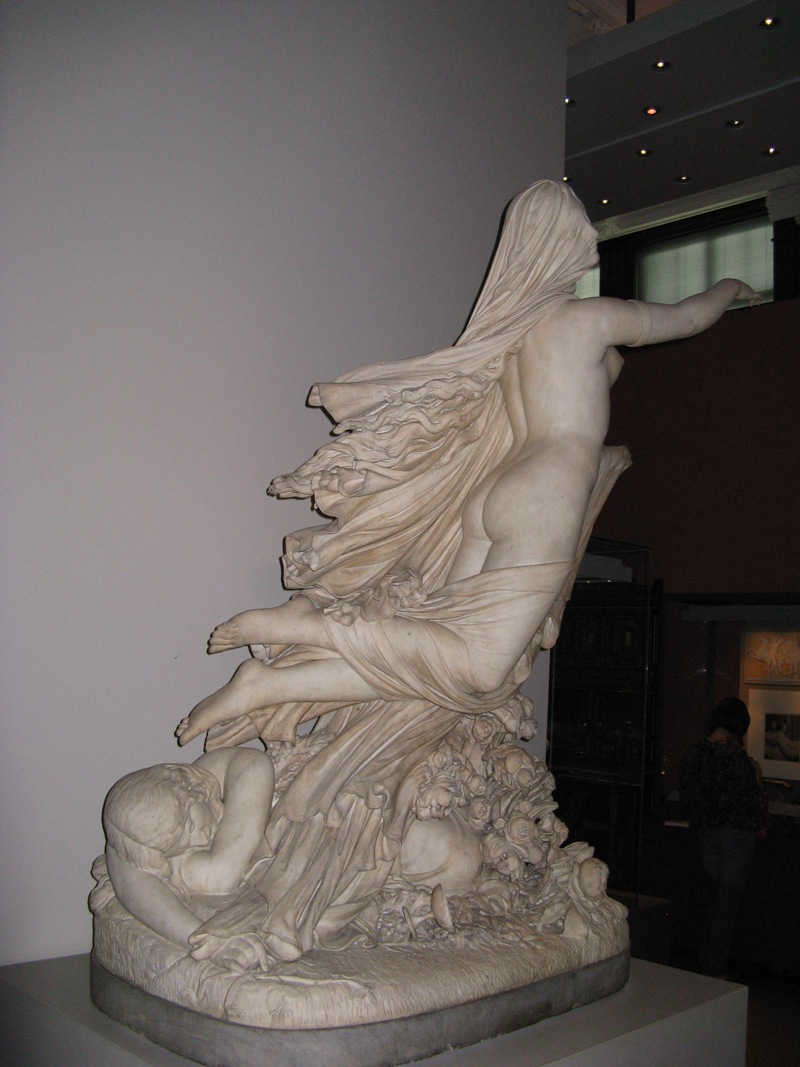
3. Sleep of Sorrow and the Dream of Joy
Artist: Raffaelle Monti
Description:
This emotional sculpture features two veiled female figures representing contrasting states—sorrow and joy. The veils play a crucial role in expressing emotion: one figure appears subdued and introspective, while the other suggests lightness and awakening. The flowing fabric enhances the emotional narrative, blurring the line between physical form and psychological depth.
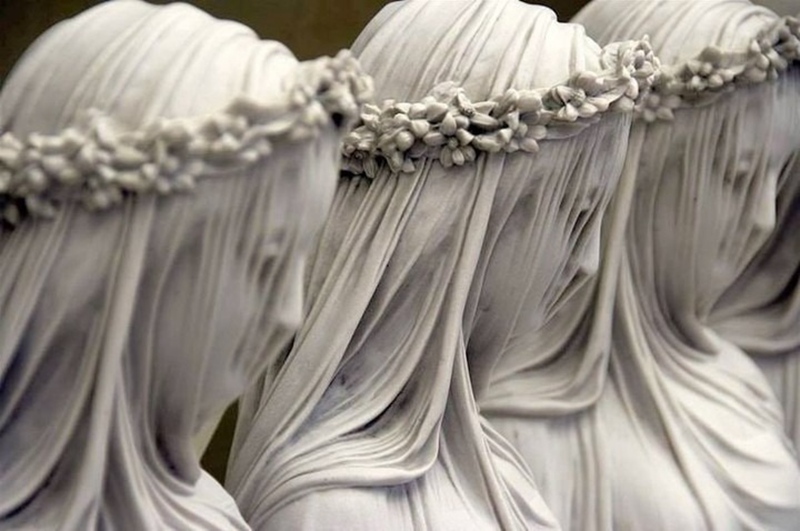
4. Sisters of Charity
Artist: Raffaelle Monti
Description:
This sculpture depicts two veiled nuns standing together, symbolizing devotion, humility, and compassion. The veils are thicker and more structured compared to other works, emphasizing modesty and discipline rather than sensuality. The composition highlights unity and spiritual commitment, making it both a religious and artistic statement.
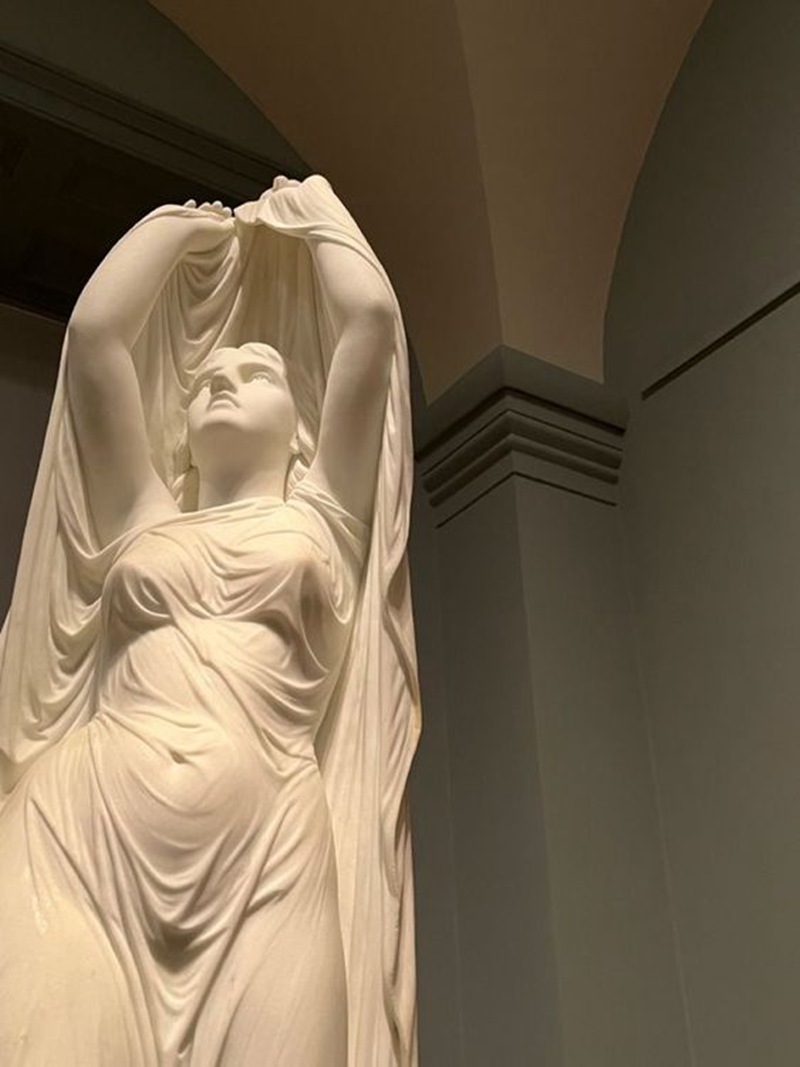
5. Undine Rising from the Waters
Artist: Chauncey Bradley Ives
Description:
Inspired by mythological themes, this sculpture shows a water spirit emerging gracefully from the surface. The veil-like drapery clings to the body as if wet, enhancing the sense of movement and fluidity. The transparency effect is used to simulate water rather than fabric, demonstrating how veiling techniques can extend beyond traditional symbolism.
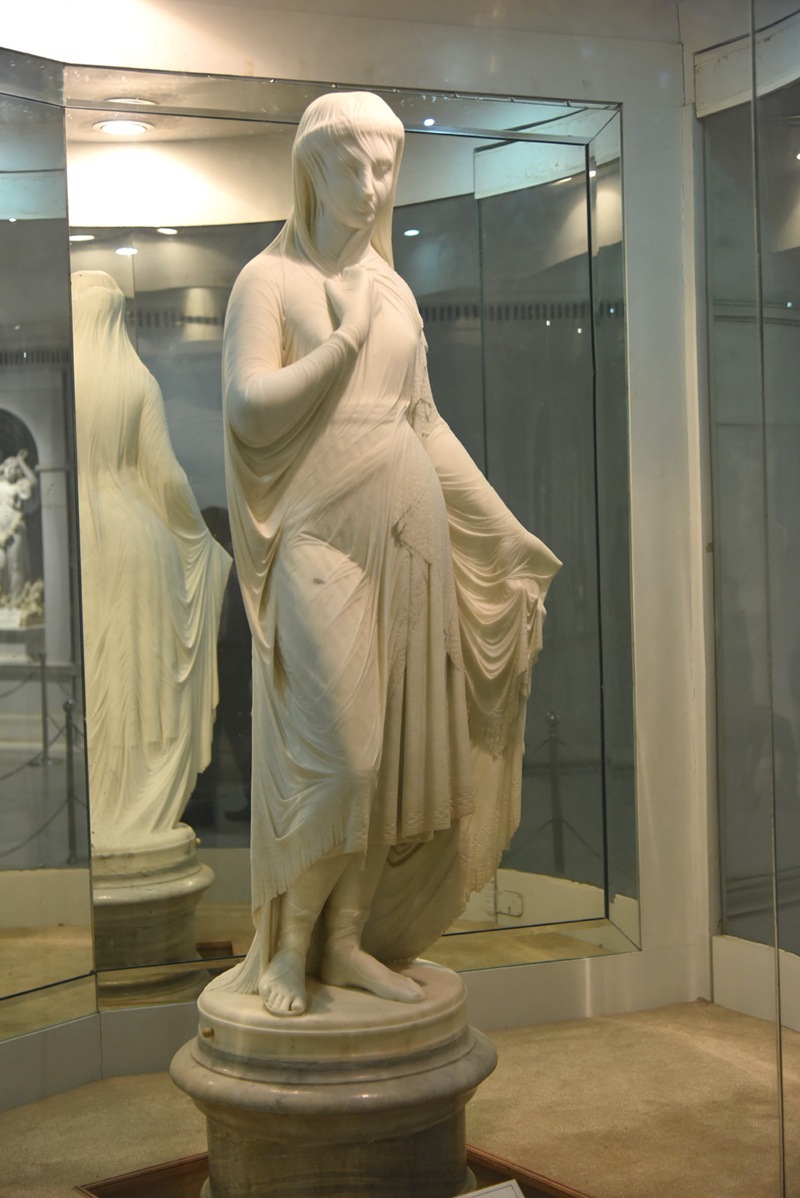
6. Veiled Rebecca
Artist: Giovanni Maria Benzoni
Description:
Depicting the biblical figure Rebecca, this sculpture captures her modesty and elegance as she covers herself with a veil. The fabric is carved so finely that her facial features and hairstyle remain clearly visible beneath it. The pose is graceful and slightly dynamic, often showing her holding the veil with one hand, adding a sense of narrative and movement.
7. Veiled Vestal Virgin
Artist: Raffaelle Monti
Description:
This sculpture represents a Vestal Virgin, a priestess of ancient Rome. The veil symbolizes chastity and sacred duty. Unlike softer, more flowing veils, this one is structured and formal, reinforcing the discipline and ritual significance of the figure. The facial expression is calm and restrained, reflecting devotion and inner strength.
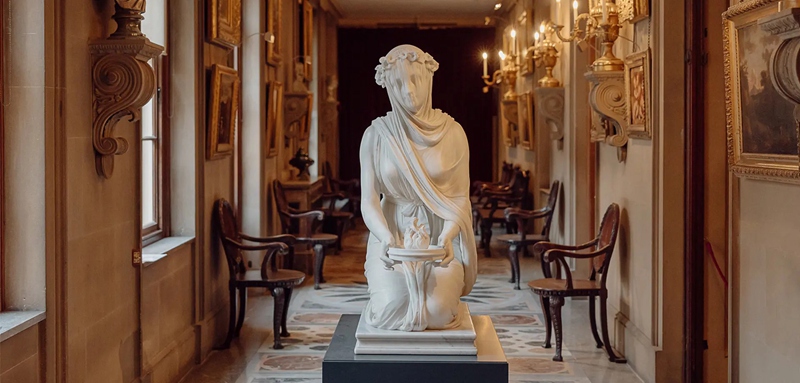
8. Modesty (Veiled Truth)
Artist: Antonio Corradini
Description:
One of the earliest and most influential veiled sculptures, Modesty portrays a reclining female figure draped in a thin veil that follows every contour of her body. The fabric is so delicately carved that it appears almost transparent. This work combines sensuality with allegorical meaning, representing purity, truth, and the unveiling of deeper reality.
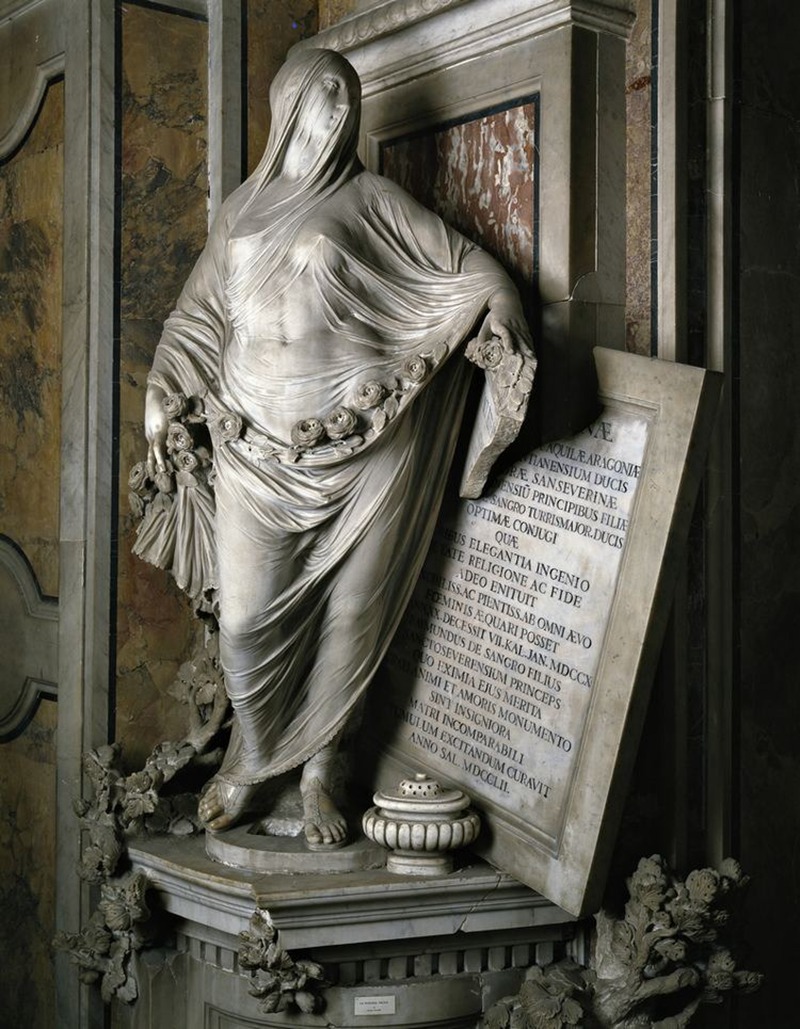
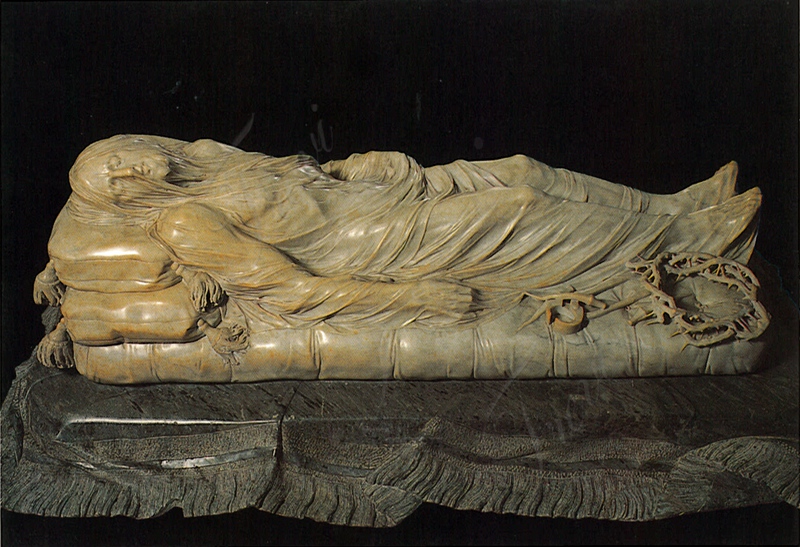
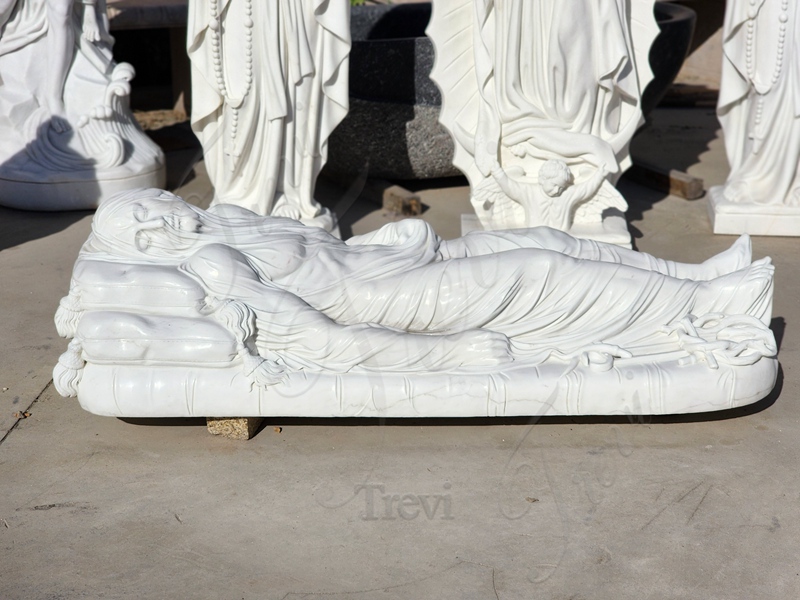
9. Veiled Christ
Artist: Giuseppe Sanmartino
Description:
Widely considered the most famous veiled sculpture in the world, Veiled Christ depicts the body of Christ lying beneath a transparent shroud. The veil adheres closely to the body, revealing wounds and anatomical details with astonishing realism. The work is both technically extraordinary and emotionally powerful, evoking themes of sacrifice, suffering, and redemption.
10. The Veiled Nun
Artist: Giuseppe Croff
Description:
This mysterious sculpture portrays a veiled nun with a haunting presence. The veil obscures her identity while subtly revealing her facial structure. The contrast between concealment and revelation creates an eerie and contemplative atmosphere. It is often interpreted as a meditation on faith, identity, and mortality.
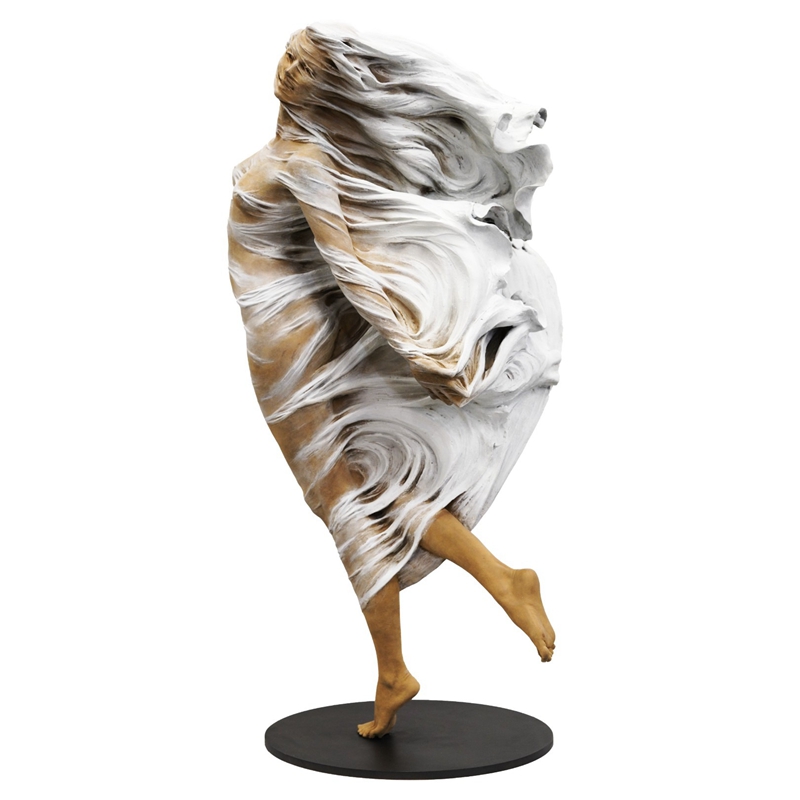
11. Veiled Woman (Modern Interpretation)
Artist: Luo Li Rong
Description:
This modern take on veiled sculpture blends classical techniques with contemporary aesthetics. The figure is often shown in motion, with the veil flowing dynamically around the body. Unlike traditional static compositions, this version emphasizes energy, freedom, and emotional expression, bringing new life to an ancient artistic tradition.
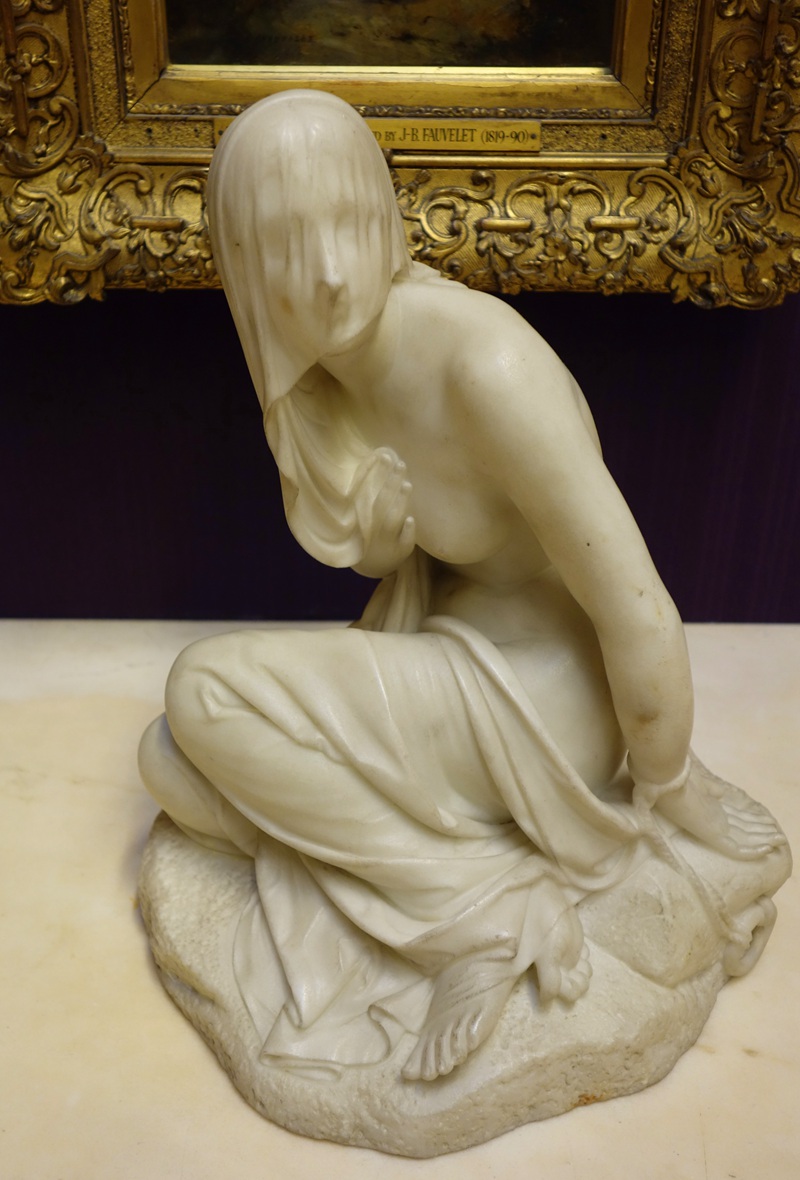
12. Circassian Slave
Artist: Raffaele Monti
Description:
“The Circassian Slave” (c. 1851 or later) is a marble sculpture that reflects the 19th-century fascination with the “Circassian beauty” myth, where Caucasian women were idealized as the purest, most beautiful white women, often depicted as victims of Ottoman harem slavery. This theme was famously captured in sculptures depicting nude, chained women in slave markets.
Profound Symbolic Significance of Veiled Statue
The veil serves not merely as a technical device, but as a metaphor for:
• Purity (particularly in depictions of the Virgin Mary)
• Mystery (the elusive nature of truth)
• Desire and Restraint (the interplay between what is revealed and what remains hidden)
Looking for a custom veiled marble statue or a reproduction of a classic design?
Feel free to contact us for more details, quotations, or design consultations. Our team is always ready to help bring your vision to life.