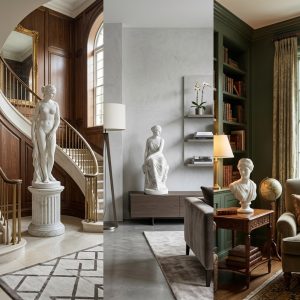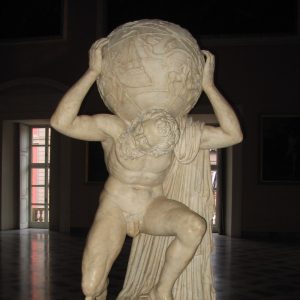
In ancient Egypt, columnar design had already achieved a high level of artistic accomplishment. In a sense, ancient Egyptian columnar design served as a precursor to ancient Greek columnar design, while ancient Greece brought this harmonious blend of technology and art to its pinnacle. The three orders of ancient Greek architecture—Doric, Ionic, and Corinthian—constitute the essence of Greek architecture.
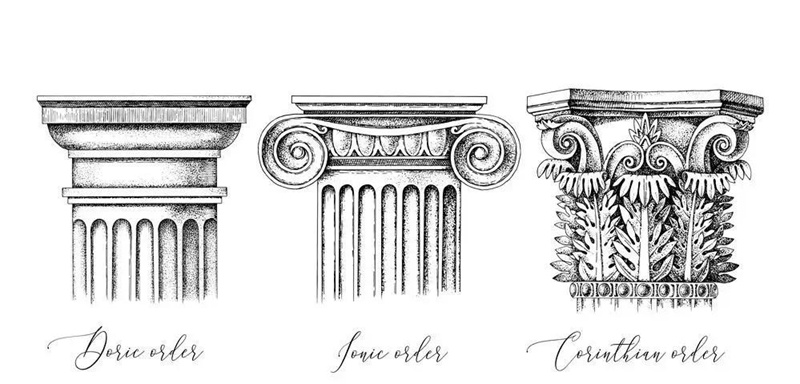
1. Doric Order — Strength and Simplicity
The Doric order emerged in the first half of the 5th century BCE. According to Vitruvius’s De Architectura, the Doric order was modeled after the male form, endowing it with a resolute, majestic, and robust character that expresses strength and power.
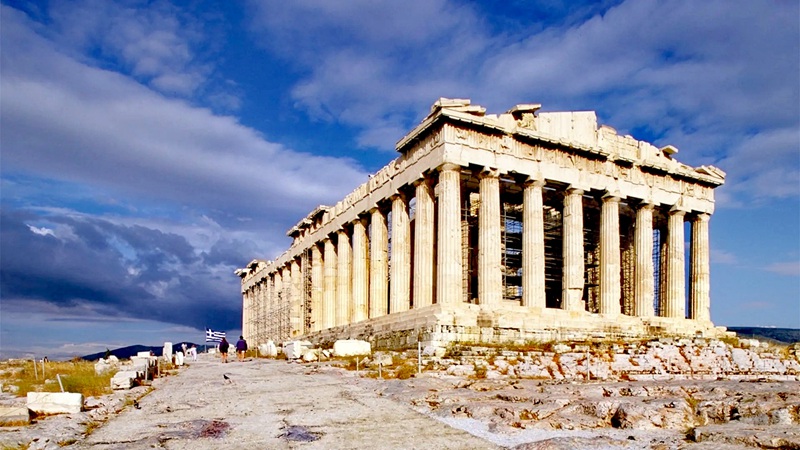
This order features no plinth, a flat capital, and a shaft devoid of any ornamentation other than continuous fluting. The entire column is robust and powerful, embodying the vigorous physique and character of a man. Its proportions typically range from 1:5.5 to 1:5.75. The column tapers noticeably toward the top, with the height of the capital accounting for approximately one-third of the total column height. The span (distance between columns) is generally 1.2 to 1.5 times the base diameter, creating a harmonious balance. As construction progressed over time, the column shafts became longer.
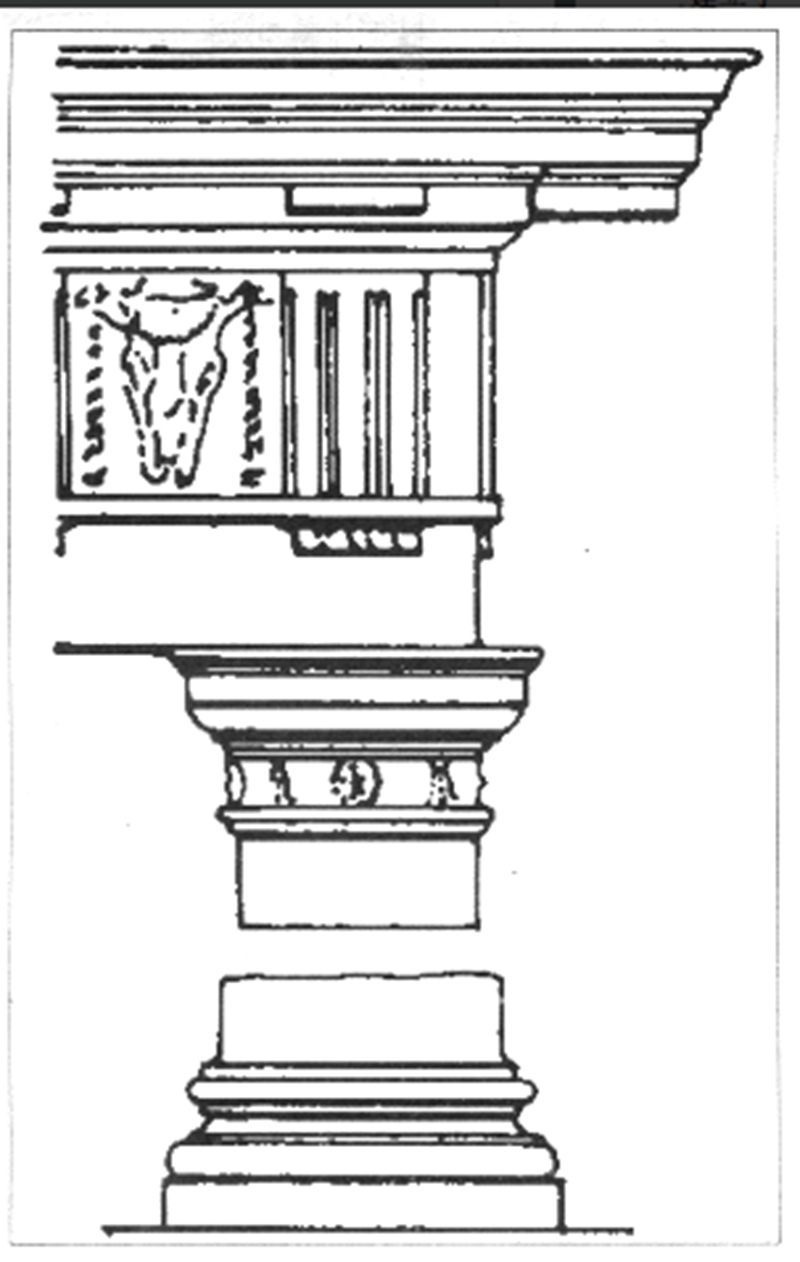
The Parthenon stands as the supreme example of the ancient Greek Doric order. Most surviving ancient Greek temples belong to the Doric order, such as the Temple of Apollo at Corinth and the Temple of Poseidon in southern Italy.
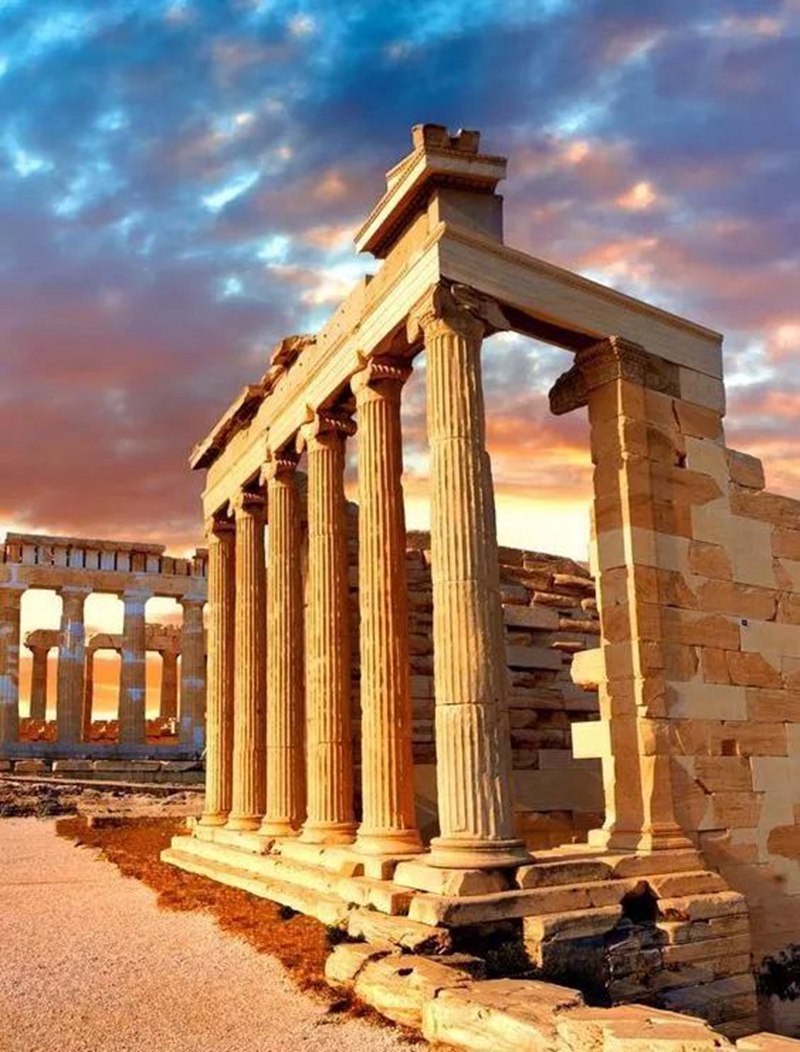
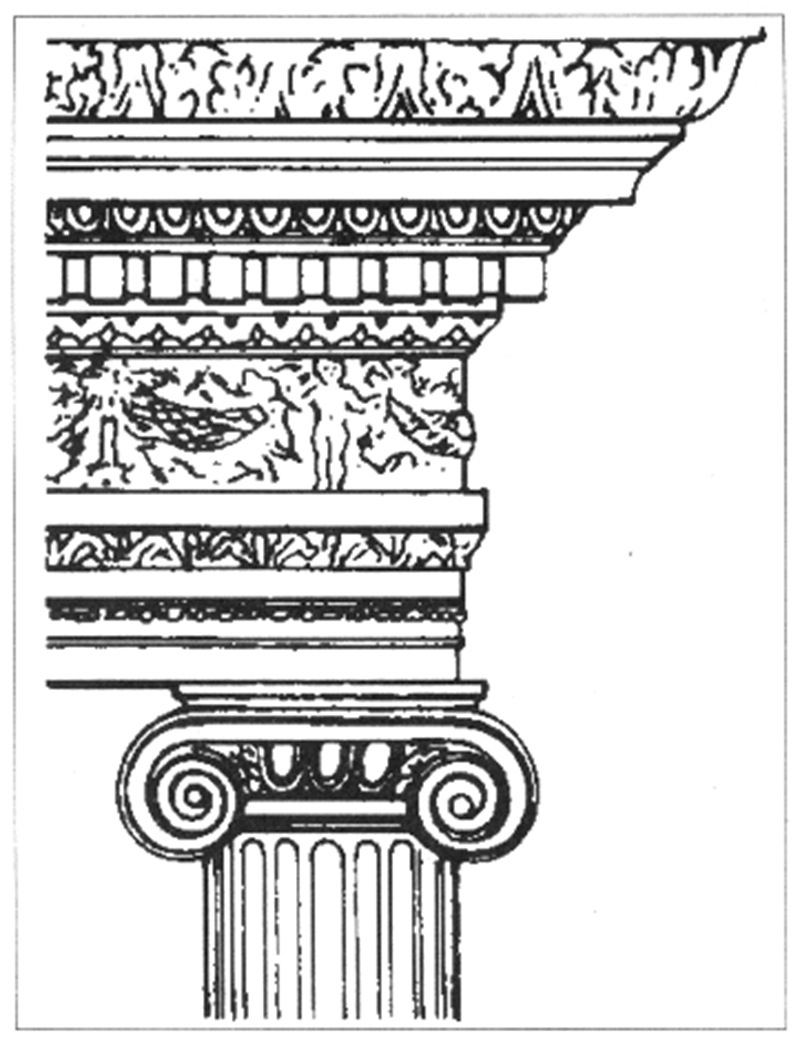
2. Ionic Order — Balance and Elegance
The Ionic order emerged later than the Doric, and its capitals are far more ornate. Its style is modeled after the female form, creating a contrast with the Doric order.
At both ends, there is a horn-shaped volute that curves downward on either side, resembling a woman’s curled hair. The curve between the capital and the volute fully embodies the delicate and gentle beauty of the female form. The columns are slender in proportion, typically ranging from 1:9 to 1:10;
The Erechtheion is a representative example of the Ionic order from the Classical period.
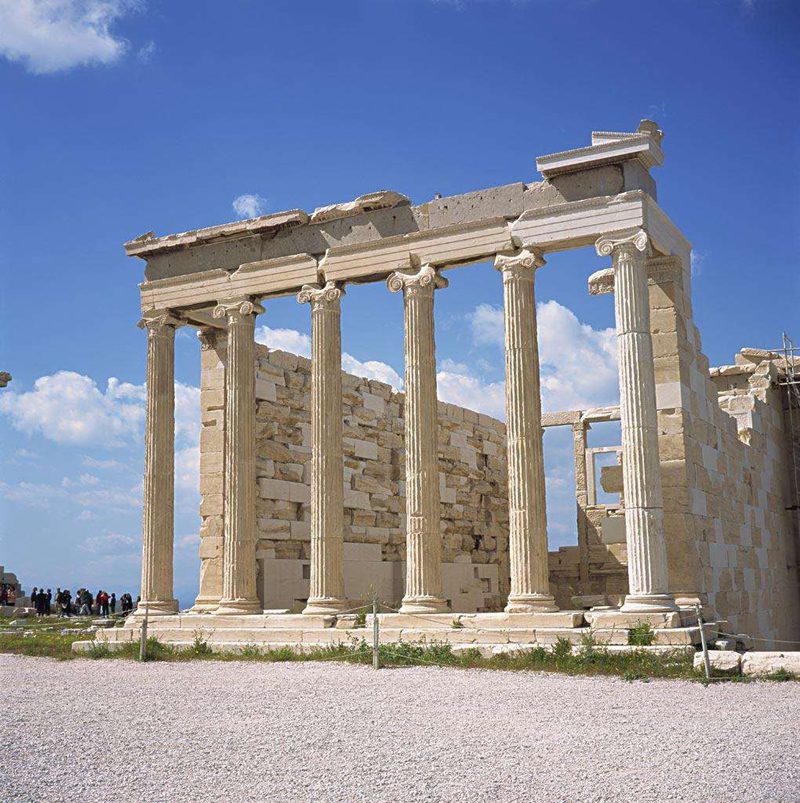
3. Corinthian Order — Luxury and Ornament
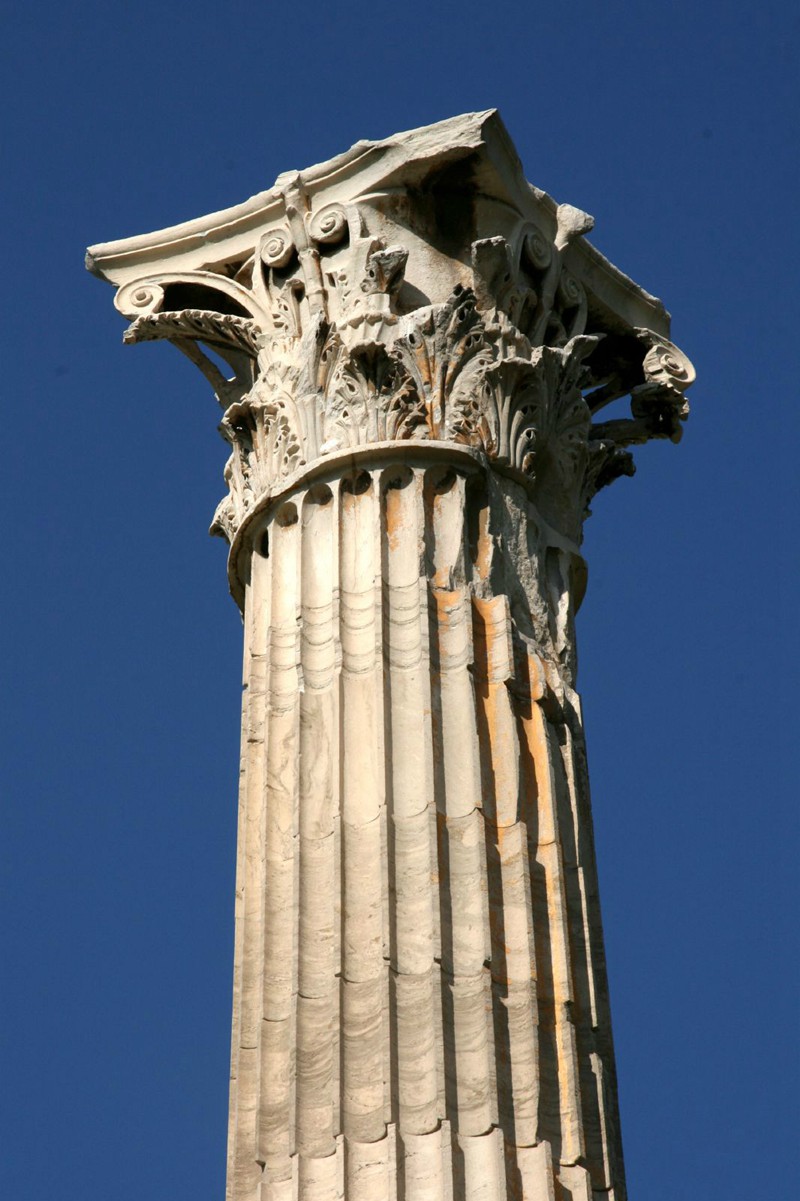
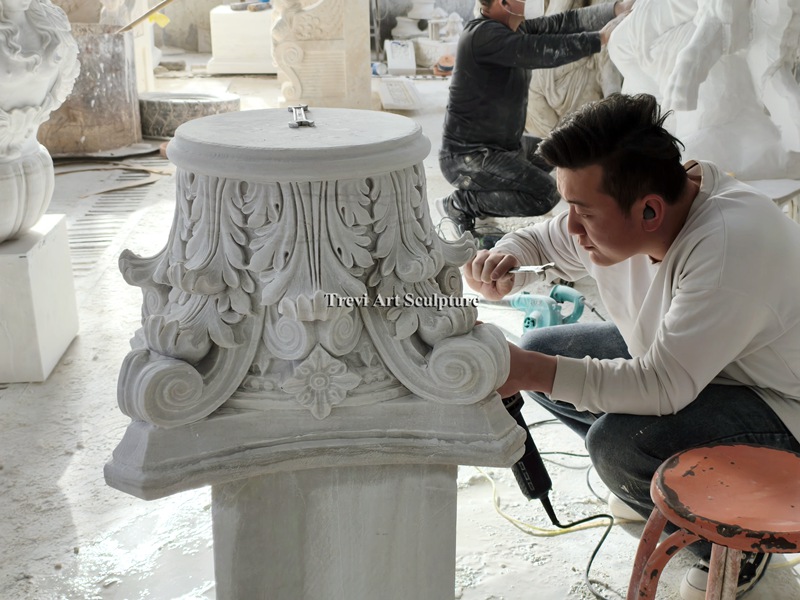
The Corinthian order emerged later; its capitals no longer feature spiral curves but are instead adorned with sawtooth-shaped leaves around the perimeter, and it can be considered a variation on the Ionic theme. It was popular during the Hellenistic period. Its overall style is slender, balanced, and elegant.
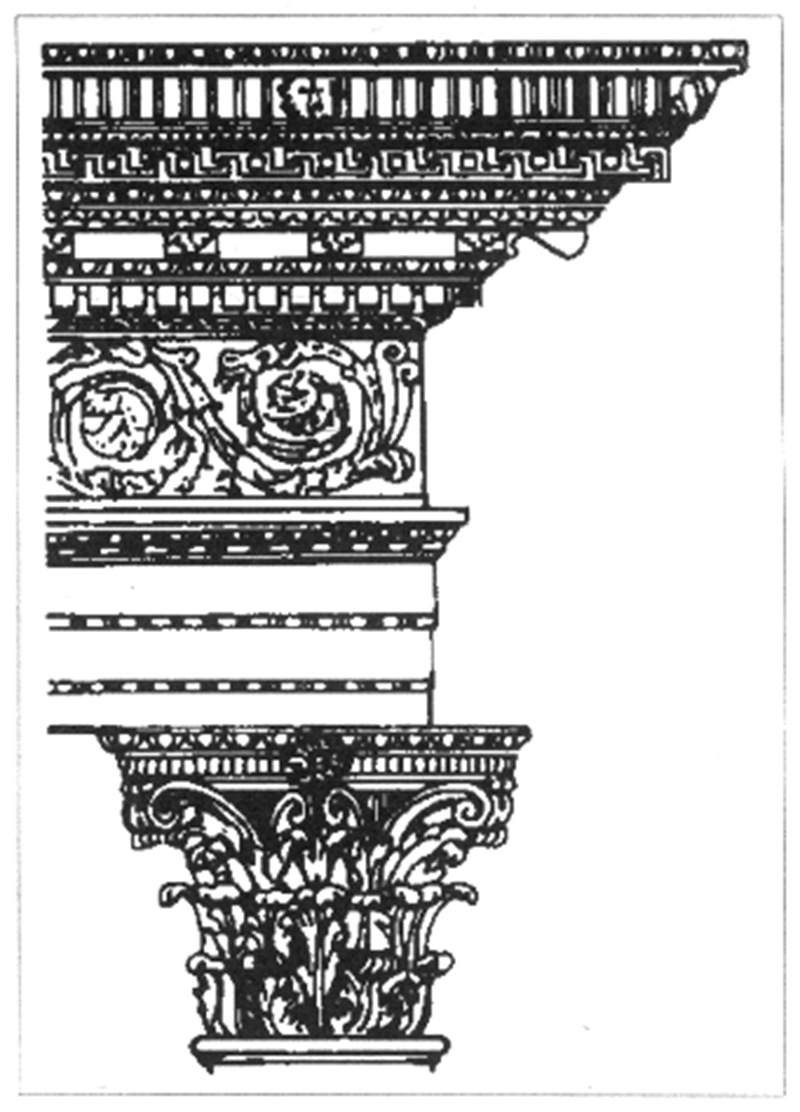
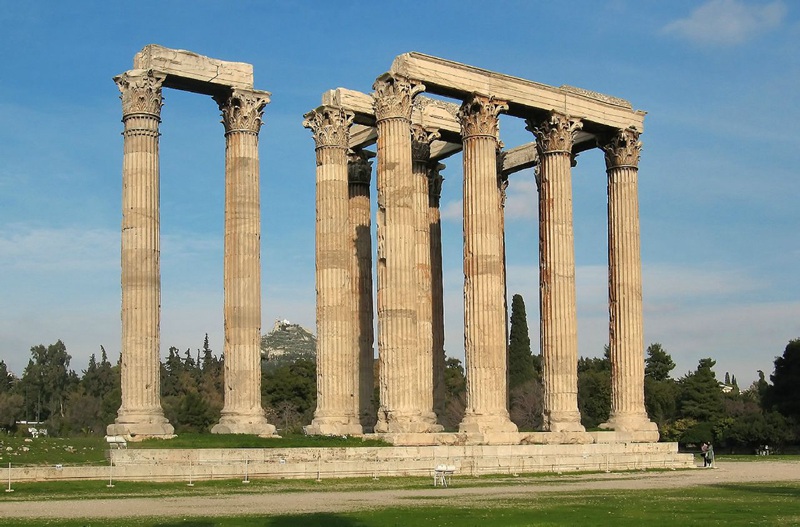
The central hall of the Temple of Olympian Zeus is surrounded by Corinthian columns, standing 16.89 meters tall, with a total of 104 columns. Compared to the Doric order, these columns appear more graceful and elegant, and their slenderness ratio mimics the proportions of the human body.
What design philosophy is embodied in the classical Greek orders?
From the proportional structure and artistic characteristics of the three ancient Greek orders, it is evident that they all use the human body as a standard. Their proportions are a visual representation of human proportions, and the decorative elements on them are all derived from nature; their forms are an artistic manifestation of human style, form, and natural beauty.
The height of the Doric column is based on the height of a man, which is six times the length of his foot, while the shaft is based on the number of human ribs. The volutes of the Ionic capital are inspired by a woman’s hair, and the honeysuckle on the Corinthian capital highlights the detail and overall harmony. The enduring status of these orders as timeless artistic models is rooted in their rich connotations and the Greeks’ long-standing aesthetic heritage.
How Are Greek Columns Used in Modern Homes and Architecture?
Today, Greek column designs are widely adapted for both architectural structures and decorative purposes: Garden pavilions and gazebos, Balcony and porch supports, and so on.
Interior Applications
- Decorative columns in living rooms
- Fireplace surrounds with classical elements
- Hallway and lobby focal points
Landscape & Commercial Use
- Wedding venues and event spaces
- Resorts and luxury hotels
- Public squares and monuments


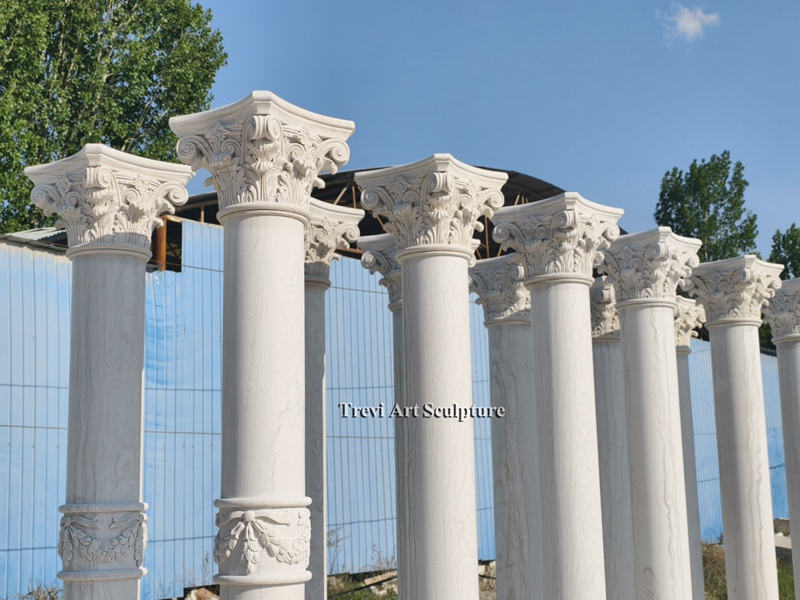
As a professional marble sculpture manufacturer, we specialize in custom-carved natural marble columns inspired by classical Greek orders.
Looking for custom marble columns for your project? Contact us today to explore design options and receive a personalized quote.
FAQ
1. How can you tell the difference between Doric, Ionic, and Corinthian columns?
The easiest way is to look at the capital (top of the column):
- Doric: simple and plain
- Ionic: scroll-shaped volutes
- Corinthian: detailed acanthus leaf carvings
These visual differences make each order easy to identify.
2. Which Greek column order is the simplest?
The Doric order is the simplest. It has no base, a thick shaft, and minimal decoration, reflecting a focus on strength and function.
3. Why are Greek columns still used today?
Greek columns are still widely used because they represent proportion, balance, and timeless design principles. These qualities continue to influence modern architecture, from public buildings to luxury homes.
4. What is the most decorative Greek column order?
The Corinthian order is the most decorative, featuring elaborate capitals with acanthus leaves and intricate details, often used to create a sense of luxury and elegance.
5. Are Greek columns only used in ancient buildings?
No. Greek column designs are widely used in modern architecture, interior design, and landscape decoration, including villas, hotels, and custom stone projects, often recreated with materials like natural marble.