Walk through almost any historic cemetery in Europe or North America and, sooner or later, you will meet an angel. Wings folded or spread, head bowed in sorrow or lifted toward heaven — the cemetery angel statue has been one of the most enduring images in memorial art for more than two hundred years. For families choosing a monument today, the angel still carries the same quiet promise it did in the Victorian era: that a life is remembered, protected, and guided home.
1. The History and Cultural Significance of Angel Sculptures in Art
Angels have appeared in art for thousands of years, but their role as cemetery guardians is a much more recent tradition. Winged messenger figures show up in ancient Mesopotamian and Egyptian art long before Christianity, and early Christian catacomb art avoided angelic imagery almost entirely — the first angels resembling the winged human figures we recognize today did not appear until around the 4th century CE, after angels became formally associated with Roman victory figures like Nike and Victoria.
Angel sculpture as we know it flourished during the Renaissance and Baroque periods, when masters such as Michelangelo and Gian Lorenzo Bernini carved angels for churches, tombs of popes, and cathedral facades, giving the figure the dramatic movement, realistic anatomy, and emotional depth still copied by monument carvers today.
The angel did not become a cemetery staple, however, until the 19th century. The rise of the “rural cemetery” movement in the 1830s–1850s turned burial grounds into landscaped parks meant to be visited, not just used — and Victorian mourning culture, with its elaborate rituals and sentimental approach to death, demanded monuments that expressed emotion rather than simple religious symbols. Angels, softer and more personal than crosses or obelisks, became the ideal vehicle for that emotion. By the late 19th and early 20th centuries, angel monuments were carved in huge numbers across Europe and the United States, and the tradition has never really stopped — it has simply moved from hand-chiseled Carrara marble in Italian ateliers to modern custom workshops, like ours, that now serve families worldwide.
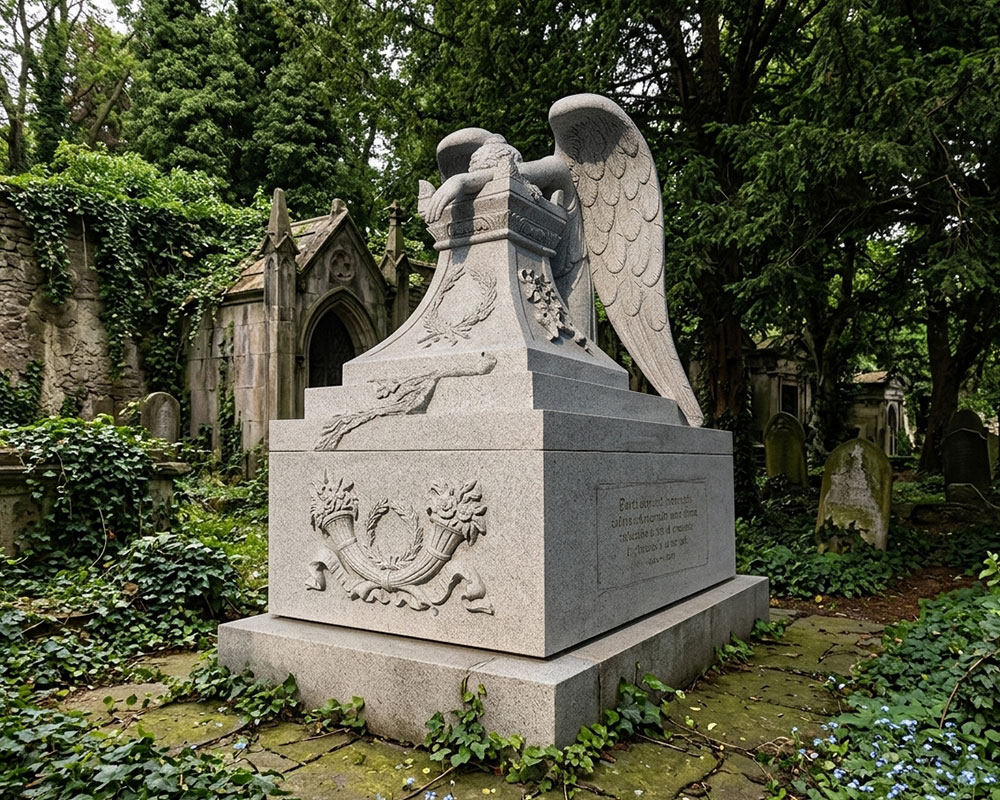
2. Symbolism Behind Cemetery Angels
An angel on a headstone is never just decoration — every pose, gesture, and object it carries has traditionally meant something specific to the mourners who chose it:
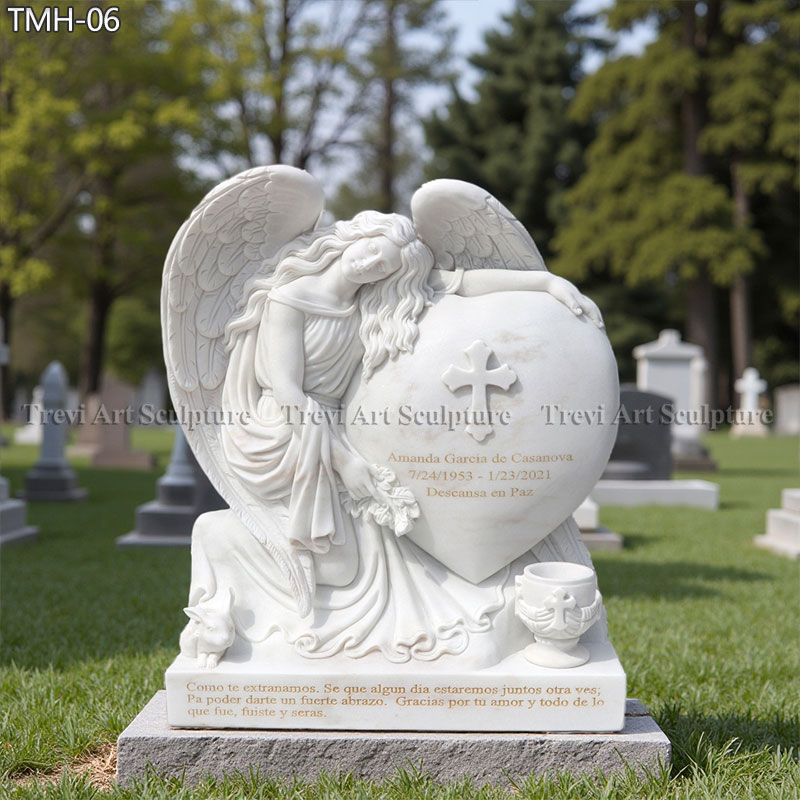
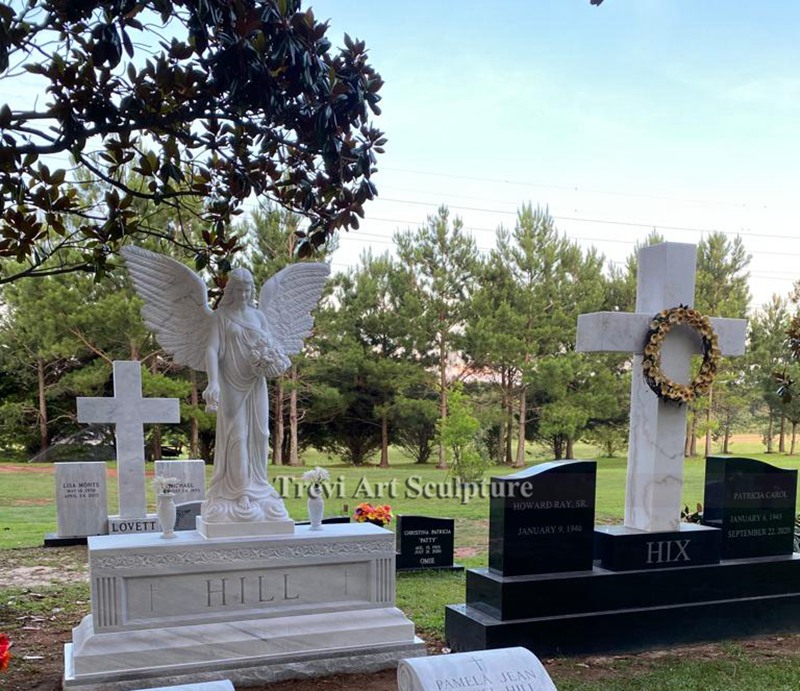
- Guardianship and protection– An angel standing watchfully beside a grave, sometimes with one arm resting on the headstone, represents a guardian who continues to watch over the deceased.
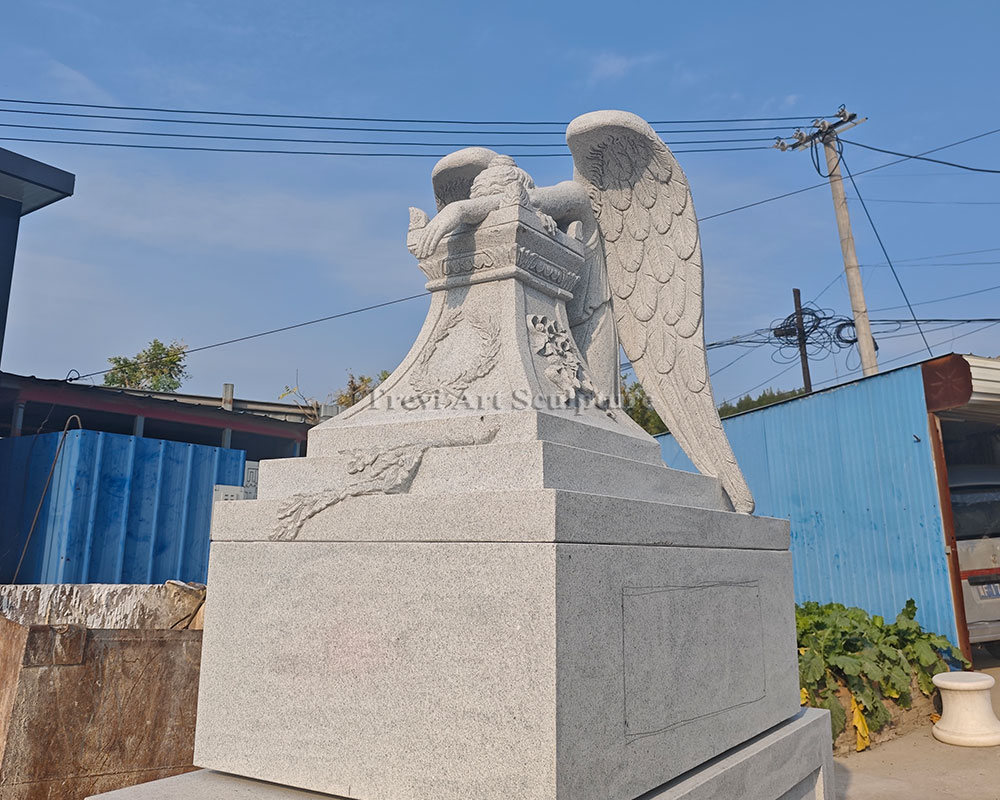
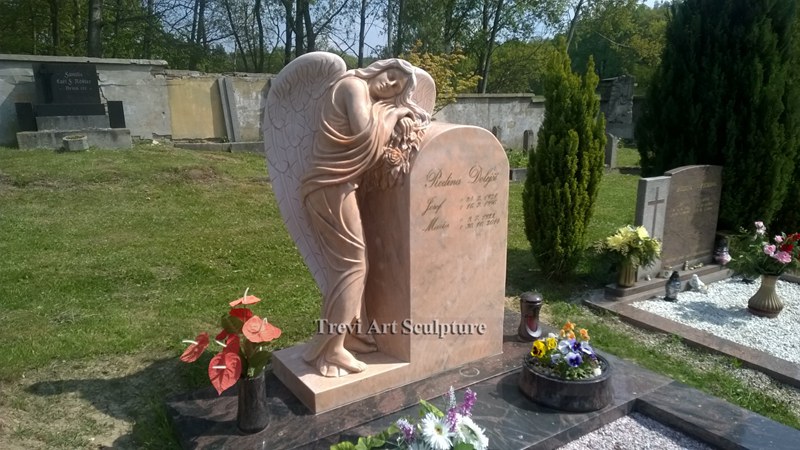
- Weeping or mourning angels– Figures with bowed heads, covered faces, or a body draped over the stone express the grief of those left behind rather than the state of the departed soul.
- Ascension– Angels shown mid-flight, robes billowing or wings lifted, symbolize the soul’s journey from earth to heaven.
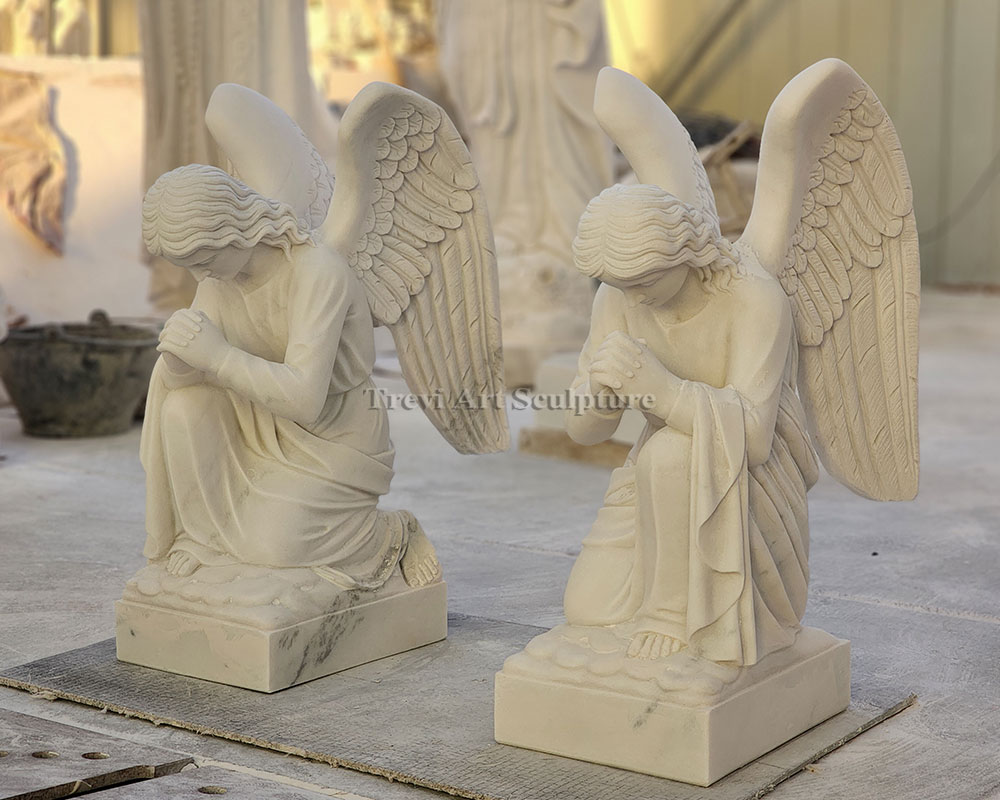
- Prayer– Kneeling angels with hands clasped represent intercession — a plea on behalf of the deceased.
- Trumpet-bearing angels– Associated with the Book of Revelation, these figures symbolize resurrection and the final judgment.
- Angels holding books or scrolls– Believed to be recording the good deeds of the deceased, tying the monument to the idea of a life well lived.
- Cherubs and child angels– Small, winged child figures are traditionally used on children’s graves, softening the image of loss with a sense of innocence.
- Flowers, wreaths, and broken columns– Frequently paired with an angel figure, these add secondary meanings: flowers for a life cut short, wreaths for victory over death, broken columns for a life interrupted.
Across nearly every tradition, the constant is this: angels serve as intermediaries between the human and the divine, a comforting presence that bridges grief and hope.
3. Famous Mourning Angel Statues
A handful of angel monuments have become so influential that their poses have been copied thousands of times over. Knowing their stories helps explain why certain angel designs remain so popular today.
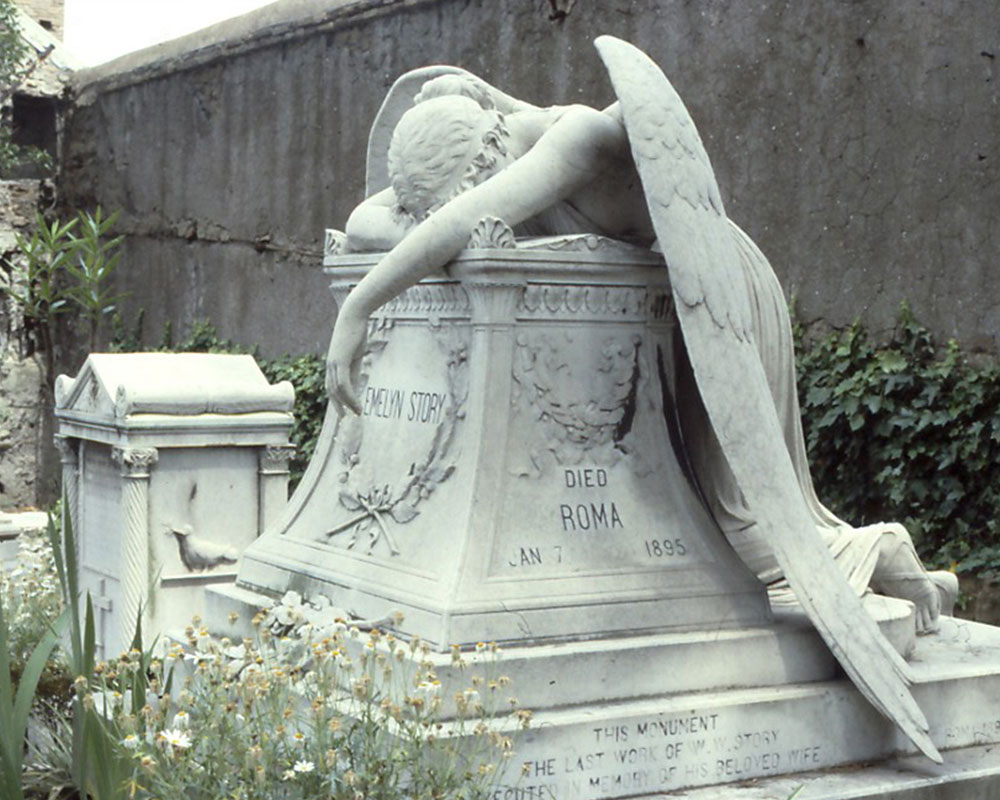
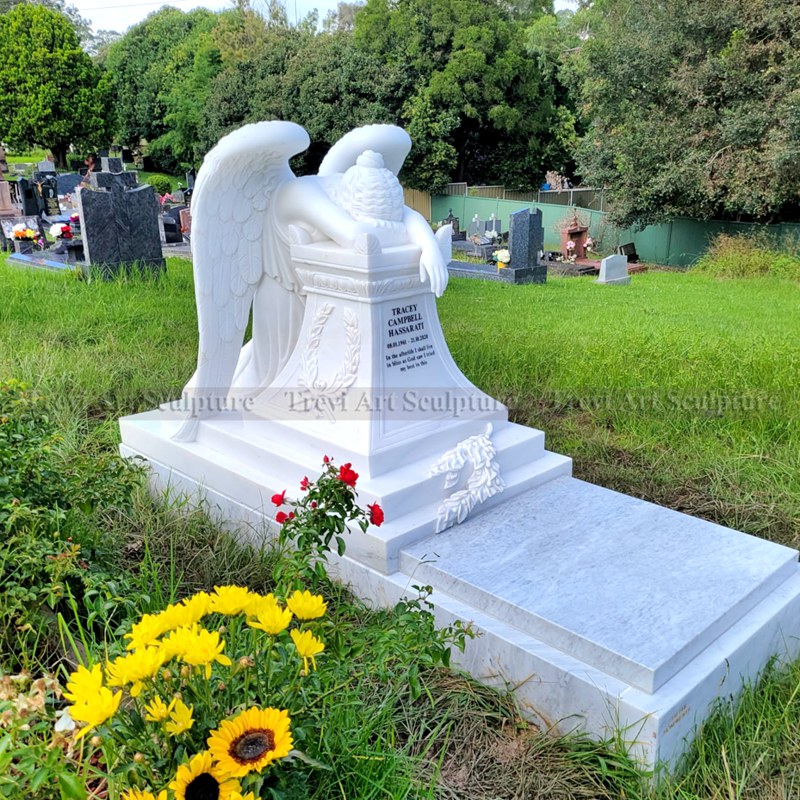
The Angel of Grief (Rome, Italy). Formally titled The Angel of Grief Weeping Over the Dismantled Altar of Life, this 1894 marble sculpture was carved by American sculptor William Wetmore Story for the grave of his wife Emelyn Story at the Protestant Cemetery in Rome. In a letter to a relative, Story explained that the collapsed, wing-drooping figure was meant to embody the raw devastation he himself felt after his wife’s death. He died the following year and is buried beneath the statue alongside his wife. Within a few years of its installation in Rome, replicas began appearing in cemeteries across the United States and Europe, and the collapsed, weeping pose it introduced — now generally called the “weeping angel” — remains one of the most recognizable and most requested cemetery angel designs in the world.
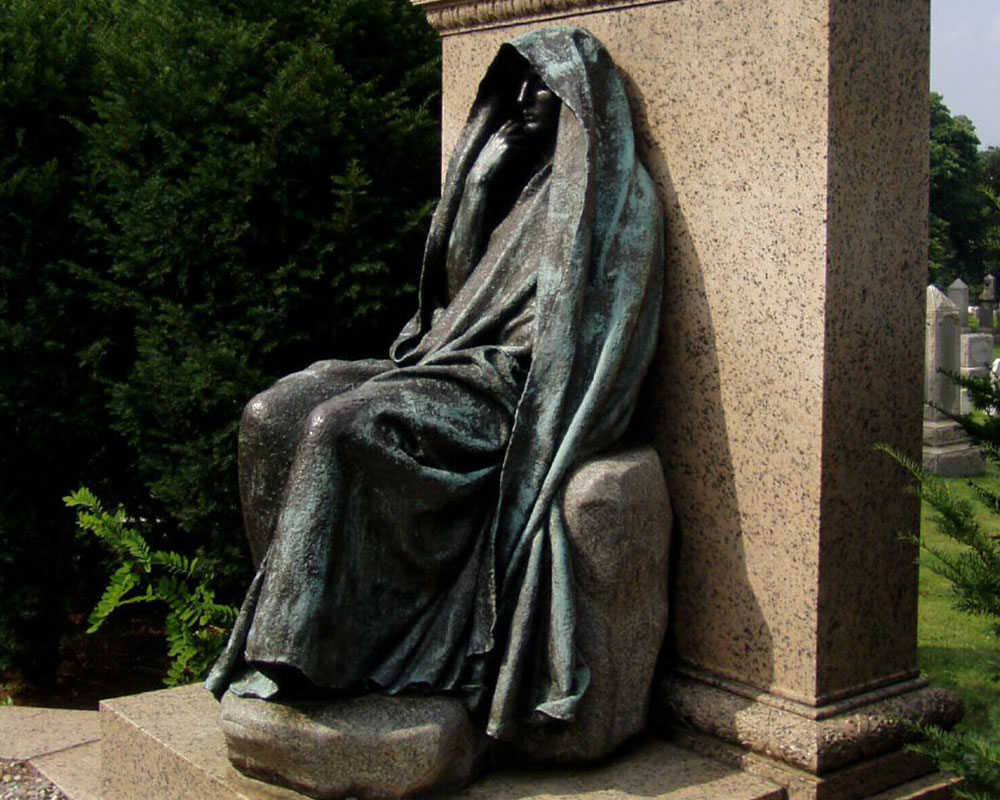
The Adams Memorial and “Black Aggie” (Washington, D.C. / Baltimore, Maryland). In 1891, sculptor Augustus Saint-Gaudens created the Adams Memorial for the grave of Marian “Clover” Adams in Rock Creek Cemetery, a hooded, seated bronze figure of profound, ambiguous sorrow that the public nicknamed simply “Grief.” Its fame inspired an unauthorized copy that was purchased by General Felix Agnus for his own family plot in Druid Ridge Cemetery, Maryland, where local legend gave it the nickname “Black Aggie” and surrounded it with ghost stories — a reminder of how powerfully a mourning statue can capture public imagination.
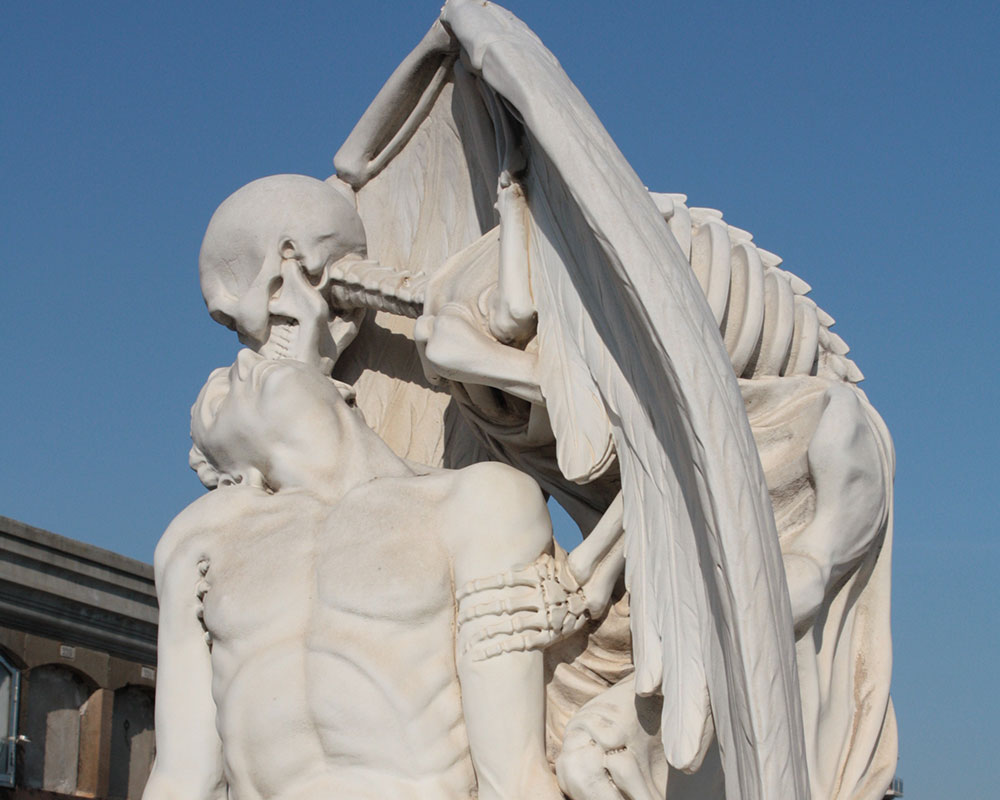
The Kiss of Death (Barcelona, Spain). Found in Poblenou Cemetery, this haunting sculpture shows a winged, skeletal figure embracing a dying young man — a stark departure from the gentle, comforting angels seen elsewhere, and one of the most photographed pieces of funerary art in Europe. Its dramatic, sorrowful realism has made it a recurring reference point for custom memorial commissions that want something more emotionally raw than a standard standing angel.
4. Meaning behind Female Angel Statues
Most cemetery angels are depicted as female, which surprises some visitors given that angels in scripture are traditionally described without a fixed gender. The female form became dominant for a combination of cultural and artistic reasons rather than doctrinal ones.
By the 19th century, Western art had long associated allegorical virtues — Victory, Liberty, Justice, and Grief among them — with the female figure, a tradition inherited from Greek and Roman sculpture. When Victorian sculptors needed a figure to embody mourning, tenderness, and intercession, they reached for that same visual language. Cemetery Insights notes that in Victorian iconography, women were seen as the natural mourners of the human race — the ones expected, and permitted, to openly express grief, which made the female form the natural choice for statues meant to grieve visibly on a family’s behalf.
The female angel also allowed sculptors to draw on the deep tradition of religious female figures — the Virgin Mary chief among them — as a visual shorthand for compassion, purity, and maternal protection. That is why so many mourning angels combine flowing robes, softly draped fabric, and a gentle, downward gaze: the same visual grammar used for centuries to depict maternal grief and comfort.
5. Male Angel Statues and Their Religious Symbolism
Male angel statues are less common in cemeteries but carry very specific, scripturally grounded symbolism, usually tied to the named archangels rather than to grief in the abstract.
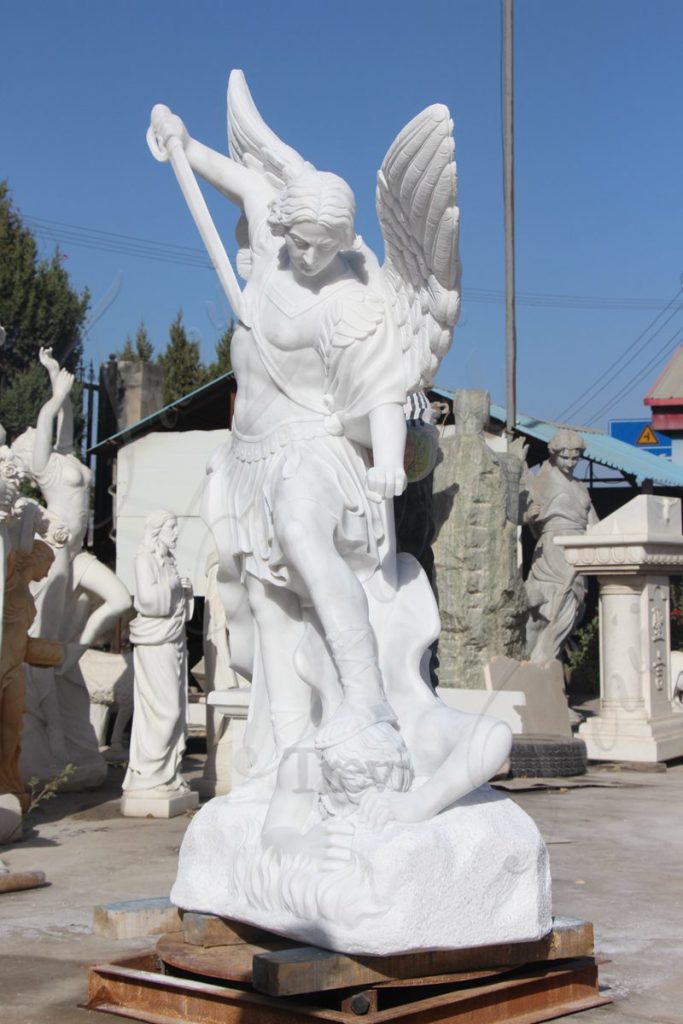
- Archangel Michael, traditionally shown as a warrior in armor holding a sword or scale, represents protection, spiritual strength, and the triumph of good over evil — a fitting guardian figure for a family monument or mausoleum entrance.
- Archangel Gabriel, often depicted holding a trumpet or a lily, is associated with divine messages, resurrection, and the announcement of new life — the trumpet in particular ties Gabriel to the Christian idea of the final resurrection.
- Cherubim and seraphim, described in scripture as genderless celestial beings, are nonetheless frequently rendered as young male children (putti) in Western art, softening the more severe, warrior-like imagery of the archangels.
Because male angels carry this more explicit doctrinal weight, they are chosen most often by families who want the monument to make a clear statement of faith — protection through Michael, or hope of resurrection through Gabriel — rather than a general expression of mourning.
6. Popular Materials for Cemetery Angel Statues
When choosing a cemetery angel statue, material plays an important role in its appearance, durability, and long-term maintenance. The three most popular choices are marble, granite, and bronze, each offering a distinct style for memorial spaces.
Marble
Marble is a classic choice for cemetery angel statues, valued for its elegant white appearance and excellent carving qualities. High-quality marble allows sculptors to capture delicate details such as facial expressions, flowing robes, and individual feathers. Its timeless beauty makes it especially suitable for traditional cemeteries, family graves, and memorial gardens. With proper finishing and care, a marble angel can remain beautiful for generations.
Granite
Granite is known for its exceptional strength, weather resistance, and low maintenance requirements. It is commonly used for cemetery monuments, angel bases, plaques, and memorial structures, and can also be carved into angel figures. Available in different colors and finishes, granite offers a solid, dignified appearance and performs well in outdoor environments exposed to changing weather conditions.
Bronze
Bronze is a durable material widely used for cemetery and memorial sculptures. Because it is cast rather than carved, bronze allows sculptors to reproduce intricate details and expressive poses with precision. Over time, outdoor bronze naturally develops a distinctive patina, giving the angel statue a dignified and enduring appearance. Bronze angels are often paired with marble or granite bases for a balanced combination of artistic beauty and structural durability.
Granite is sometimes used as well, mainly for the base, plaque, or heart-shaped memorial that an angel figure is paired with, since granite is extremely weather-resistant and holds polished engraving well — but for the angel figure itself, marble and bronze remain the two materials most associated with fine cemetery sculpture.
7. Popular Cemetery Angel Statue Styles Today
Based on current demand from our clients across the US and Europe, six angel monument styles consistently stand out as the most requested:
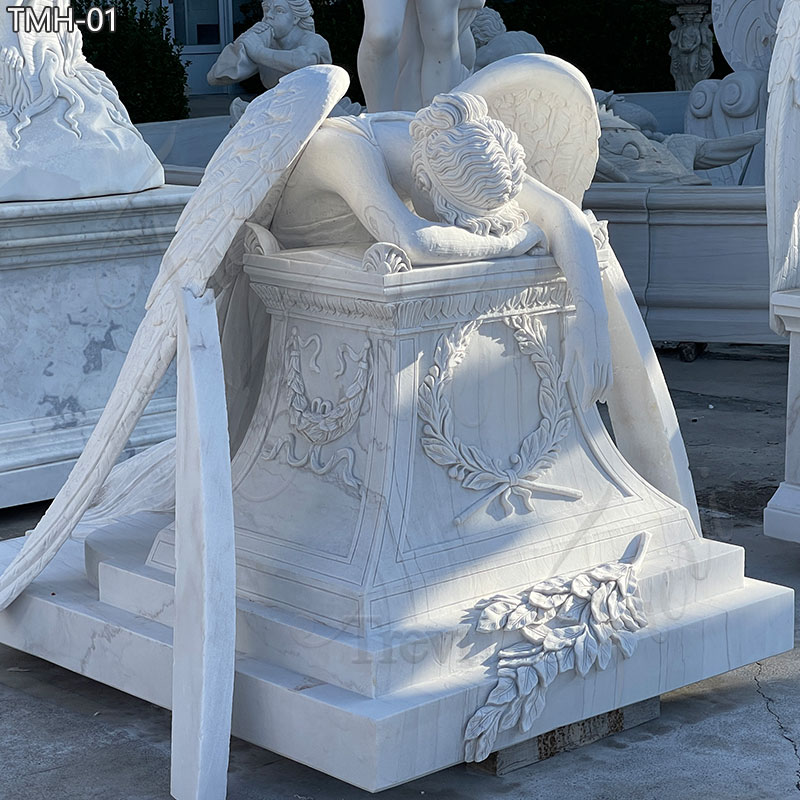
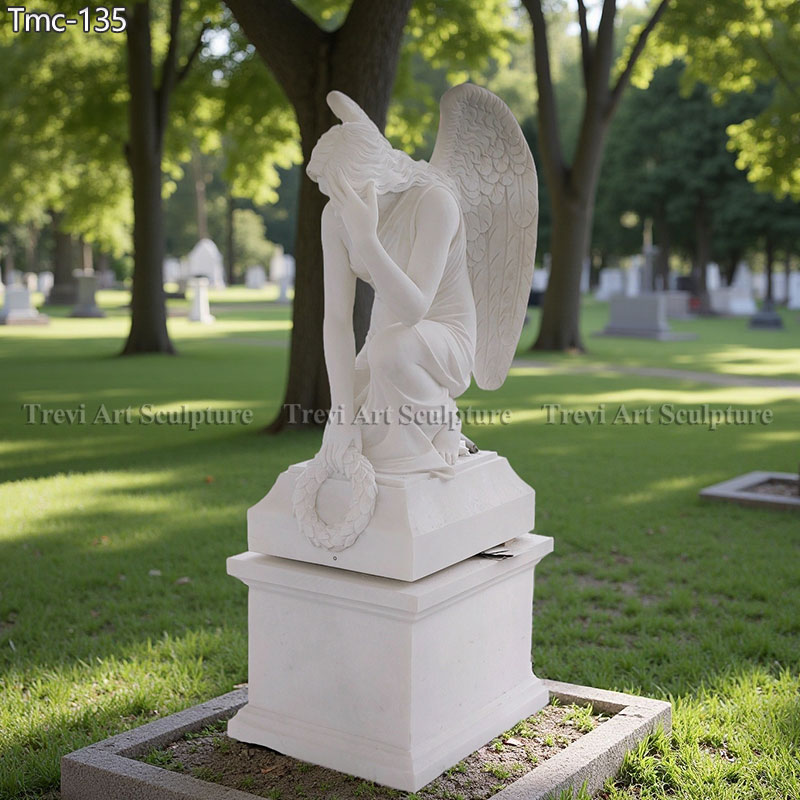
- Life Size Marble Weeping Angel Statue for Cemetery— A hand-carved, life-size interpretation of the classic weeping-angel pose, ideal for families who want a strong emotional focal point on the plot.
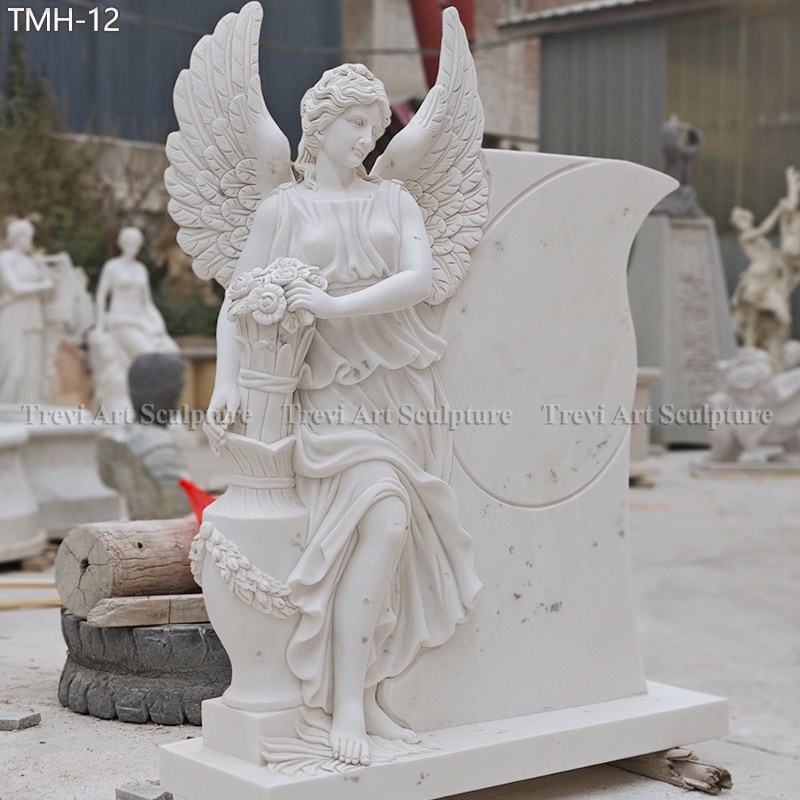
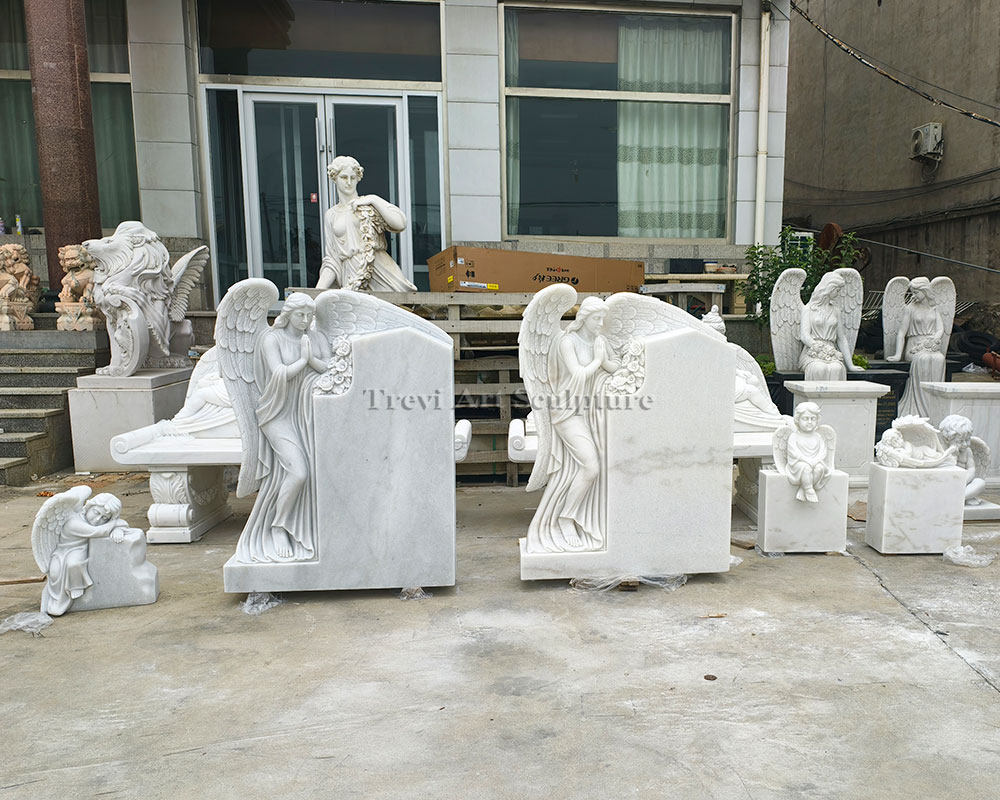
- Marble Standing Angel Headstone Monument— An elegant standing angel integrated directly into the headstone, combining figure and inscription panel in one monument.
- Custom Made Marble Angel Headstones— A fully customizable angel headstone that can be tailored in pose, facial features, and inscription.
- Carved Marble Sad Kneeling Angel Statue— A kneeling angel in a posture of prayer and sorrow, a popular choice for expressing quiet grief.
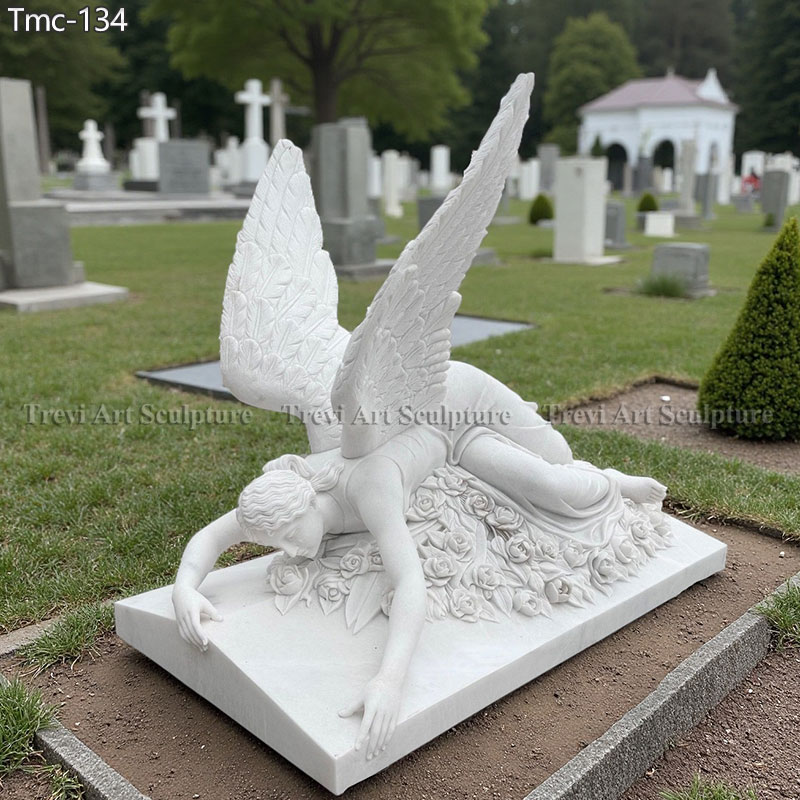
- Mourning Angel Lying Down Statue for Graveyard— An angel reclining over a bed of carved roses, echoing the “collapsed over the altar” pose made famous by the Angel of Grief.
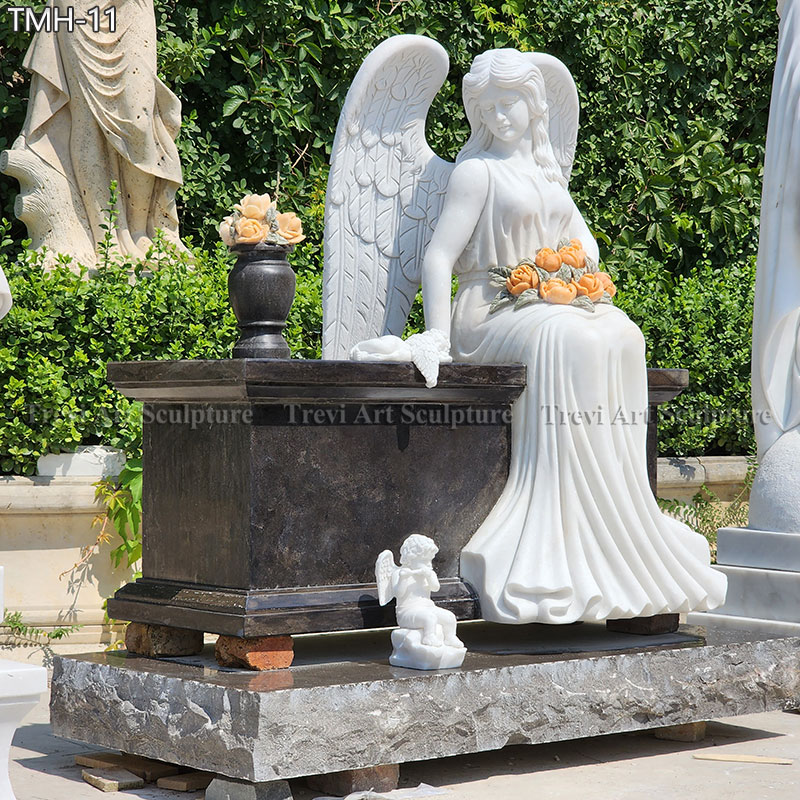
- Angel with Granite Bench Headstone Memorial— An angel paired with a memorial bench, giving visiting family members a place to sit while creating a larger, more prominent family monument.
Each of these styles can be produced as shown or adapted into a custom design — pose, size, material, and inscription can all be adjusted to fit a specific family plot or cemetery requirement.
8. How to Choose the Right Angel Statue for a Cemetery
A few practical and personal factors should guide the decision:
- Cemetery regulations.Many cemeteries — particularly newer, “memorial park” style grounds — restrict monument height, footprint, or require flush markers only. Always confirm size and design limits with the cemetery office before finalizing a design.
- The relationship and story being honored.A weeping or kneeling angel suits a monument focused on grief and remembrance; a standing guardian angel suits one focused on protection and faith; a small cherub is traditional for a child’s grave.
- Faith background.If the family’s religious tradition emphasizes specific angels (Michael, Gabriel) or scriptural imagery, a male archangel figure or a design incorporating a cross, trumpet, or scroll may be more meaningful than a generic mourning angel.
- Site conditions.A monument standing in full sun and rain for decades benefits from bronze or a dense, well-sealed marble; a sheltered mausoleum or indoor niche allows more flexibility.
- Scale of the plot.Life-size and larger-than-life angels suit prominent family plots or mausoleums; smaller carved angels integrated into a headstone panel suit single or companion plots.
- Budget and lead time.Larger, more intricate figures cost more and take longer to hand-carve and ship — worth planning for early if there’s a specific installation date in mind, such as an anniversary or unveiling ceremony.
9. How to Customize a Marble Cemetery Angel Statue
Because every family’s story is different, most of our angel monuments are produced as custom commissions rather than off-the-shelf pieces. Here is what that process typically looks like:
Step 1: Initial consultation and design selection. We start with a conversation about the deceased, the cemetery’s requirements, and the emotional tone the family wants — grief, peace, protection, or celebration of life. From there we recommend a base design or pose (standing, kneeling, weeping, or a fully original composition) as a starting point.
Step 2: Facial customization. One of the most requested services is carving the angel’s face to reflect a specific likeness or expression — for example, giving the angel gentler or more youthful features to echo the person being memorialized, or adjusting the expression from serene to sorrowful. Our sculptors work from reference photos and sketches to hand-carve these details rather than using a generic factory face.
Step 3: Inscription and text layout. We design the wording layout together with the family — name, dates, an epitaph, a Bible verse, or a personal message — and confirm the font, spacing, and placement on the stone before any carving begins.
Step 4: Porcelain photo portrait (optional). For families who want a photographic likeness on the monument, we can produce a ceramic (porcelain) photo portrait — a fired, weatherproof photo image mounted directly onto the marble — as an added personal touch alongside or instead of carved features.
Step 5: 3D design proof and approval. Before any stone is cut, we send a detailed drawing or 3D rendering showing the final pose, facial details, inscription layout, and dimensions for the family’s approval.
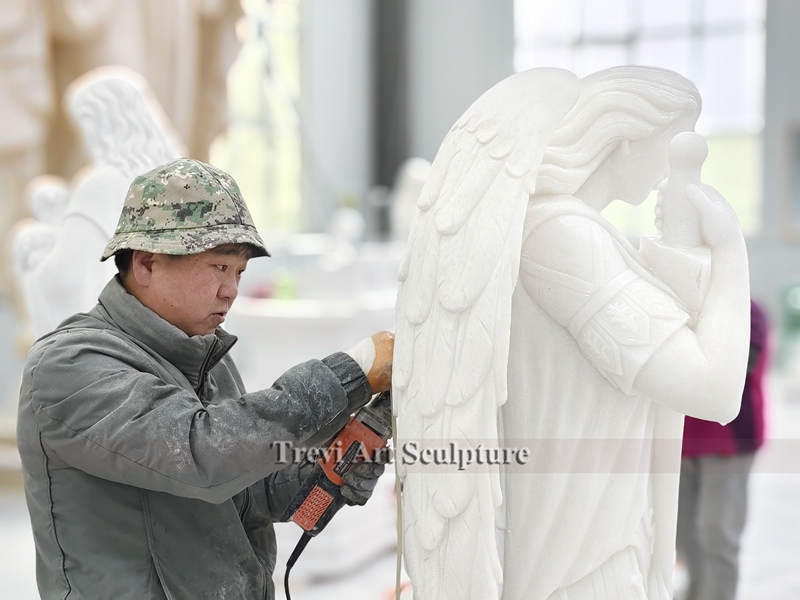
Step 6: Hand carving. Our artisans carve the piece from a single block of Grade-A marble, a process that — depending on size and detail — typically takes several weeks to a few months.
Step 7: Quality inspection, packing, and worldwide shipping. Every finished piece is inspected for surface finish and structural integrity, then securely crated for international shipping, with installation guidance provided for the receiving cemetery or monument company.
10. How Much Does a Marble Cemetery Angel Statue Cost?
Marble angel headstone prices vary widely depending on material grade, size, carving complexity, and the level of customization involved. Based on current market data, complete marble angel headstones generally range from $500 to $6,000+, with the most detailed, large-scale figures running higher.
| Design | Material | Description | Price Range (USD) |
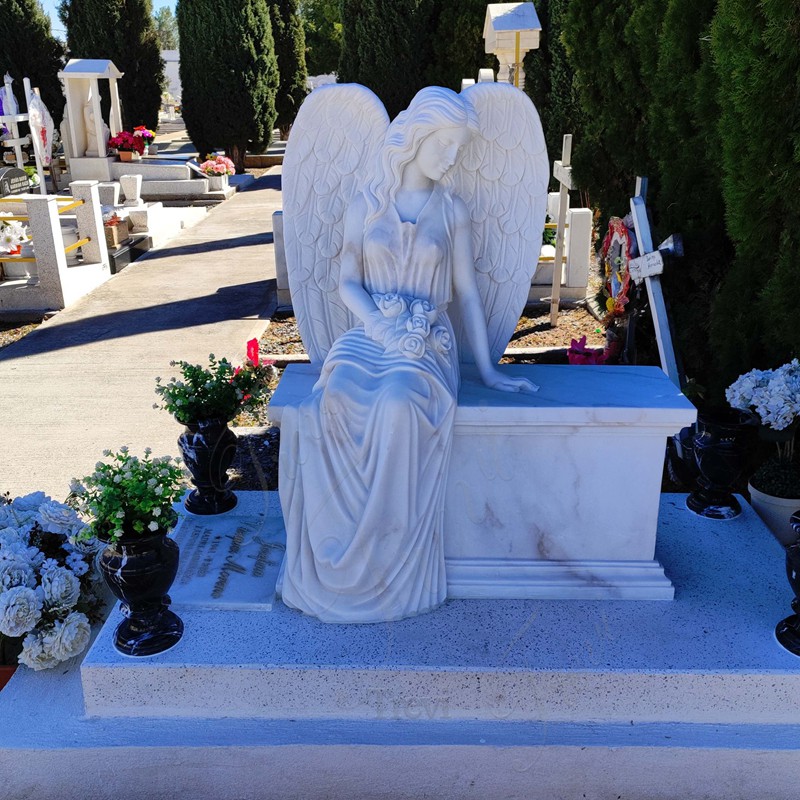
| Sitting angel headstone | Grade-A Marble | Angel sitting gracefully, holding flowers | $3,000 – $4,500 |
| Weeping angel memorial | Grade-A White Marble | Angel weeping on a pedestal | $3,500 – $5,500 |
| Classic angel headstone | Grade-A Marble | Angel leaning on a heart-shaped headstone | $2,500 – $4,500 |
| Two angels headstone | Grade-A White Marble | Two angels embracing a large heart design | $5,000 – $8,000 |
A few factors move a design up or down within (or beyond) these ranges:
- Material quality— premium Carrara-grade marble costs more per square foot than standard natural or Indian white marble, but carves more finely and weathers better.
- Carving complexity— a simple relief angel is far less expensive than a fully three-dimensional, life-size sculpture.
- Size and thickness— larger, thicker monuments require more raw material and carving time.
- Customization—engraved names, epitaphs, custom facial features, and porcelain photo portraits — typically adds 20%–50% to the cost of a standard design.
- Shipping and installation—international shipping and local installation — are usually quoted separately based on size and destination.
Want the full breakdown, including material cost per square foot and shipping estimates? You can read our detailed pricing guide, How Much Does an Angel Headstone Cost?, or contact us directly for a quote tailored to your design.
11. Case Studies: Marble Angel Monuments We’ve Carved for Cemeteries
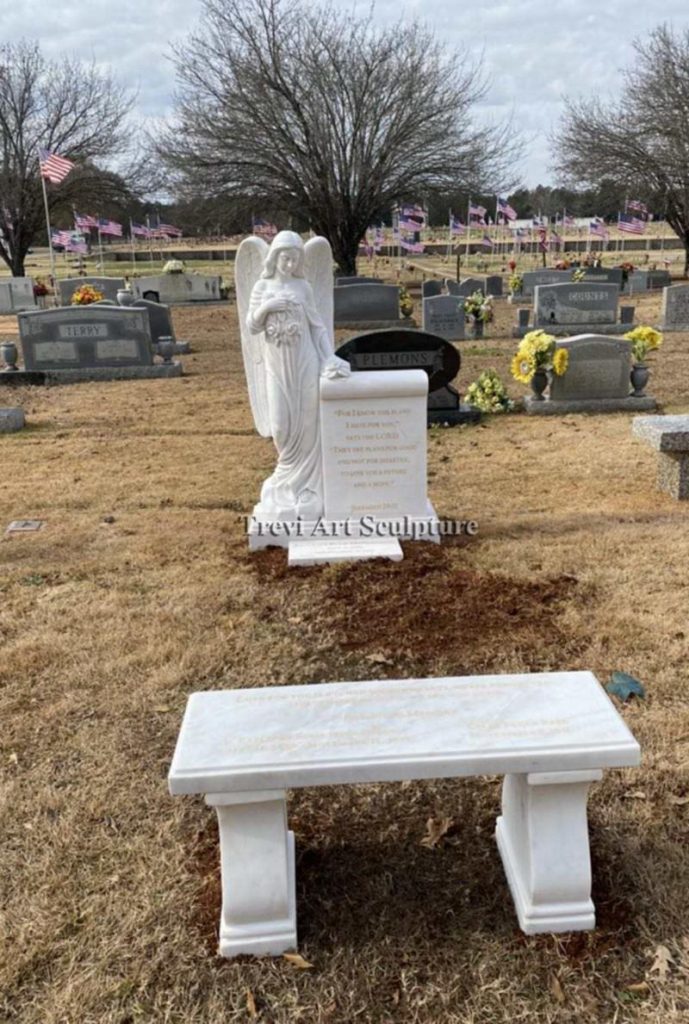
Over four decades of hand-carving marble at our Quyang, China workshop — the historic hometown of Chinese stone sculpture — we have shipped angel monuments to cemeteries and memorial parks across the United States and Europe. A few examples from our recent work:
If you’re planning a custom angel monument for a loved one’s cemetery plot — whether inspired by a classic design like the Angel of Grief or something entirely original — our design team is ready to help. Contact us to start the conversation.
FAQ
What does an angel statue on a grave mean? It generally symbolizes protection, mourning, spiritual guidance, or the soul’s ascension to heaven — the exact meaning depends on the angel’s pose, gesture, and any objects it carries, such as a trumpet, book, or flowers.
Why are most cemetery angels female? The female form became the standard for allegorical figures like Grief, Victory, and Liberty in Western art long before it was applied to cemetery angels, and Victorian culture associated visible mourning with women, making the female angel the natural choice for grief-themed monuments.
Is marble or bronze better for a cemetery angel statue? Both are excellent choices. Marble carves finer detail and has a soft, luminous quality that suits delicate figures, while bronze is more weather-resistant over very long periods and develops a distinguished patina. The right choice depends on budget, climate, and the level of carved detail desired.
Can a cemetery angel statue be customized to look like a specific person? Yes. Reputable monument carvers, including our workshop, can adjust an angel’s facial features and expression based on family photographs, and can add a fired porcelain photo portrait for an additional, exact likeness.
How long does it take to have a custom marble angel statue made? From design approval to completion, hand-carving a custom marble angel typically takes several weeks to a few months depending on size and detail, plus additional time for international shipping and installation.
How much does a marble angel headstone cost? Most complete marble angel headstones range from roughly $500 to $6,000 or more, depending on size, marble grade, carving complexity, and customization. See our detailed pricing guide for a full breakdown.
Do cemeteries allow custom angel statues? Most cemeteries allow figurative monuments, but many set restrictions on height, footprint, or material. Always check with your specific cemetery’s office regarding size and design regulations before finalizing an order.
What’s the difference between a weeping angel and a guardian angel statue? A weeping angel — head bowed or body draped over the stone — expresses the grief of the living. A guardian angel, typically shown standing upright and watchful, represents ongoing protection and comfort for the deceased.