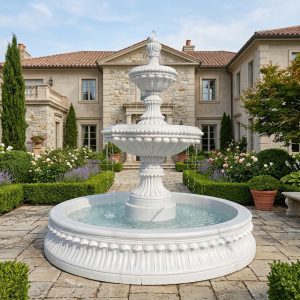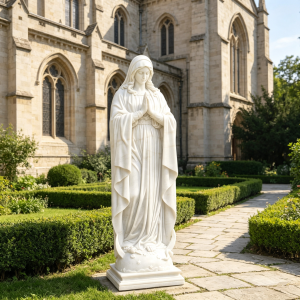
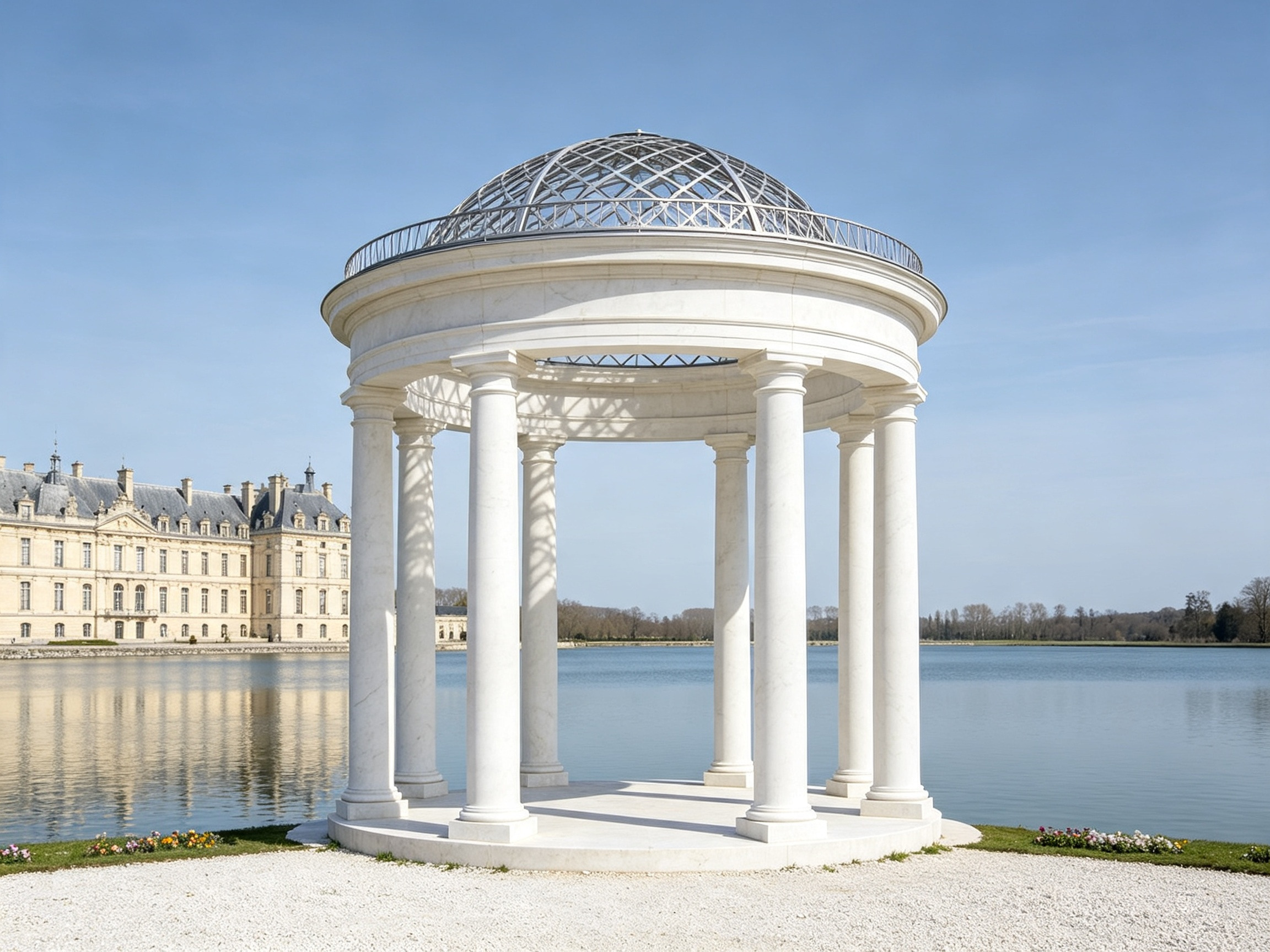
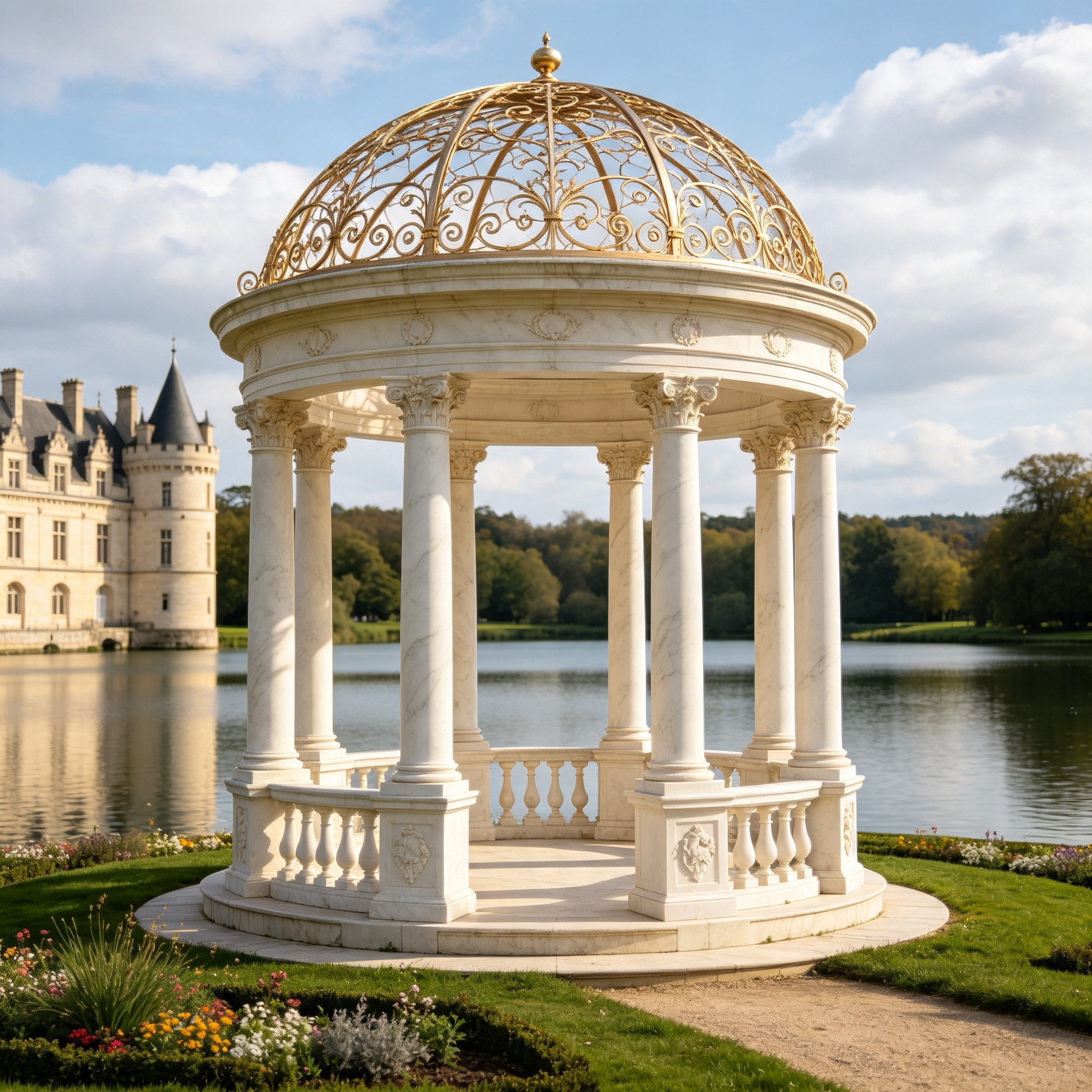
Walk through the gardens of a European palace, an Italian villa, or a Middle Eastern estate, and sooner or later you’ll come across a small domed structure carved entirely from stone — pillars rising to support an ornate roof, open on all sides to the garden around it. That’s a marble gazebo, and it’s one of the oldest ways human beings have built beauty into outdoor space.
Unlike a wooden pavilion or a modern steel pergola, a marble gazebo isn’t assembled — it’s carved. Each column, cornice, and dome panel is cut and finished by hand from solid natural stone, then engineered to stand as a permanent architectural feature rather than a temporary structure. That distinction is the whole reason marble gazebos have survived for centuries while lesser materials have not.
What Does a Marble Gazebo Actually Mean?
The word “gazebo” has murky origins — some trace it to a playful 18th-century blend of “gaze” and the Latin suffix “-ebo” (“I shall gaze”), describing a structure built specifically to offer a view. In marble, that meaning takes on more weight. A stone gazebo isn’t just a place to sit and look outward; it becomes the thing worth looking at.
Historically, marble pavilions and garden temples carried symbolic weight beyond shelter:
- Permanence and legacy— because marble endures for generations, a marble gazebo on an estate has long signaled that the family or institution intends to last. It’s architecture built with the same mindset as a monument.
- Refuge and reflection— open-sided garden structures in classical and Renaissance design were built as quiet spaces for conversation, reading, or retreat from the main house— a deliberate pause built into the landscape.
- Status and craftsmanship— because hand-carving marble at architectural scale requires enormous skill and time, a marble gazebo has always been a marker of taste and resources, from Ottoman garden kiosks to European palace grounds.
In short: a marble gazebo means permanence, refinement, and a garden’s centerpiece — a structure built not just to be used, but to be admired for generations.
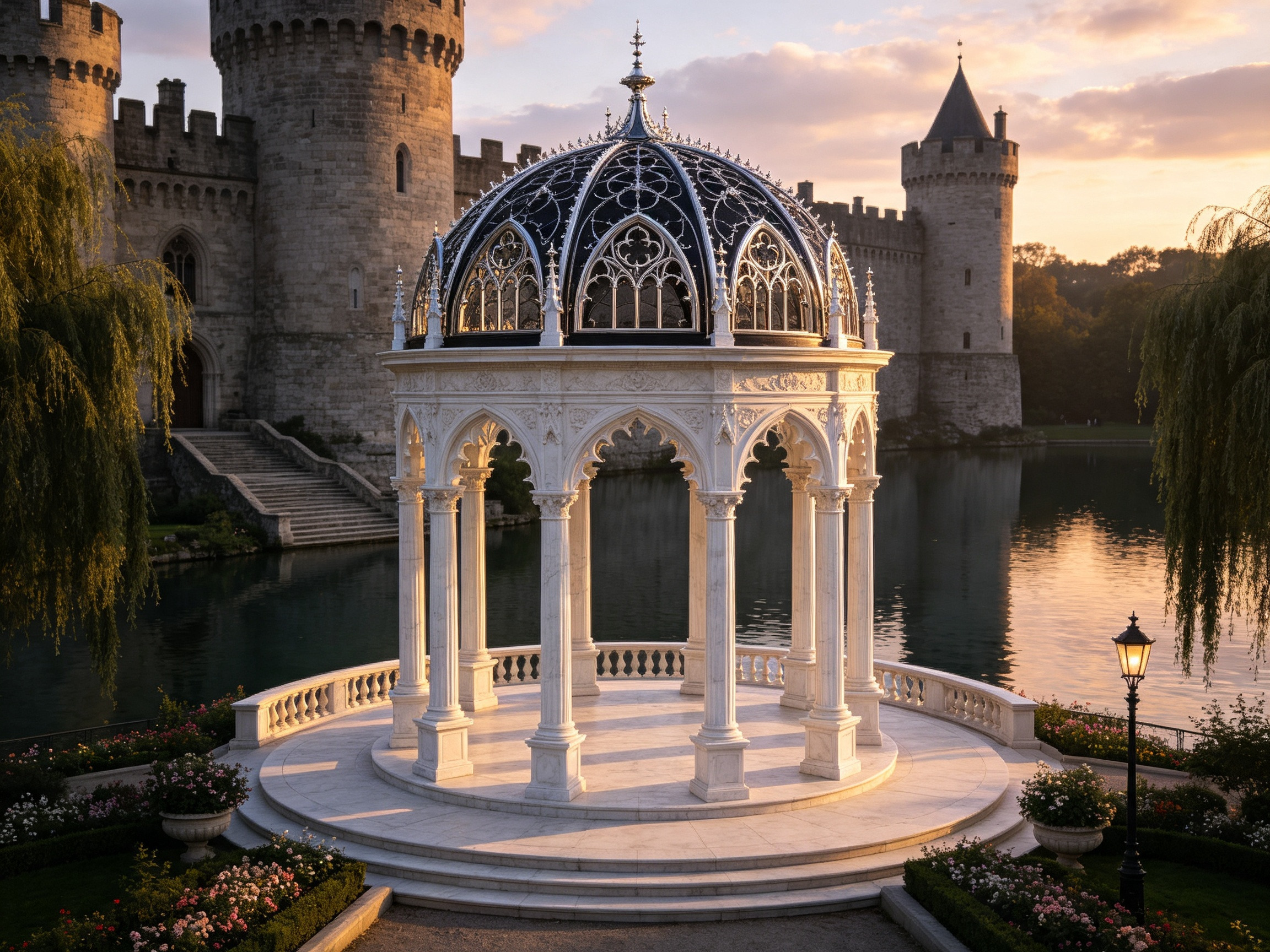
Where and How Marble Gazebos Are Used Today
The uses have expanded well beyond the palace garden, but the core idea — a stone structure as the anchor of an outdoor space — hasn’t changed.
Private estates and luxury residences: A marble gazebo is often the single feature that defines a garden’s character. Placed at the center of a lawn, at the end of a sightline from the main house, or beside a pool, it gives an outdoor space a permanent focal point the way a fireplace anchors a living room.
Wedding and event venues: Because marble gazebos photograph beautifully and hold symbolic weight (ceremony, permanence, elegance), they’ve become a favorite architectural feature for wedding venues, event gardens, and hospitality properties looking to create a signature backdrop.
Hotels, resorts, and country clubs: High-end hospitality properties use marble gazebos as outdoor lounge or ceremony spaces — combining shade and shelter with an architectural statement that reinforces the property’s positioning.
Public parks and civic landscaping: Municipalities and public gardens use marble pavilions as rest points along walking paths or as commemorative structures, since stone requires far less long-term maintenance than wood or metal in outdoor, high-traffic settings.
Memorial and religious gardens: Because of marble’s associations with permanence and reverence, gazebo-style structures are also used in memorial gardens and religious sites as spaces for quiet reflection.
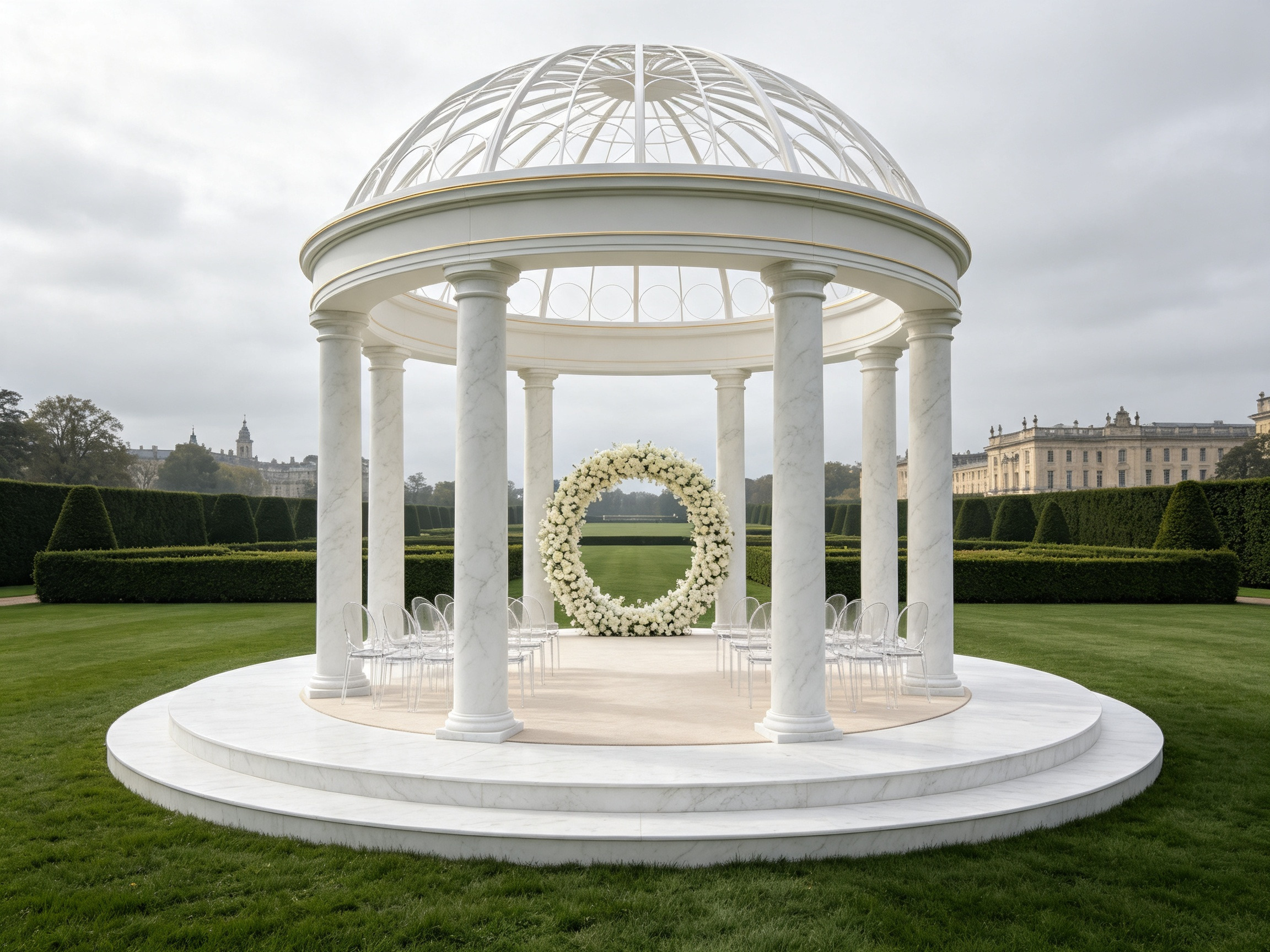
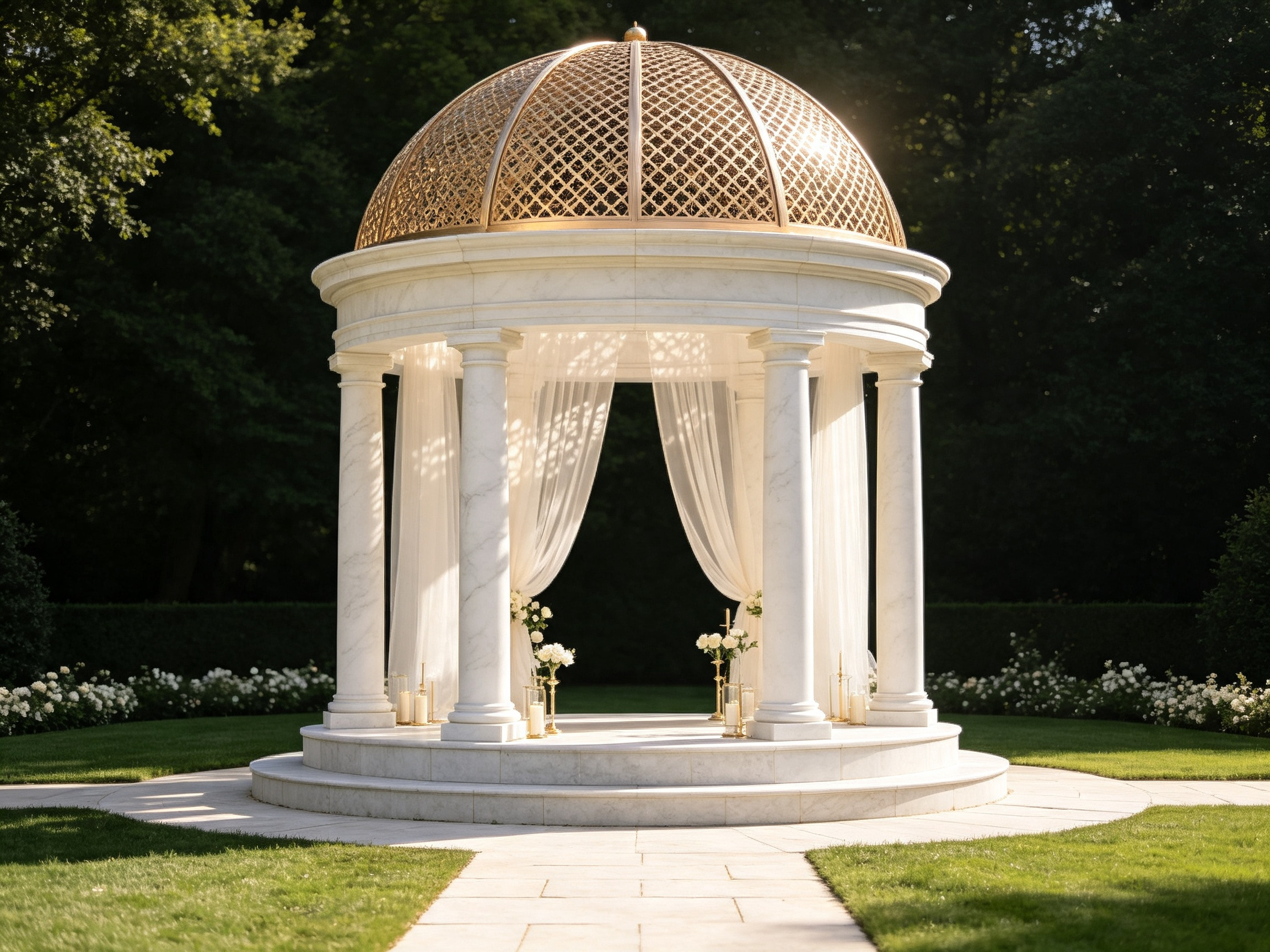
Why Marble Over Wood, Metal, or Composite
It’s worth being direct about the practical case, since the symbolism only holds up if the material performs:
- Weather resistance— natural marble withstands rain, UV exposure, and temperature swings without warping, rusting, or rotting the way wood and untreated metal eventually do.
- Minimal maintenance— no repainting, no re-sealing wood joints, no rust treatment. Periodic cleaning and occasional sealing are typically all that’s needed.
- Structural longevity— a well-engineered stone gazebo, properly foundationed, can realistically remain standing for a century or more.
- Visual weight— marble has a density and presence that other materials simply can’t replicate; it reads as architecture rather than furniture.
The tradeoff is upfront cost and lead time — a marble gazebo is a hand-carved architectural commission, not an off-the-shelf purchase — but for a structure meant to outlast the people who built it, that tradeoff has made sense for a very long time.
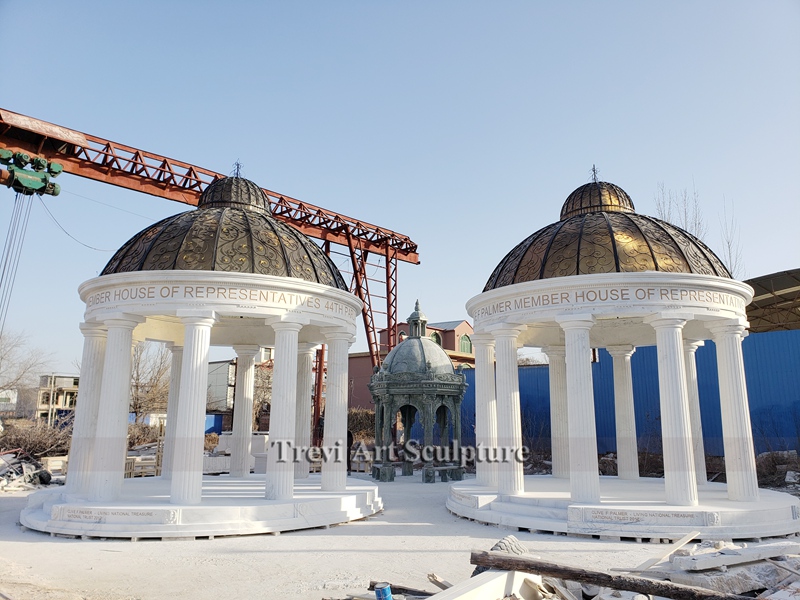
Bringing a Marble Gazebo to Your Own Garden
A marble gazebo is as much an engineering project as an artistic one — it requires precise stone-cutting, structural planning for the dome and columns, and experienced installation to ensure the finished structure is both beautiful and safe for the long term. That combination of hand-carving skill and architectural know-how is rare, which is why sourcing directly from an experienced marble workshop matters more with a gazebo than with almost any other piece of garden decor.
If you’re considering adding a marble gazebo to a private garden, hotel landscape, or public space, Trevi factory specializes in hand-carved marble gazebos and architectural stonework, offering custom designs, sizes, and finishes with full gazebo installation guidance from quarry to garden. It’s the kind of project worth building once — and building right.